

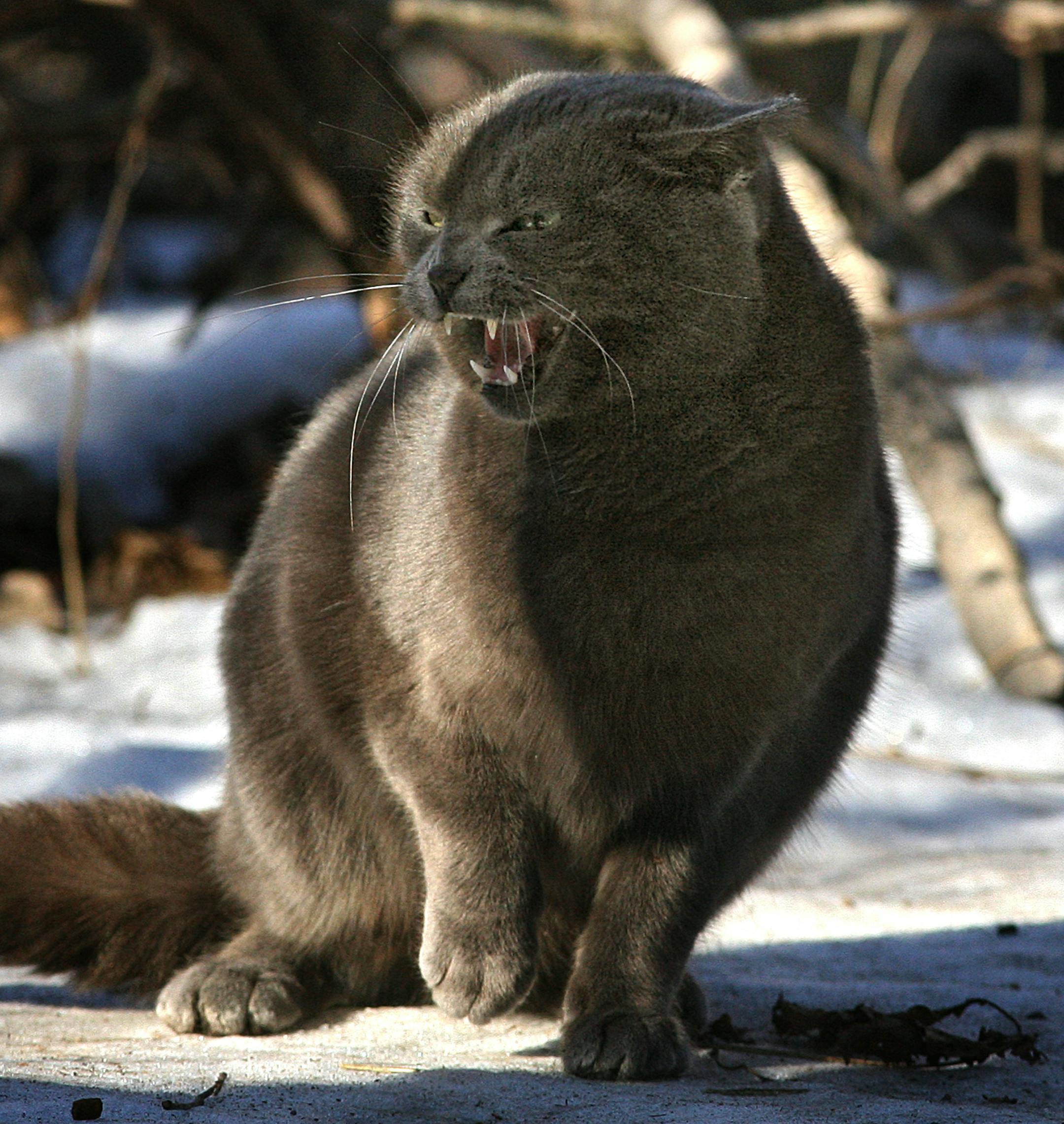
Everyone can agree on one thing: It's not the cats' fault they're bad for wildlife.
Cats are carnivores. Their talent for preying on rodents is a big reason their ancestors and ours started hanging around together in the first place. But then, people carried cats around the world, into ecosystems that weren't equipped for such predators.
Wherever they are, they stalk. They pounce. They kill. They eat.
Now researchers have documented the breadth of cats' global buffet. A study published recently in the journal Nature Communications found that free-ranging domestic cats (including feral ones) eat more than 2,000 species, raising renewed concerns about the ecological fallout.
Almost half of the species were birds, followed by reptiles and mammals. An unexpected number of insects were found, including monarch butterflies, pink-spotted hawk moths and emperor dragonflies. Other surprises on the menu included camels, cows and green sea turtles. (As skilled as cats are at hunting, the camels and cows were probably scavenged. The sea turtles were probably hatchlings.)
"Cats eat a lot more than we thought," said Christopher Lepczyk, an ecologist at Auburn University and one of the study's authors. "That's meaningful."
Nearly 350 of the species, including monarch butterflies and green sea turtles, were imperiled or at risk of being imperiled.
The fallout from cats is especially acute on far-flung islands, where species have often evolved without any mammalian predators. But even in the United States, research by the federal government and the Smithsonian Institution estimated that cats kill a median of 2.4 billion (yes, billion with a b) birds per year. That's especially concerning given the alarming declines in North American bird populations, which have gone down 29% since 1970.


