

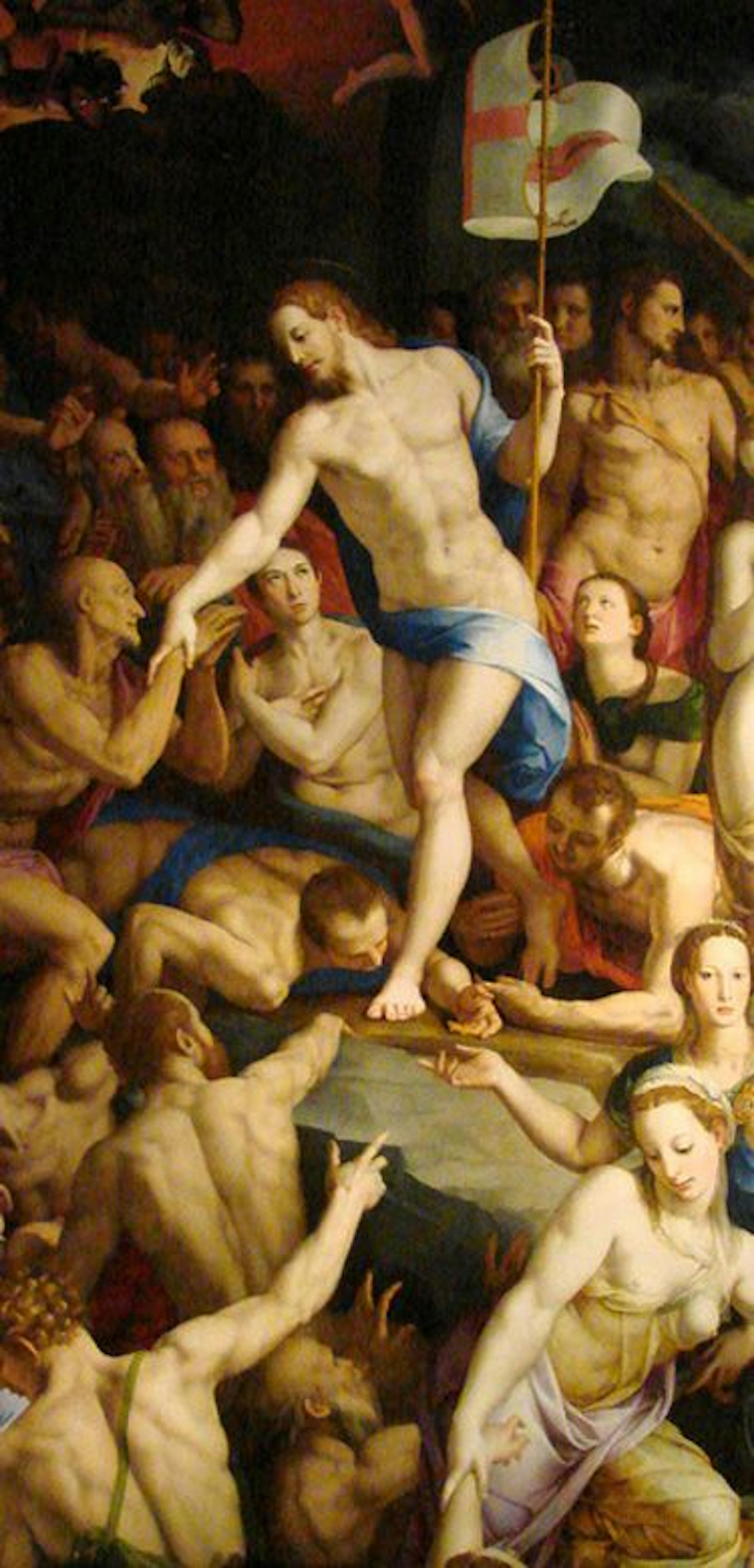
Every Christian knows the story: Jesus was crucified on Good Friday and rose from the dead on Easter Sunday. But what did he do on Saturday?
That question has spurred centuries of debate, perplexed theologians as learned as St. Augustine and prodded some Protestants to advocate editing the Apostles' Creed, one of Christianity's oldest confessions of faith.
Roman Catholic, Eastern Orthodox and most mainline Protestant churches teach that Jesus descended to the realm of the dead on Holy Saturday to save righteous souls, such as the Hebrew patriarchs who died before his crucifixion.
The catechism of the Catholic Church calls the descent "the last phase of Jesus' messianic mission," during which he "opened heaven's gates for the just who had gone before him."
An ancient homily included in the Catholic readings for Holy Saturday says a "great silence" stilled the Earth while Jesus searched for Adam, "our first father, as for a lost sheep."
Often called "the harrowing of hell," the dramatic image of Jesus breaking down the doors of Hades has proved almost irresistible to artists, from painter Hieronymus Bosch to poet Dante to countless Eastern Orthodox iconographers.
But some Protestants say there is scant scriptural evidence for the hellish detour, and that Jesus' words contradict it.
On Good Friday, Jesus told the thief crucified alongside him that "today you will be with me in paradise," according to Luke's Gospel.


