

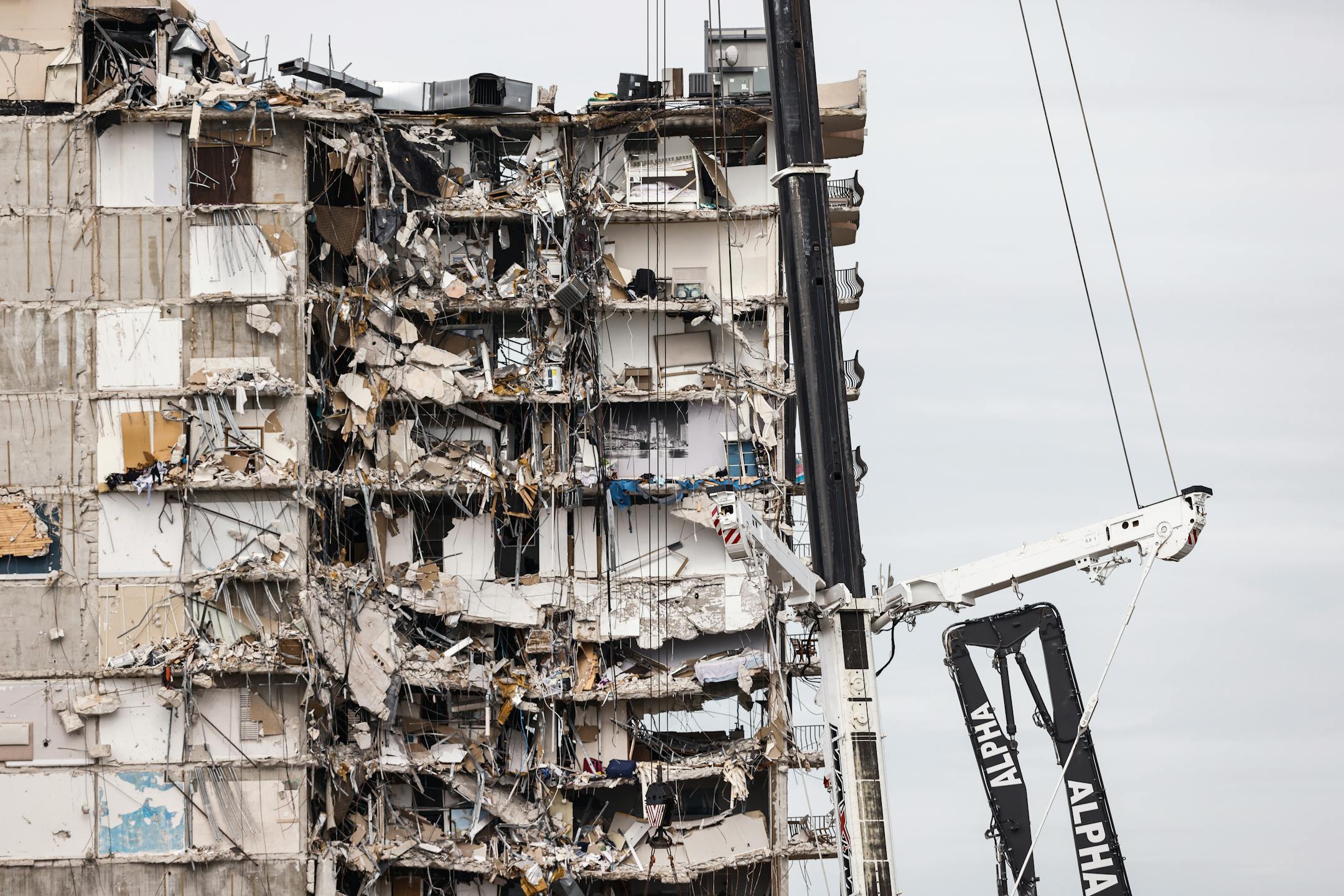
It's been 40 years since 114 were killed and 200 others injured when two giant skywalks collapsed in the lobby of the Hyatt Regency hotel in Kansas City, Mo. The images from that catastrophic structural failure — chunks of the walkways flattened to gray rubble, firemen clawing through busted concrete in search of the living or dead, the anguish of families desperate for news — seem to have been replayed in Surfside, Fla., in recent days.
In the weeks, months and a year or more ahead, even grimmer moments will follow. And answers could take years, if they come at all.
Why did the high-rise Champlain Towers South condo building suddenly collapse in the pre-dawn hours on June 24? Whom should we blame? Will this community ever find closure over such an enveloping tragedy? As of Tuesday evening, 12 bodies had been recovered in the Surfside disaster; about 150 other people are missing.
The experts reviewing the Florida disaster are considering several scenarios: whether the beachfront building snapped near the underground parking garage, sending the 12 stories and 136 condos toppling down; or the foundation eroded from ocean saltwater or rising tides; a roof renovation project went wrong; or the outdoor pool splintered. One witness heard an eerie creaking sound. Others spied cracks around the site. Some felt the building shaking. Others spotted a sinkhole near the pool.
An advance warning had been sounded. A consultant in 2018 found evidence "of major structural damage" below the pool deck and "abundant" cracking of concrete beams and walls in the garage area. Afterward, however, the community was assured by a town inspector that the Champlain Towers complex remained "in very good shape."
A similar alert arose at the Hyatt Regency when the lobby ceiling collapsed during the hotel construction. The owners learned that many of the atrium connections were weakening. They repaired the roof but missed the lobby skywalks, which later pulled apart, largely because of an engineering design error.
Also in the Hyatt case, seven months passed before federal investigators pinpointed the structural design error. In Florida, federal investigators from Washington are offering their expertise, but it likely will take longer to determine if outside factors like water or weather were involved. A number of local and state agencies will be involved in the inquiry, though it's not clear which agency would lead the effort. Separate experts are also being hired by the building owners and the families considering lawsuits. All of this could compound or delay a definitive answer into why the seaside tower crumbled.
Already, a lawsuit seeking more than $5 million has been filed by condo residents. Yet typically in mass disaster cases, the complicated litigation — usually a class-action suit — ends with out-of-court settlements and no public trial. There is only so much insurance money to go around, and the courts in recent decades have worked to accommodate everyone equitably.


