

President Obama was right to dispatch Secretary of State Hillary Rodham Clinton to the Middle East last week to help broker a cease-fire between Israel and Hamas. But as the president enters his second term, he faces the prospect of bigger challenges in the Middle East, most notably on Iran's nuclear program. To make sure the Israeli government does not act on its own on Iran, Obama needs to gain the trust of the Israeli public.
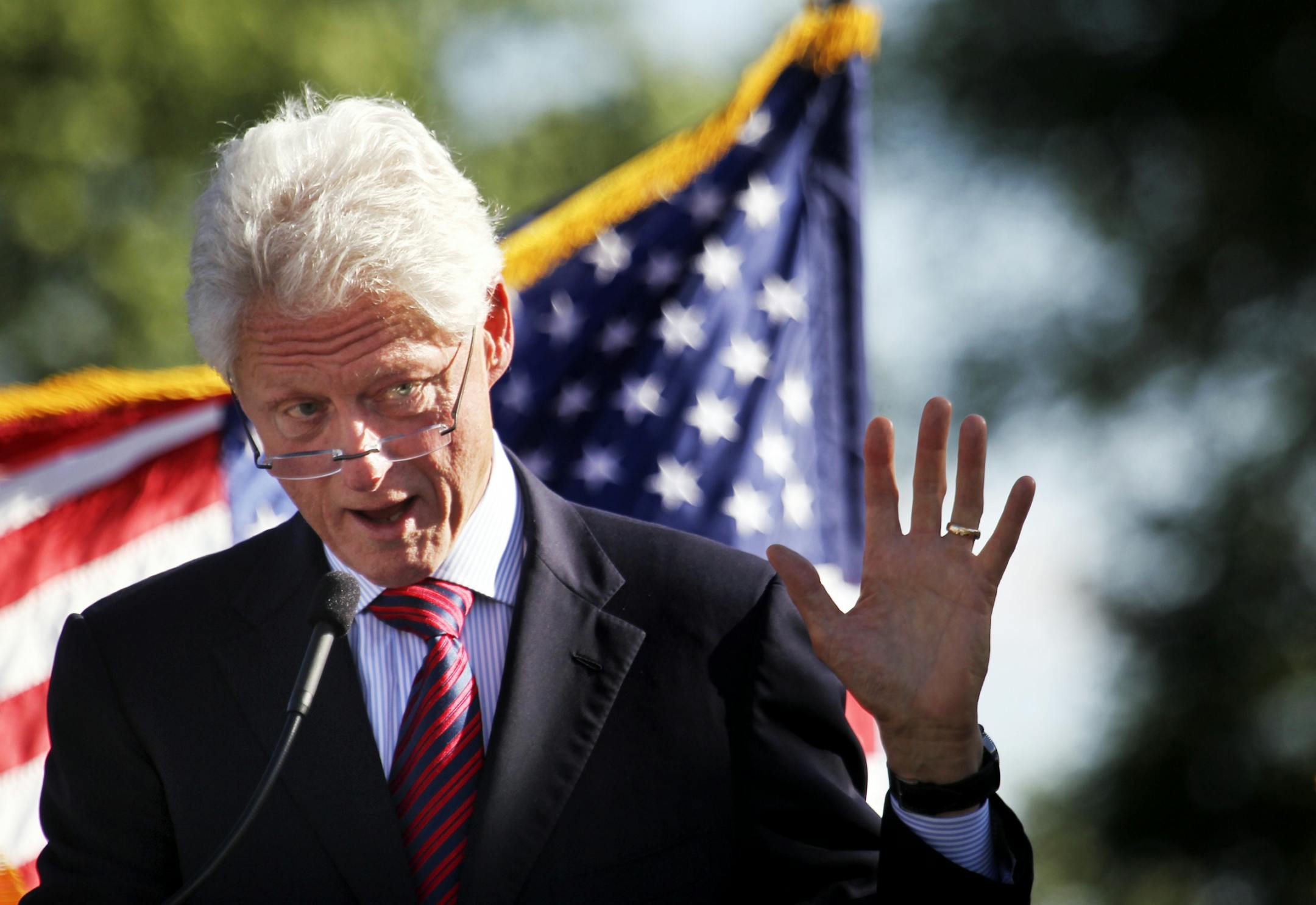
And to do that, Obama should look to the example of another Clinton - Bill. Although the former president had his own fraught relationship with Israeli Prime Minister Benjamin Netanyahu, he managed to gain leverage over Netanyahu because he had the trust - and even the love - of the Israeli public. The lack of such deep trust is Obama's biggest deficit in dealing with Israel.
Ordinary Israelis, who are keenly aware of politics, care deeply about the U.S. president's policies and attitudes toward their country. Clinton understood this and mastered it. He knew how to make the Israeli people believe that he had their interests at heart. Obama has yet to inspire such trust. While Israelis respect Obama for his office and his intelligence, he has yet to inspire their trust.
To Clinton, who dealt with Netanyahu when he was prime minister from 1996 to 1999, charm comes easily, and the Israeli public fell for it willingly. The public's love was no accident; Clinton carefully cultivated it. Even when he strongly disagreed with Netanyahu's policy, he framed the disagreements judiciously, using Israeli public opinion - more moderate on some issues than Netanyahu's policies - to his advantage. Sen. John McCain's recent suggestion that Obama appoint Bill Clinton as his Mideast envoy shows Clinton's lingering relevance. But no envoy can replace the role and power of the sitting U.S. president.
Clinton understood a fundamental truth about Israelis: Although they are a tough and battle-tested people, they are eager for recognition and assurance. Although Israel possesses considerable military power, Israelis are acutely aware of the multiple threats that surround their country - from the chaos in Syria to Israel's north, to the breakdown of authority in the Sinai Peninsula and the flow of weapons to the Gaza Strip, to Iran's ominous rhetoric and nuclear ambitions.
Moreover, Israelis are well-aware of the anti-Israeli sentiment around the world. Although most Israelis view their country's actions as fundamentally just, they sense how poorly they are perceived abroad. Israelis feel more vulnerable than one might expect from a powerful, seemingly self-assured country - making the public highly receptive to simple sympathy. Clinton understood this; he knew how to win over Israelis by recognizing their concerns.
For example, when Clinton appeared at the Knesset, the Israeli parliament, to mark the signing of the Israeli-Jordanian peace treaty in 1994, he sounded genuine to his audience when saying, "So long as Jews are murdered just because they are Jews or just because they are citizens of Israel, the plague of anti-Semitism lives and we must stand against it."
Similarly, when Clinton eulogized Yitzhak Rabin after his assassination in 1995, saying in Hebrew, "Shalom, haver" - or "goodbye, friend" - the phrase echoed through Israeli public discourse. It adorned bumper stickers and placards nationwide, becoming part of the national mourning process. When bombs struck buses in Jerusalem, Tel Aviv and Ashkelon in February and March of 1996 - as they did again last week in Tel Aviv - Clinton visited Israel to pay tribute to the fallen and their families. By the president of the United States coming to show his support, Israelis thought that he understood their pain and anger, much as if the bombings had occurred in New York or Los Angeles. He visited my former high school in Jerusalem, which lost alumni in the bombings, and the community was deeply moved by his gesture.


