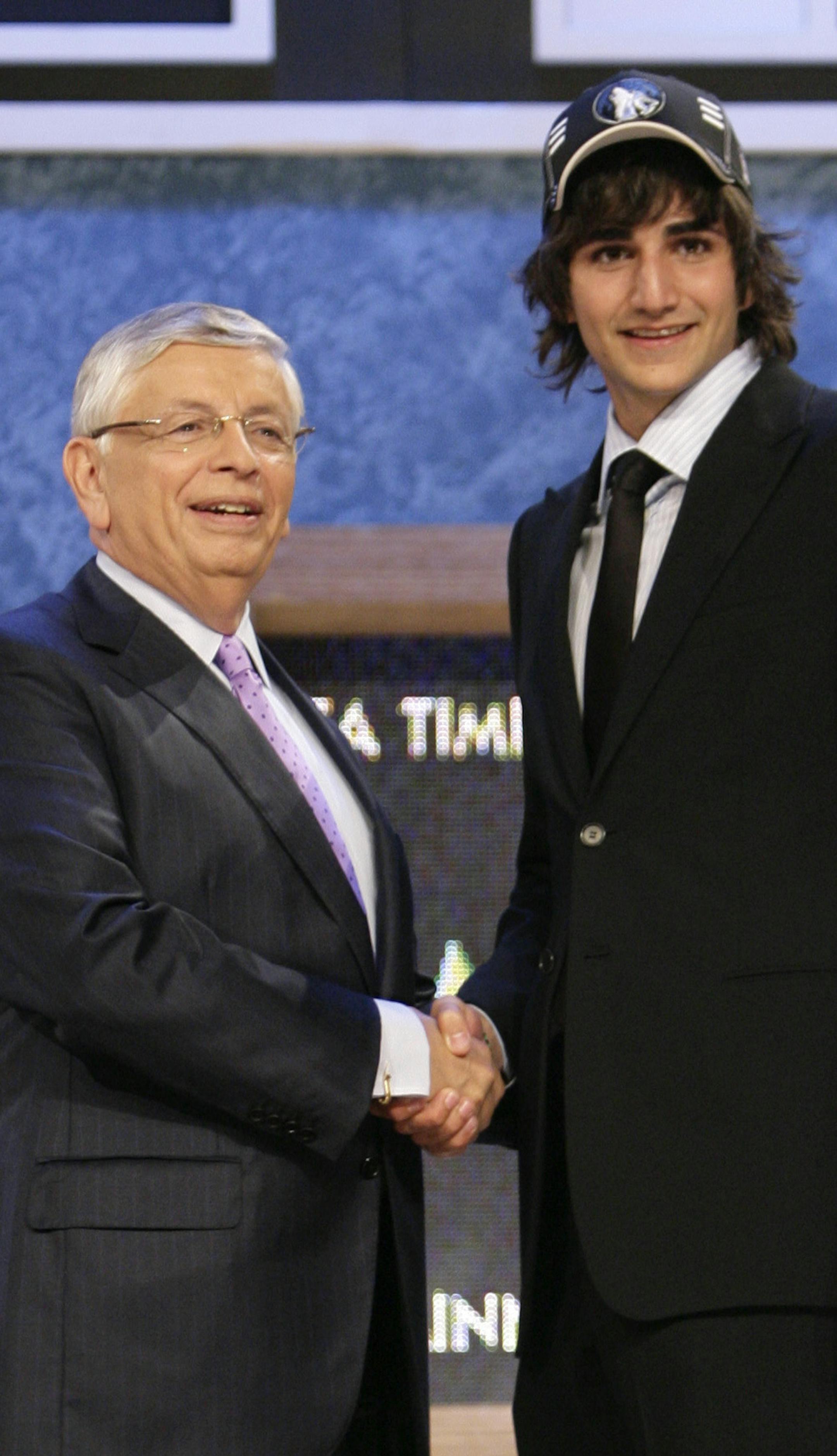
![Minnesota Timberwolves rookie Ricky Rubio (9). ] CARLOS GONZALEZ cgonzalez@startribune.com, December 09, 2011, Minneapolis, Minn, Target Center, Minnesota Timberwolves, Media Day Portraits ORG XMIT: MIN2013061414105498 ORG XMIT: MIN1306141413427141](https://arc.stimg.co/startribunemedia/2GAPVJ7UJZH3JVWVSWGCHNS4TM.jpg?&w=1080)
Editor's note: For the much longer, fuller version of this special project, see startribune.com/sports.
In a strange recurring daydream, I'm riding in a car in downtown Minneapolis with Ricky Rubio and a couple of his friends, on the way to what promises to be an amazing night on the town. Through a series of wrong turns, frustrating construction delays and one-way streets, we are making no progress. The trip started at Target Center, and after 30 minutes we pull up once again to 600 First Avenue.
Rubio, who has been singing along to the radio and telling stories, keeping everyone cheerful and generally unaware of the lack of progress, suddenly looks out his window and sees Target Center. His wide eyes narrow and he says with accented exasperation, "Guys, we're right back where we started. What is going on here?"
This daydream is rooted in two facts: 1) Even as a member of the media, I think it would be cool to just ride around in a car with Rubio, because he seems like a genuinely fun and nice person I'd like to get to know better. 2) Because I'm a writer, I've imagined a scenario that would make the perfect opening paragraph to a story about Rubio.
Like the fictional Rubio in the car making no progress and winding up back at Target Center, the basketball version of real-life Rubio has spent the past six years doing the same thing.
On June 20, 2011 — almost exactly six years ago — Rubio arrived at the Minneapolis-St. Paul Airport to a scene befitting a rock star. He had been drafted by the Wolves with the No. 5 overall pick almost exactly two years before that — June 25, 2009 — as a precocious 18-year-old from Spain. He represented so many things for a franchise that had been through so much losing, but the one-word crystallization of all of it was "hope."
Eight years later — through joy, pain and promise, but ultimately zero playoff berths — Rubio is left with a complicated legacy. If we can return to the daydream one more time: The car is back at Target Center now, but what is its final destination?
To understand that question, though, we need to start at the beginning. So we enlisted the help of experts to help tell the full tale of Rubio from 2009 until now for a special online oral history project. The voices: