
What a doctor sees when Joe Biden hesitates while speaking

Seniors may be the last minority whose natural traits are singled out for ridicule and stereotyping.

March 11, 2024 at 4:05PM
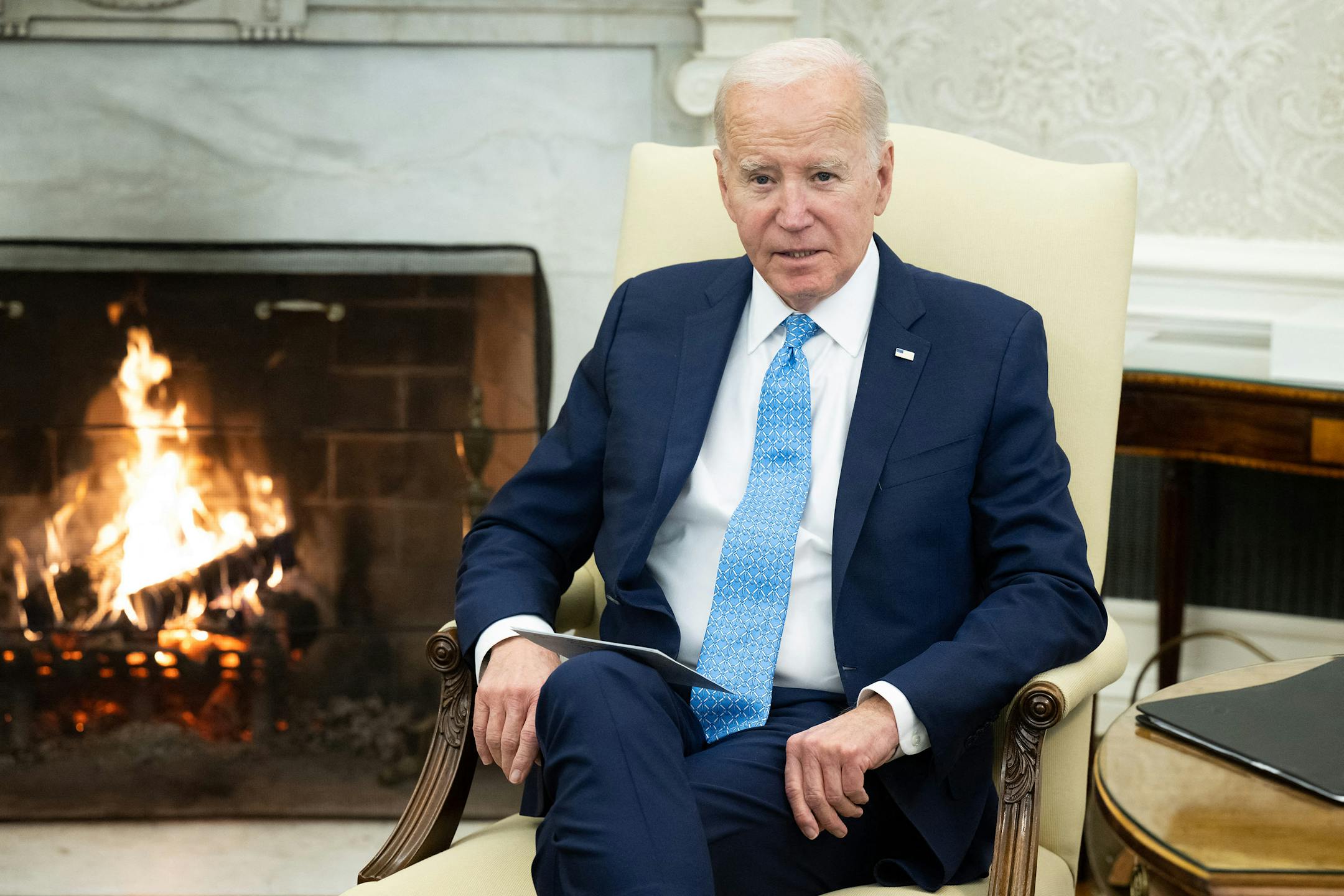
President Joe Biden during a meeting with Italian Prime Minister Giorgia Meloni in the Oval Office on March 1. (Saul Loeb/AFP)

Opinion editor’s note: Star Tribune Opinion publishes a mix of national and local commentaries online and in print each day. To contribute, click here.

As a geriatrician, I discuss the effects of aging with patients every day. I wish I had a chance to give my usual talk to everyone who chortles or tears their hair out about President Joe Biden’s fitness for his job.

First, memory. I explain to patients that there are three components to consider. One is formation. Then storage. And finally, recall. The most common issue among seniors is slow recall. This is the familiar “tip of the tongue” phenomenon, when a word seems to hide or a name won’t come to mind. You know the name, it’s in your bank of memories, it just can’t be accessed quickly. Given time, it usually arrives.

This problem, called age-associated memory impairment, often starts for people in their 30s and gradually progresses. It’s a nuisance but not disabling. If, like me, you find yourself using the term “whatchamacallit,” you probably have it. Don’t worry, you’ll be fine.

Alzheimer’s disease, the most common cause of dementia, is a different story. Those affected lose the ability to store new memories. They can still access old memories in their memory bank and may recount events that occurred decades ago. But they can’t tell you what they had for breakfast because that never entered the memory bank. (I reassure my patients with age-associated memory impairment by asking whether they remember their breakfast. They do.)

Alzheimer’s is cognitively crippling. Losing the ability to form new memories freezes one in time. Those affected can’t make new friends or address new situations without fresh memories. Additionally, the disease progressively impairs other domains, including behavior and ultimately physical skills.

Fortunately, President Biden shows no signs of Alzheimer’s disease. At news conferences, he references new events and obviously creates new memories efficiently. He speaks slowly and pauses to find words like others with benign age-associated memory impairment. These issues are exacerbated by a chronic speech impediment. Biden has struggled with stuttering since childhood, and remnants of the condition have long been apparent in his speech.

Unfortunately, word hesitations coupled with the mild stutter can’t help but affect his public speaking. Biden’s political opponents and the uninformed exploit it, along with stereotypes about older people, to create a false narrative about intellectual impairment.

I take care of many high-functioning seniors like President Biden in my practice. One that I know, who is not a patient of mine, has been my family’s lawyer for five decades. Melvin Spears, at 96, recently responded to an emailed legal question with succinct and well-targeted advice, as he always has. When I spoke to him, he acknowledged some concessions to his age. He speaks more slowly, and transportation is a challenge because he’s stopped driving. (He considers Uber and Lyft “a hassle.”) Like Biden, Spears focuses on his work and lets others worry about his age if they choose.

Studies show that high-functioning seniors like Mel Spears and the president compensate for slower reaction time by applying superior knowledge and judgment. The presidency is not a job that requires lightning-quick reflexes. First-hand experience with the successes and failures of U.S. foreign policy over decades, for example, combined with time-tested judgment offers far more than speed in speech or decisionmaking.

Actuarial tables show that the 81-year-old president’s life expectancy extends nearly eight years, well beyond a second term. He gets excellent health care, has no major chronic illnesses, and at his recent physical at Walter Reed Military Medical Center, he was declared “healthy, active” and “fit for duty.” All that means that Biden is likely to beat the actuarial estimate. Given his overall health and the absence of current cognitive impairment, he would likely complete a second term with stable cognition.

All candidates for political office in the U.S. deserve to be evaluated on their accomplishments and capabilities rather than by their age. Seniors may be the last minority whose natural traits are singled out for ridicule and stereotyping. If the American people disagree with President Biden’s policies and prefer change, they should support his opponent. But in the absence of valid evidence of true cognitive impairment, their judgment should not be influenced by ageist social stereotypes. Biden and the American political process deserve better.

Daniel J. Stone is an internist and geriatrician in Beverly Hills.

about the writer

about the writer

Daniel J. Stone

More from Commentaries

See More
card image
Emilio Morenatti/The Associated Press

There are counterarguments to the criticisms about the decision.

card image
card image