


By MeghanEvansAccuWeather.com

The earliest and most widespread case ofa serious plant disease ever in the East is forcing the removal of tomatoplants from stores in New York and New England. This infectious disease iscalled late blight, the same disease that caused the Irish Potato Famine in the1840s. It does occur occasionally in the Northeast, but this year's rainyweather has accelerated the spores' airborne spread. On top of that, infectedplants have been widely distributed by big-box retail stores.According to the Associated Press, the disease is not harmful to humans, butit is quite contagious. It is most likely spread on garden center shelves toplants that were not involved in the initial infection. Once plants reachgardens, both home and commercial ones, the disease can also spread.
A big dip in the jet stream in the Northeast region has sent persistentrounds of showers and storms from the Great Lakes to New England and part ofthe mid-Atlantic in recent weeks. Conditions worsened this past week as strongdisturbances squeezed out extra rain, extensive cloud cover and abnormally lowtemperatures.
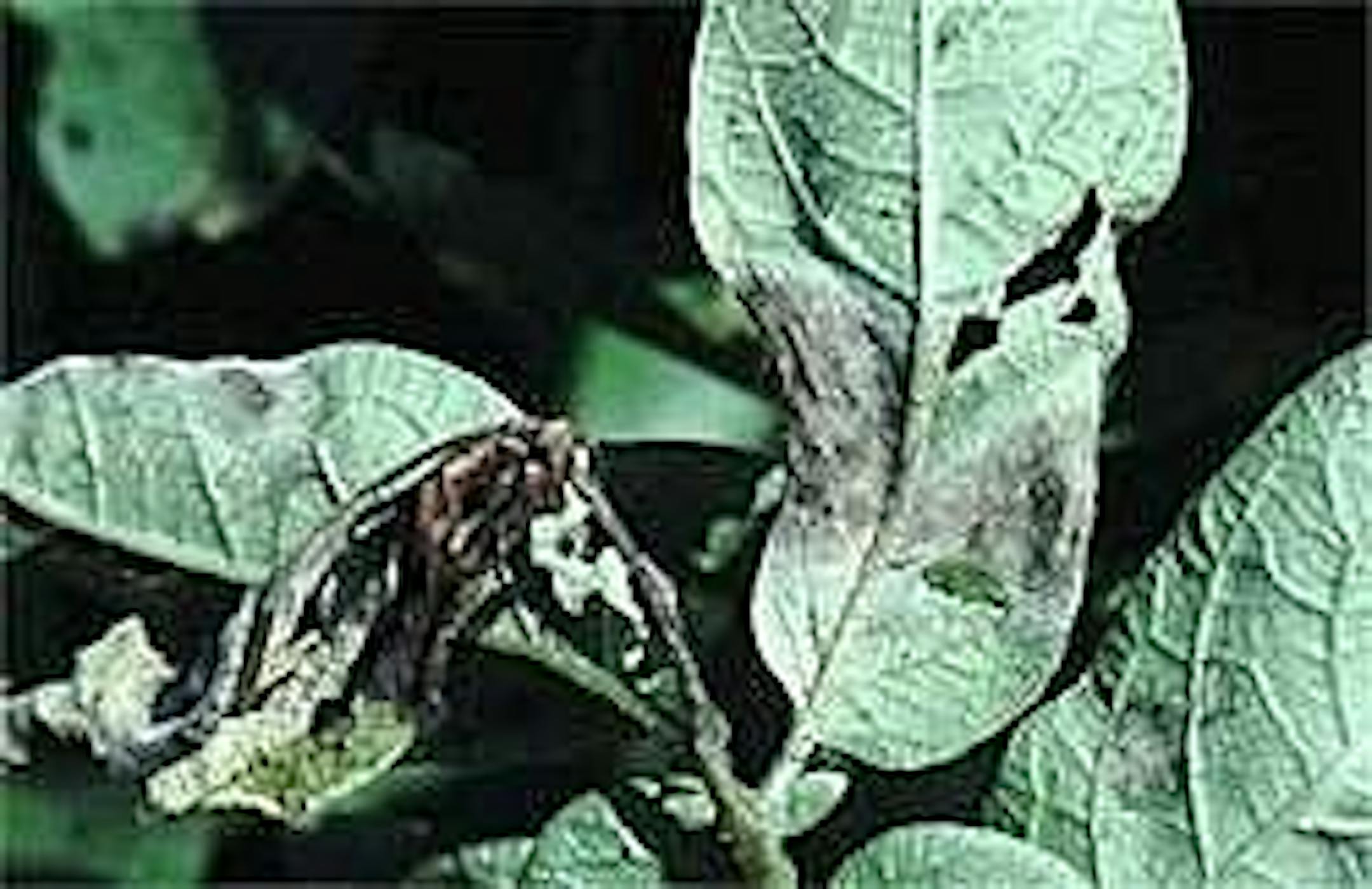
An infected plant with late blight. (Photo courtesyof Foster's Daily Democrat)New England has been hardest hit with Boston receiving nearly half of itsnormal July rainfall in the first two days of the month. Flooding and traveldisruptions occurred late last week throughout much of New England.New York City had its second wettest June on record with just over 10 inchesof rain falling.
There will be a brief break from the extensive unsettled weather across mostof New England on today, but spotty showers or storms could still impactnorthern parts of New Hampshire and Maine. More widespread showers and stormswill return to New York and New England early in the upcoming week as adisturbance pushes across the region.
Tomato plants have been removed from Home Depot, Wal-Mart and Kmart storesin all of New England and New York, the areas that have been the wettest. Othercases, although not as widespread as in New England, have been found in almostevery other East Coast state with the exception of Georgia.
If this becomes a widespread problem with large crops and negatively impactscommercial growers, it could force prices of tomatoes and other vegetables torise, so that growers can cover costs of treating the late blight.
The overall weather pattern in recent weeks also favors the formation ofmold and "black spot" fungus on certain flowers and vegetable plants. Thecloudy, cool, rainy weather is bad enough. However, when the rain falls duringthe evening, it fails to evaporate on the leaves, which in turn promotes thefungus. This is why the best time of the day to water is during the earlymorning when the weather is dry. This allows the moisture to get to the roots,while evaporating off the leaves before problems begin.


