
West St. Paul wins round 1 in Robert Street review

The city hopes to persuade the Met Council and two other panels that it should keep its federal grant to rebuild the thoroughfare.

November 24, 2012 at 12:52AM
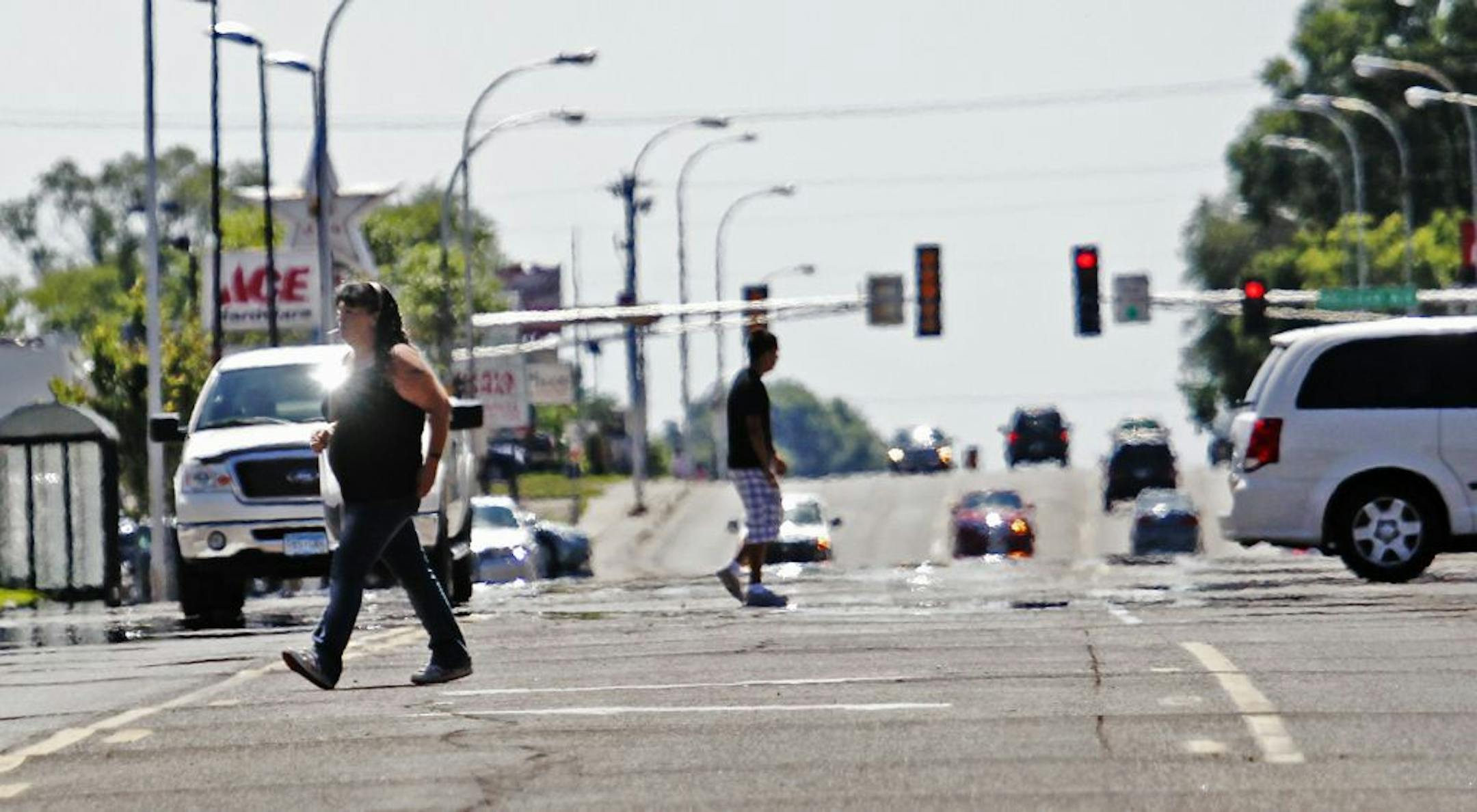
Two pedestrians take on traffic while crossing Robert Street near Butler Ave., July 26, 2011, in West St. Paul.
Businesses north of Butler Avenue on Robert Street in West St. Paul have opposed reconstruction plans because of the effect it could have on their trade. (Dml - Star Tribune/The Minnesota Star Tribune)

West St. Paul has won a critical point in its ongoing struggle to rebuild Robert Street, the community's main street.

To the city's relief, a transportation advisory panel of the Metropolitan Council recommended that West St. Paul be allowed to add expensive extras to the project and drop a planned bike-pedestrian bridge without losing its $7.3 million federal grant.

But for failing to deliver the bike bridge, it also recommended the city be docked $300,000 -- the original cost of the bridge.

It's an early indication that the city may be able to follow through on the project, planned to begin in 2014. But the matter must pass through two more advisory boards and be approved by the Met Council before it's settled.

Doubts about the project crept in this summer when the city was rocked by the news that the $10.4 million pricetag would nearly double to $19.4 million.

The price went up because advanced engineering found the road needed five inches of new pavement rather than two inches; new, instead of revamped, traffic signals; and new underground water pipes. At the same time, the estimated cost of the bike-pedestrian bridge near Wentworth Avenue was revised from $300,000 to $3 million.

The $7.3 million is the largest federal grant the city has ever received, but it would not be enough to cover the higher costs, and it threw the project into turmoil, raising questions about how the city could possibly close the funding gap.

If the city wins ultimate approval to remove the bridge, the cost would drop to $16 million.

The Metropolitan Council transportation staff has recommended against the city's request. "It felt like a new project to us," said Kevin Roggenbuck, coordinator of the Met Council's transportation advisory board. "A lot of things added to the cost were not exactly West St. Paul's choice," but the change is partly the city's fault for not investigating costs more fully in the beginning, he said.

But the staff recommendation goes out the window now that the committee has recommended that the city be allowed the amend the project, Roggenbuck said.

City Council members this month renewed their commitment to the project, but until the funding is clear, decided not to take on new issues, including the fact that noise walls would have to be offered in a few locations. The people affected would have the entire say about whether they would be built.

Robert, which functions as a commercial strip and commuter route, sends a river of traffic through the city. The goal is to make the street a better-looking entrance to the community while making it safer to drive and improving traffic flow by eliminating many of the 140 individual driveways that enter the road.

From the beginning, businesses north of Butler Avenue have opposed a key feature of the new road -- a central median that would stop the left-turning traffic that now crosses the street. The businesses insist that the median would cost them sales by keeping people from turning left into their parking lots.

Recently those opponents peppered council members with a new round of critical e-mails.

Disappointed by the continued resistance, council members wondered why the city has been unable to win over the businesses.

"We have lost the PR battle on this," said Council Member Jim Englin. "It is the right project at the right time. Something needs to be done with that road out there."

Laurie Blake • 952-746-3287

about the writer

about the writer

LAURIE BLAKE, Star Tribune

More from No Section

See More
FILE -- A rent deposit slot at an apartment complex in Tucker, Ga., on July 21, 2020. As an eviction crisis has seemed increasingly likely this summer, everyone in the housing market has made the same plea to Washington: Send money — lots of it — that would keep renters in their homes and landlords afloat. (Melissa Golden/The New York Times) ORG XMIT: XNYT58
Melissa Golden/The New York Times

It’s too soon to tell how much the immigration crackdown is to blame.