
West Nile, not Zika, is biggest mosquito-borne threat in Minnesota

Metro area's mosquito district will remain focused on viruses typically identified in Minnesota.

February 17, 2016 at 3:09AM
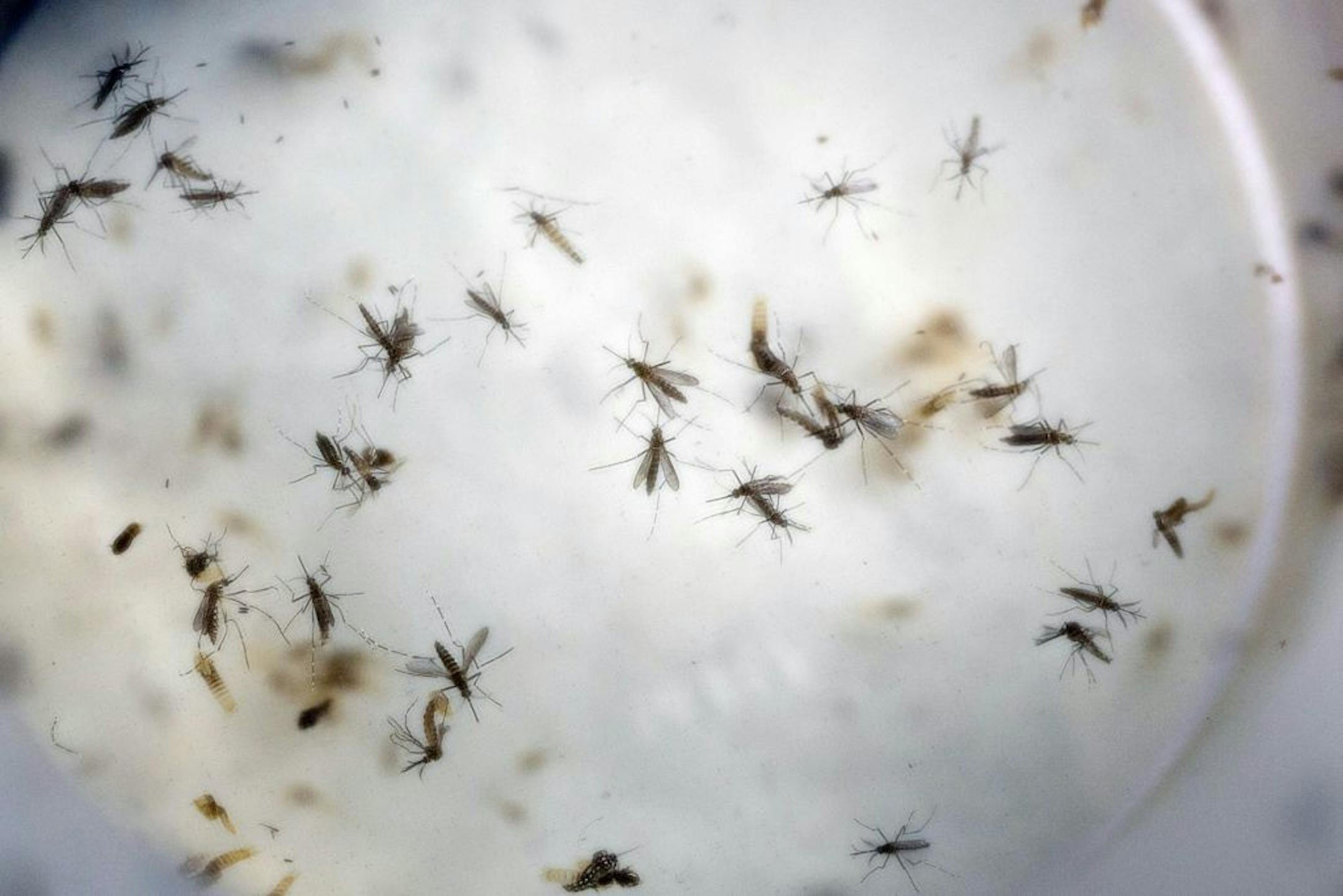
FILE - In this Thursday, Feb. 11, 2016, file photo, Aedes aegypti mosquitoes float in a mosquito cage at a laboratory in Cucuta, Colombia. The Aedes aegypti mosquito is the vector that transmits the Zika virus, and also dengue and chikunguna. The Food and Drug Administration is recommending U.S. blood banks refuse donations from people who have traveled to countries where the Zika virus is active in the prior four weeks, part of guidelines meant to protect the blood supply from the mosquito-born
FILE - In this Thursday, Feb. 11, 2016, file photo, Aedes aegypti mosquitoes float in a mosquito cage at a laboratory in Cucuta, Colombia. The Aedes aegypti mosquito is the vector that transmits the Zika virus but doesn’t inhabit Minnesota. (Associated Press/The Minnesota Star Tribune)

The mosquito species known to spread Zika virus doesn't inhabit Minnesota, so the real concern this summer will be the West Nile virus and other mosquito-borne illnesses already identified in the state, the head of the Metropolitan Mosquito Control District said Tuesday.

Weeks after the first Zika virus case in Minnesota was diagnosed in Anoka County, Executive Director Stephen Manweiler told the Anoka County Board that the best chance for Minnesotans to pick up the virus is by going somewhere else.

"The main vector does not exist in Minnesota. Traveling is the main risk," Manweiler said.

In the Anoka County case, a female patient in her 60s contracted the virus while traveling in Honduras. She is expected to make a full recovery, according to the Minnesota Department of Health.

The U.S. Centers for Disease Control recommended last month that pregnant women avoid traveling to Zika-affected areas, including parts of Central and South America, after the virus was linked to microcephaly, a severe birth defect where a baby's head is smaller than normal.

"The disease is horrifying because of the possible birth defects," said Mike McLean, a spokesman for the Mosquito Control District. "It does cause a lot of concern, especially this time of year as people are desperate to go somewhere warmer. … But most people who get the Zika virus won't know they have it. It's usually mild, flu-like symptoms."

Manweiler said his agency, a partnership of seven metro-area counties, will stay focused on illnesses known to infect Minnesotans, including West Nile and La Crosse encephalitis. Last year, there were about 2,000 cases of West Nile virus nationwide, including six in Minnesota; that number was low, Manweiler said. Nationally, 111 people died of the virus.

West Nile virus was detected in Minnesota in 2002, and it has caused death in a small number of cases. Annual reported cases have varied dramatically, from two in 2011 to 148 in 2003, according to the state Health Department.

The Mosquito Control District Board, made up of 18 commissioners from the seven counties, has an $18.8 million annual budget. It surveys and controls mosquitoes that transmit human diseases. Its scientists also monitor deer tick populations, which transmit Lyme disease.

Shannon Prather • 612-673-4804

about the writer

about the writer

Shannon Prather

Reporter

Shannon Prather covers Ramsey County for the Star Tribune. Previously, she covered philanthropy and nonprofits. Prather has two decades of experience reporting for newspapers in Minnesota, California, Idaho, Wisconsin and North Dakota. She has covered a variety of topics including the legal system, law enforcement, education, municipal government and slice-of-life community news.

See Moreicon

More from No Section

See More
FILE -- A rent deposit slot at an apartment complex in Tucker, Ga., on July 21, 2020. As an eviction crisis has seemed increasingly likely this summer, everyone in the housing market has made the same plea to Washington: Send money — lots of it — that would keep renters in their homes and landlords afloat. (Melissa Golden/The New York Times) ORG XMIT: XNYT58
Melissa Golden/The New York Times

It’s too soon to tell how much the immigration crackdown is to blame.