

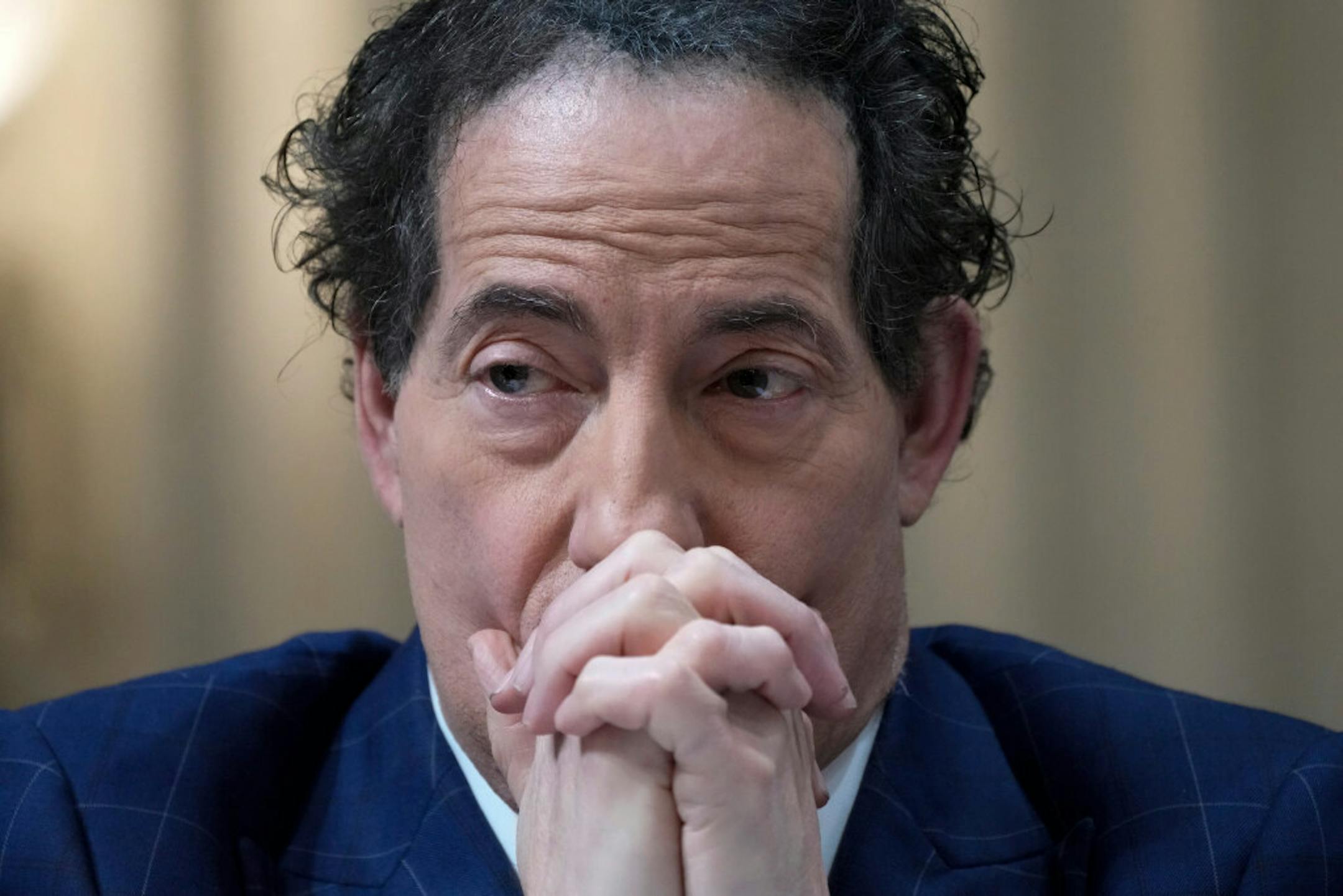
One Friday last month, Jamie Raskin, a Democratic member of Congress from Maryland, spent a chunk of his day in court securing a protective order.
It was not his first. Raskin, who played a leading role in Donald Trump’s second impeachment hearing, said he received about 50 menacing calls, emails and letters every month that are turned over to the Capitol Police.
His latest court visit was prompted by a man who showed up at his house and screamed in his face about the COVID-19 vaccine, Trump’s impeachment and gender-related surgeries. Nearly two years earlier, the same man, with his 3-year-old son in his arms, had yelled profanities at Raskin at a July 4 parade, according to a police report.
“I told the judge I don’t care about him getting jail time. He just needs some parenting lessons,” Raskin said.
Raskin was far from the only government official staring down the uglier side of public service in the United States in recent weeks. Since late March, bomb threats closed libraries in Durham, North Carolina; Reading, Massachusetts; and Lancaster, Pennsylvania, and suspended operations at a courthouse in Franklin County, Pennsylvania. In Bakersfield, California, an activist protesting the war in the Gaza Strip was arrested after telling City Council members: “We’ll see you at your house. We’ll murder you.”
A Florida man was sentenced to 14 months in prison for leaving a voicemail message promising to “come kill” Chief Justice John Roberts.
And Trump, the presumptive Republican presidential nominee, refused to rule out violence if he were to lose in November. “It always depends on the fairness of the election,” he said in an interview late last month.
This was just a typical month in American public life, where a steady undercurrent of violence and physical risk has become a new normal. From City Hall to Congress, public officials increasingly describe threats and harassment as a routine part of their jobs. Often masked by online anonymity and propelled by extreme political views, the barrage of menace has changed how public officials do their work, terrified their families and driven some from public life altogether.


