

Alumni, students, faculty and administrators at the University of Minnesota can take considerable pride in the mission statement that guides the institution.
The university is "dedicated to the belief that all people are enriched by understanding" and it "strives to sustain an open exchange of ideas" in an "atmosphere of mutual respect, free from racism, sexism, and other forms of prejudice and intolerance."
But at least some students and faculty appear to flinch from that noble mission if the ideas fail to fit a certain political philosophy. In that case, throw mutual respect out the window and cue the intolerance.
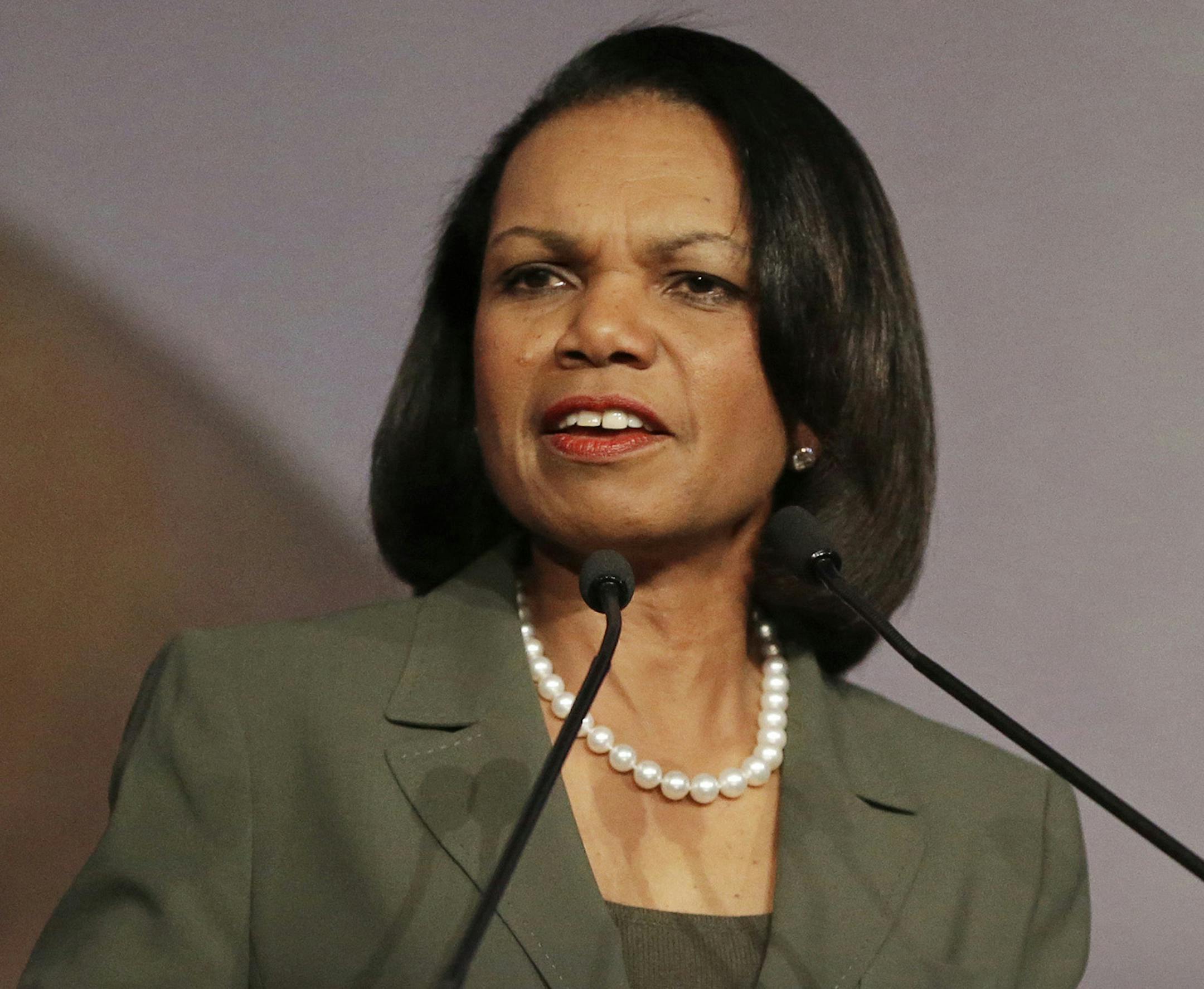
It's been tempting to ignore the campus kerfuffle over today's appearance by former Secretary of State Condoleezza Rice, who was invited to speak by the Humphrey School of Public Affairs. Two developments in the ongoing protest, however, deserve comment.
The first is the less worrisome. Students for a Democratic Society (SDS), which failed in its attempt to pressure the U to rescind the invitation, informed university police in a letter that a "truly dangerous" person was coming to campus. The letter goes on to give a physical description of Rice and says, "There is probable cause to believe Dr. Rice has been involved in massive criminal activity."
The missive likely achieved its objective — drawing modest news media attention — but it can otherwise be written off as a harmless, albeit creative, publicity stunt.
It's more troubling to read the letter of protest signed by 182 faculty members, stating that Rice has every right to visit campus and "engage in an open exchange of ideas." The faculty members have their own definition of "open," however, and they find Rice, the first African-American woman to serve as secretary of state, a poor choice to discuss civil rights as part of the Humphrey School's Distinguished Carlson Lecture Series marking the 50th anniversary year of the Civil Rights Act of 1964.
"While Dr. Rice is an accomplished African-American woman, the advancement of civil rights — the theme of this year's lecture series — is not central to her legacy. Indeed, as a leading national security official during the entirety of the Bush administration, she bears responsibility for substantial violations of civil liberties and civil rights that were carried out in the name of prosecuting the War on Terror."


