

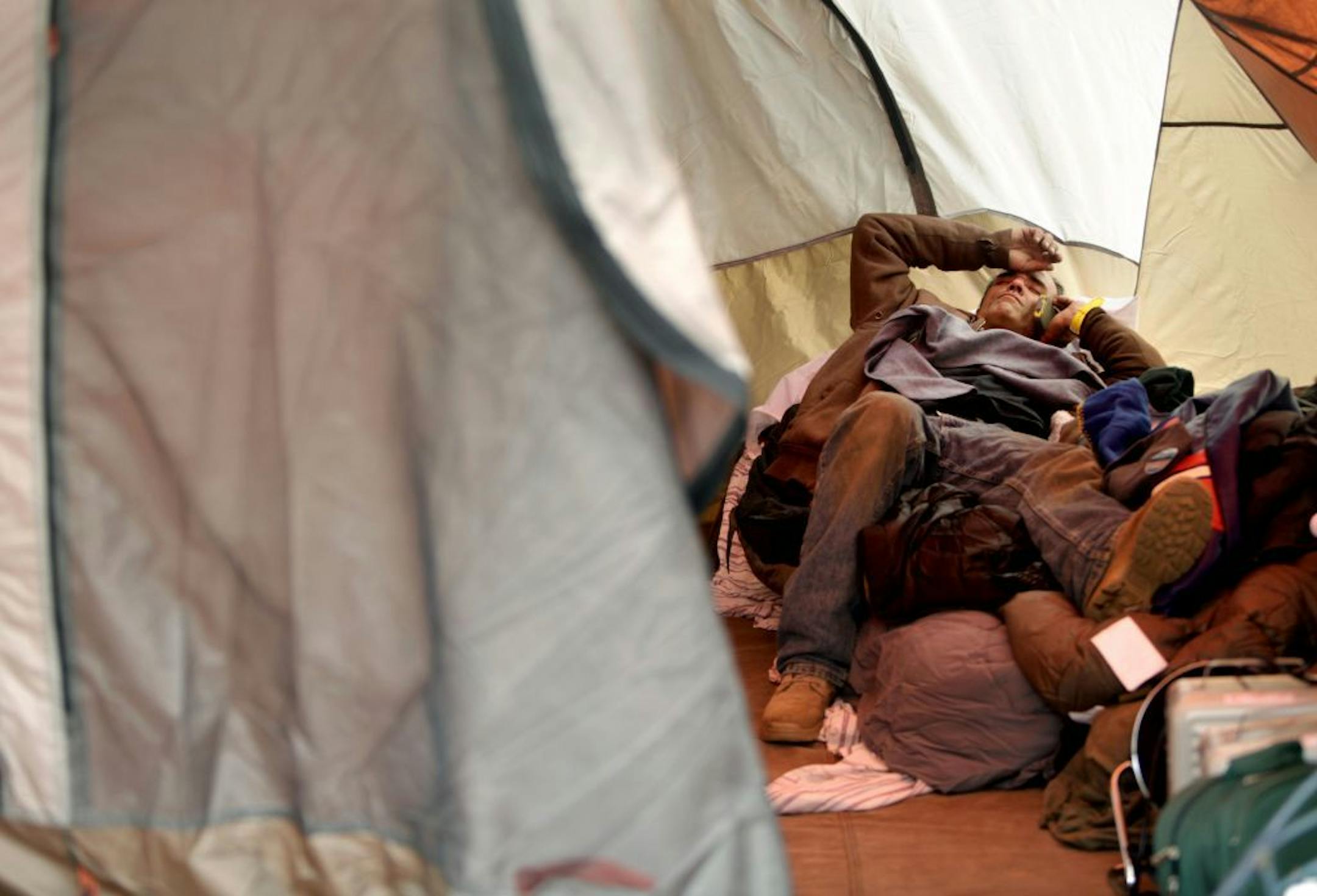
NEW YORK - The image of his brother trapped in a car with water rising to his neck, his eyes silently pleading for help, is part of a recurring nightmare that wakes Anthony Gatti up, screaming, at night.
Gatti hauled his brother out of the car just in time, saving his life at the height of Superstorm Sandy. The two men rode out the hurricane in their childhood Staten Island home and survived. But weeks afterward, Gatti still hasn't moved on.
Now he's living in a tent in the backyard, burning pieces of furniture as firewood, refusing to leave until the place is demolished. Day and night, he is haunted by memories of the storm.
"My mind don't let me get past the fact that I can't get him out of the car. And I know I did," Gatti said, squeezing his eyes tightly shut at the memory. "But my mind don't let me think that. My mind tells me I couldn't save him, he dies."
As communities battered by Sandy clear away the physical wreckage, a new crisis is emerging: the mental and emotional trauma that storm victims, including children, have endured. The extent of the problem is difficult to measure, as many people are too anxious to even leave their homes, wracked by fears of wind and water and parting from their loved ones. Others are too busy dealing with losses of property and livelihood to deal with their grief.
To tackle the problem, government officials are dispatching more than 1,000 crisis counselors to the worst-hit areas in New York and New Jersey, helping victims begin the long work of repairing Sandy's emotional damage.
Counselors are assuring people that anxiety and insomnia are natural after a disaster. But when the trauma starts to interfere with daily life, it's probably time to seek help. And in a pattern that played out in New Orleans and the Gulf Coast after Hurricane Katrina in 2005, symptoms may only get worse as victims transition from the initial shock to the disillusionment phase of the recovery.
"Folks are starting to realize that they may be in this for the long haul," said Eric Hierholzer, a commander in the U.S. Public Health Service. "And things aren't necessarily going to get better tomorrow or next week."


