
'Wedding Plan' sticks to a familiar rom-com blueprint

REVIEW: This story about the frantic search for Mr. Right is an old-fashioned rom-com from Israel.

May 25, 2017 at 5:31PM
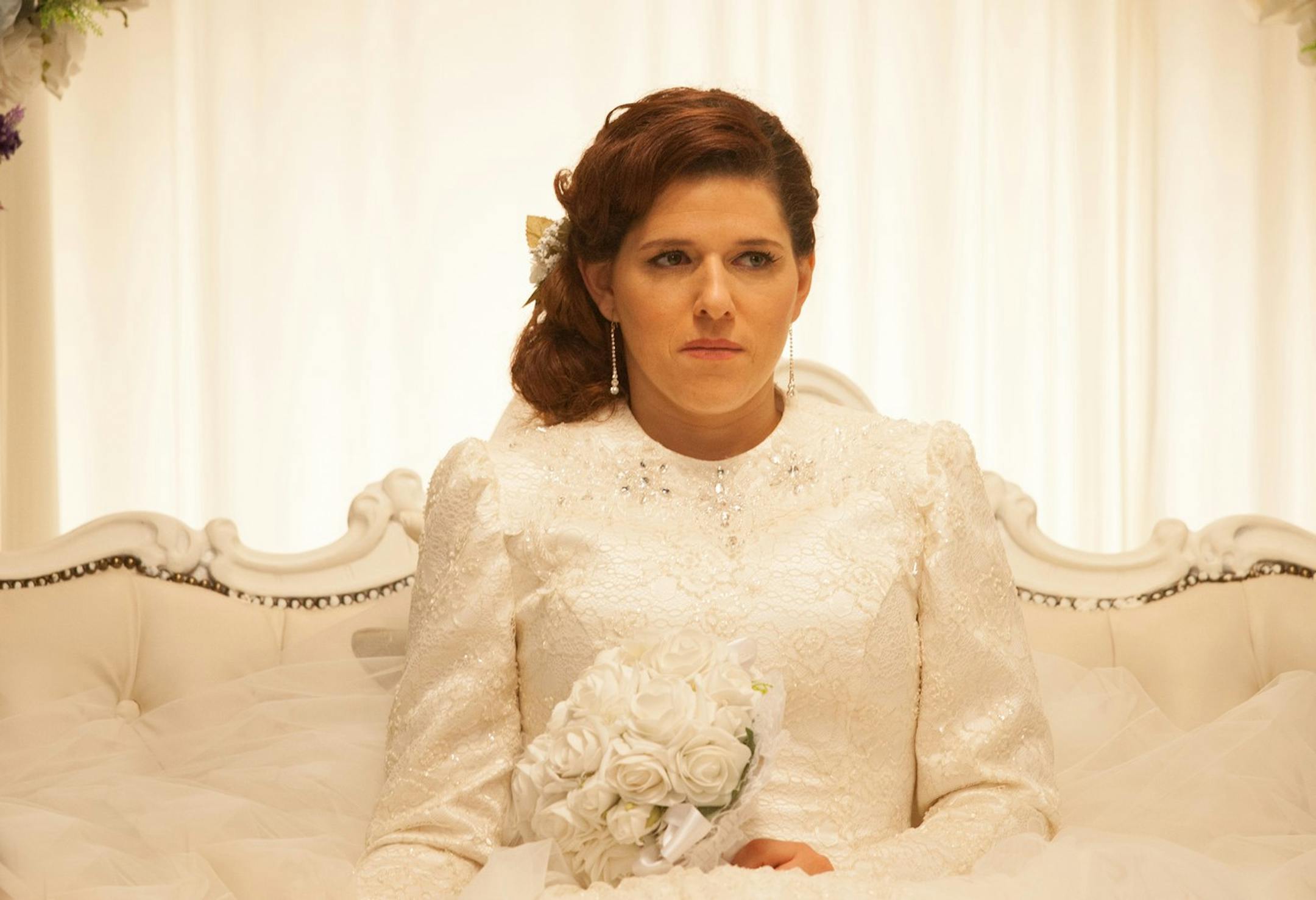
Noa Koler is a jilted bride in “The Wedding Plan.”
Noa Koler is a jilted bride in “The Wedding Plan.” (Randy Salas/The Minnesota Star Tribune)

"The Wedding Plan," an Israeli comedy, contains an Orthodox Jewish protagonist and sensibility, but you needn't be an Orthodox Jew, or religious at all, to enjoy writer/director Rama Burshtein's emotionally genuine, serio-kooky tale about a woman's extreme strategy for finding Mr. Right.

Like Burshtein's 2013 debut film, "Filling the Void," this more humorous story reflects the filmmaker's belief in the power of faith and the institution of marriage, and it features a devout woman faced with choosing a husband.

It's an old-fashioned romantic comedy that adheres to that recipe while benefiting from novelty appeal, a compelling lead performance and a cute, winningly presented premise.

Michal (Noa Koler) is a 32-year-old ultra-Orthodox woman who, like many rom-com heroines, is deserving, desirable, slightly offbeat — she runs a petting zoo — and unsuccessful in love. Having been seeking a husband for a decade in a culture where women are expected to marry before exiting their 20s, Michal finally has a fiancé, Gidi (Erez Drigues).

A month before the wedding, however, Gidi dumps Michal, who, determined to become a married woman, instructs the befuddled wedding-hall owner (Amos Tamam) to go ahead with the ceremony. If she has faith, God will take care of the missing-groom problem, Michal believes.

Nonetheless, her mother (Irit Sheleg), sister (Dafi Alpern) and best friend (Ronny Merhavi) worry.

Michal's mission includes a string of quirky blind dates. No groom emerges. On a religious pilgrimage in Ukraine, she meets a pop star (Oz Zehavi). Compatibility problems occur.

With the clock ticking, will a groom materialize?

The movie has its frustrations. Limited by the rom-com formula, the story is largely predictable.

Burshtein, who herself holds Orthodox beliefs, doesn't seem troubled by the social expectations that make Michal feel that she needs a husband and children to be happy and whole.

Yet Burshtein has infused a down-to-earth tone with some "nutty energy" (a quality a scared-off suitor attributes to Michal) and produced an amiably loopy slice of Orthodox Jewish life and love, complete with matchmakers and Hasidic sidelocks.

The movie is also a faith fable, whose ambiguous or perhaps fantastical final moments won't turn skeptics into believers but will prompt a good feeling regardless.

Burshtein's smart screenplay doesn't let the plot's loony aspects upstage the emotional elements, and thanks largely to Koler's dramatic skills, the results are rewarding.

As portrayed by Koler, who received an Israeli Oscar for her performance, Michal is an emotionally open presence, embraceable and challenging. Her surface confidence cannot mask her insecurities, which sometimes sabotage her chances for happiness.

With her headstrong nature and high standards, she suggests an ultra-Orthodox Elizabeth Bennet. But she's foremost her own distinctive brand of character, and we're glad to have made her acquaintance.

about the writer

about the writer

Anita Katz, San Francisco Examiner

More from No Section

See More
FILE -- A rent deposit slot at an apartment complex in Tucker, Ga., on July 21, 2020. As an eviction crisis has seemed increasingly likely this summer, everyone in the housing market has made the same plea to Washington: Send money — lots of it — that would keep renters in their homes and landlords afloat. (Melissa Golden/The New York Times) ORG XMIT: XNYT58
Melissa Golden/The New York Times

It’s too soon to tell how much the immigration crackdown is to blame.