

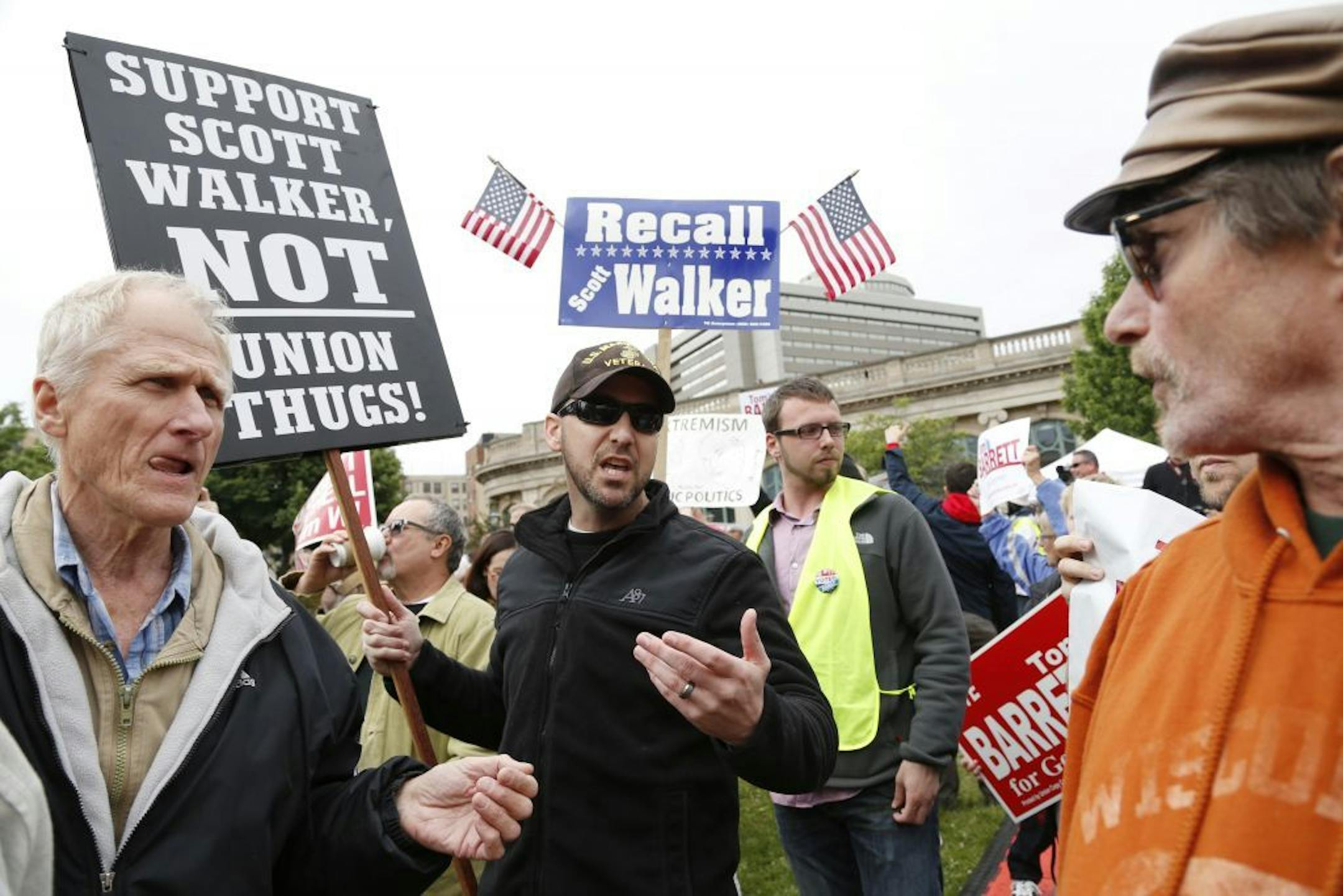
RIVER FALLS, WIS. - From the stools at Mel's Mid-Towner Sports Bar, located on the western edge of a state with a national rep for cheese, football, Harleys and beer, it sometimes looks like Wisconsin has gone a little wacky, politically speaking.
Weary Wisconsinites are unplugging phones to block the flood of pitches on who to vote for in Tuesday's historic recall. Families with opposing views have agreed not to speak about Gov. you-know-who's future. TV ads dominate the Wisconsin airwaves and are even leaking into the Twin Cities, though the number of Badger State voters undecided on the subject of Scott Walker appears to match the number of snowdrifts currently blocking I-94.
Mel's patron Fred Marnach, who leans Democratic and fears billionaires are buying his state, has lost count of the trips he's made to the polls for recall votes. Wisconsin, he says, is suffering from a serious case of "election fatigue."
One stool over, Scott Green, who leans the other way politically, believes the recall is a wasteful and harmful exercise for a governor barely 18 months into his term.
"He can't do his job," Green said, referring to Walker. "He has to campaign to save his job. It's too bad. Wisconsin needs to look at its law."
Since Walker took office in January 2010 and immediately unveiled a plan to greatly weaken most public employee unions as part of a budget-balancing plan, the state and its famed dairylands have become the backdrop for a nonstop, nationalized, $100 million campaign that may be a harbinger for a larger business vs. labor clash coming in November.
Then there's Wisconsin's recall statute itself. An artifact of the Progressive Era of the 1920s that's etched into the state's constitution, it allows angry citizens to force elected officials into a recall election for any reason, or for no reason at all, if the citizens can gather enough signatures. It is either a vibrant exercise in direct democracy or a recipe for the ultimate endless campaign.
Some factoids stick out:


