

The liberal hope for the 2020 presidential election was a decisive repudiation of Donald Trump and the Republican Party. This is no longer on the table. A Joe Biden win, if it happens, will be as narrow an Electoral College win as Trump's was in 2016. Biden won the national popular vote — which matters for popular legitimacy, even if it doesn't weigh on the outcome — but Trump outperformed his job approval, winning more total votes than any Republican presidential nominee in history.
Despite everything, the president expanded his support, most likely saving the Republican Senate majority in the process. A Trump loss is still possible — perhaps even probable, since Biden holds a lead in states totaling 270 electoral votes — but there's every reason to think Trumpism will survive as a viable strategy for winning national elections.
And what is Trumpism? It is a performance, or rather, a series of performances.
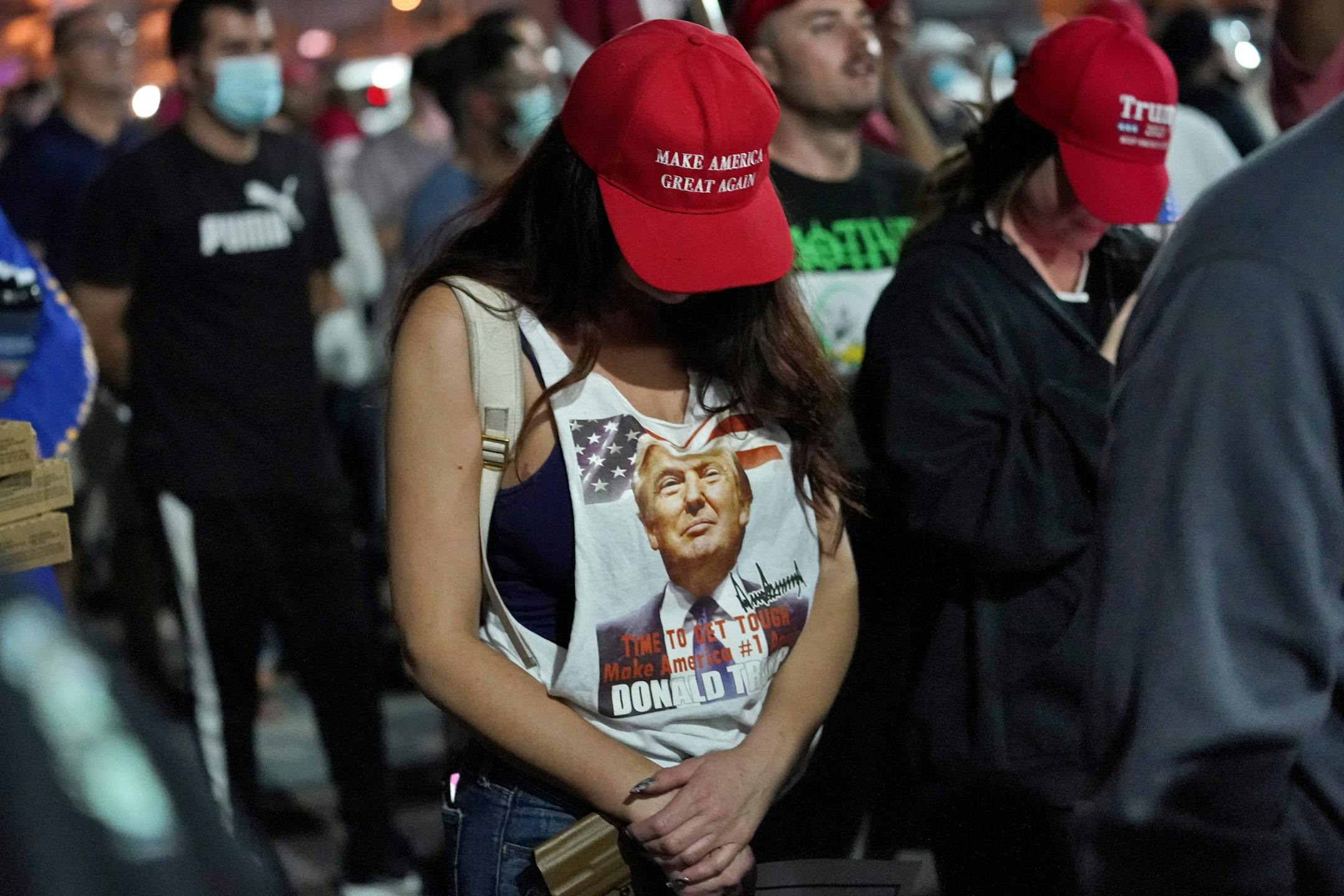
It is a performance of nationalism, one that triangulates between open chauvinism in favor of the dominant ethnic group and narrow appeals to inclusion, with the promise of material gain for anyone who joins his coalition. It is a performance, on the same score, of success, projecting an image of wealth and power and urging the public to embrace it as its own — a version of "The Apprentice" in which the contestants are the American people. It is also the performance of an aggressive and aggrieved masculinity centered on the bullying and domination of others.
Even without policy to match the populist persona — the Trump administration has been as generous to the wealthy and connected as it has been stingy with the poor and the working class — Trumpism appeals to tens of millions of voters, from the large majority of white Americans to many people in traditionally Democratic constituencies.
That, if anything, is the surprise of this election. Although it is still too early to make any definitive statement about the shape of the electorate (broad white support for Trump notwithstanding), it is clear that the president made modest inroads with Black and Hispanic voters, especially men. This is most apparent in the states of Florida, Georgia and Texas, where Trump outperformed his 2016 totals in several areas where Hispanic voters make up a majority.
We don't yet know why Trump made those gains — although the aforementioned performances, which figured prominently in his outreach to those groups, may have something to do with it — but this shift is a useful reminder that politics does not move along a linear path. For all of our data, the political world is still a fundamentally unpredictable place.
A decade ago, for example, Democrats believed that demographic change — the shift from a "majority white" country to a "majority minority" one — would give the party an almost unbreakable lock on national politics; that a growing population of Asian and Hispanic Americans would inevitably redound to liberal benefit. At the time, I wrote that this was unlikely, that while it was a seductive theory, there was not much evidence to support the vision of an enduring Democratic majority. Racial and ethnic identity, I argued, were too fluid, and there was no guarantee that future members of those groups would think of themselves as "minorities" in the way that has been historically true of Black Americans. Changing conditions — greater assimilation and upward mobility — could make them as volatile in partisan politics as European ethnic groups were in the 20th century.


