

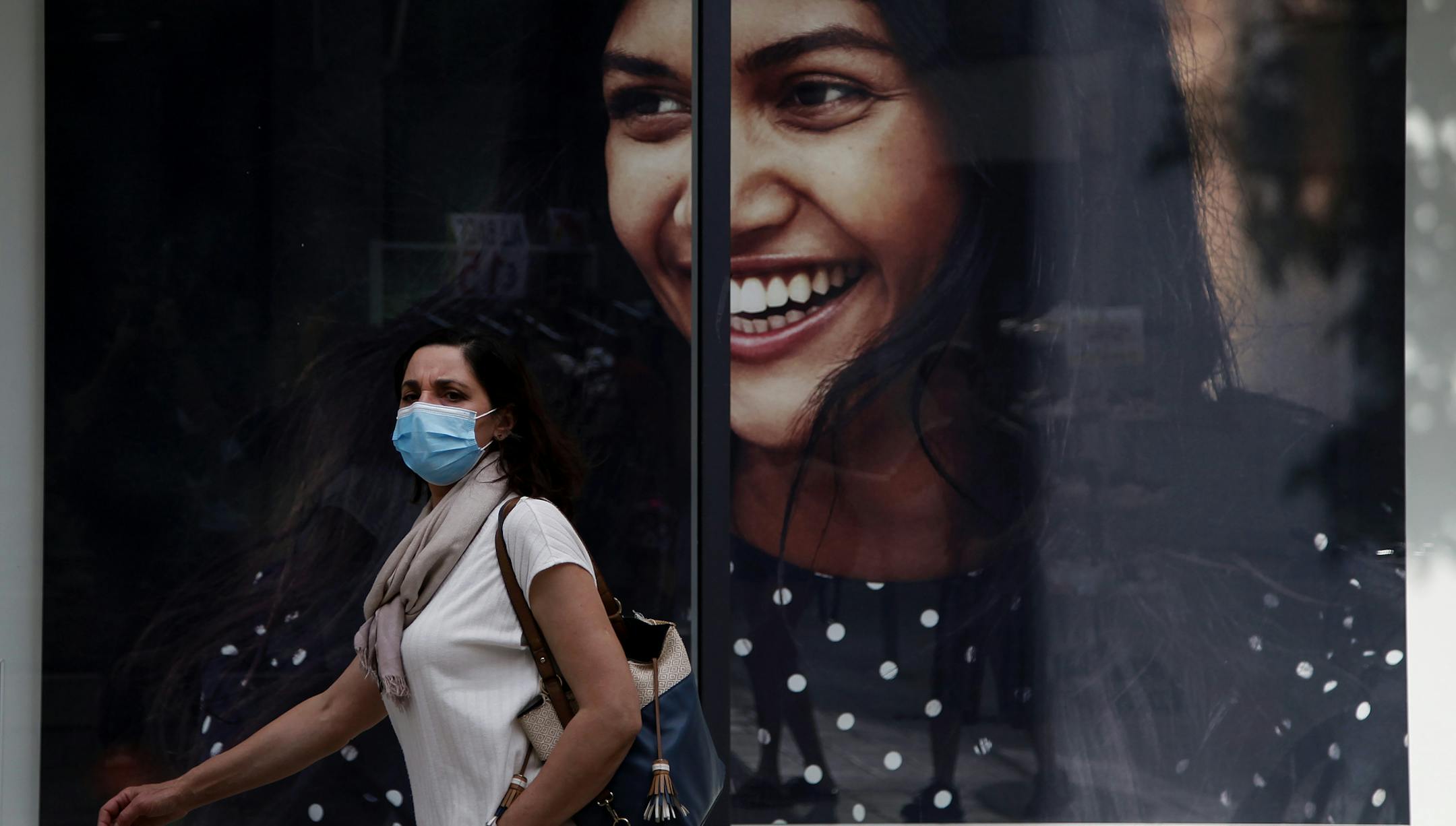
It's amazing how quickly social norms have changed. Just a few weeks ago, people wearing masks were few, far between and subject to dirty looks and whispered asides (Why didn't you donate that? Don't you know it doesn't really work?). Now, in many states, wearing masks is the law.
And millions of people are listening. The home mask-making industry is one of the few vibrant corners of the economy right now, as is — unexpectedly — the bandanna sphere. If you step outside right now (and please only do so if you need to!) you will see a sea of masks. We are doing it.
But we don't really like it.
The mask has been portrayed by protesters as a symbol of government oppression, rather than lifesaving gear. But there are also more practical complaints: It's harder to breathe with a mask on. Glasses fog up. Noses get itchy. Ears get pulled. Voices are muffled.
But, most significantly, we can't smile at each other, detect any facial expressions or even see each other's faces, giving even brief, socially distanced social encounters a cold, eerie cast.
Not being able to see other people's faces challenges a crucial part of how human beings communicate. Rooted in the ancient practice of physiognomy, which links external facial features to internal character, people have long built relationships and assessed others based on how they look. The long history of physiognomical practice — which saw its height in the 19th century but lingers through today — demonstrates the tremendous stock we place in faces as an index to character, and helps explain why we are so uncomfortable in masks today, even if they are a temporary necessity.
Dating from the 16th century, the term "barefaced" described someone who was beardless or maskless and thus open, unconcealed and honest. Telling a "barefaced lie" through the 19th century was a particularly egregious offense, being as it was so shameless and unconcealed, paving the way for today's equally impudent "boldfaced lie."
In 1802, the novelist Maria Edgeworth wrote about those who "call a good countenance the best letter of recommendation," speaking to the mistrust of those who covered, concealed or in other ways manipulated their faces.


