

I have a complaint about our president. Mine differs from the complaints from kooks convinced that he's a Kenyan-conceived commie committed to conspiracy to convert our country to a caliphate.
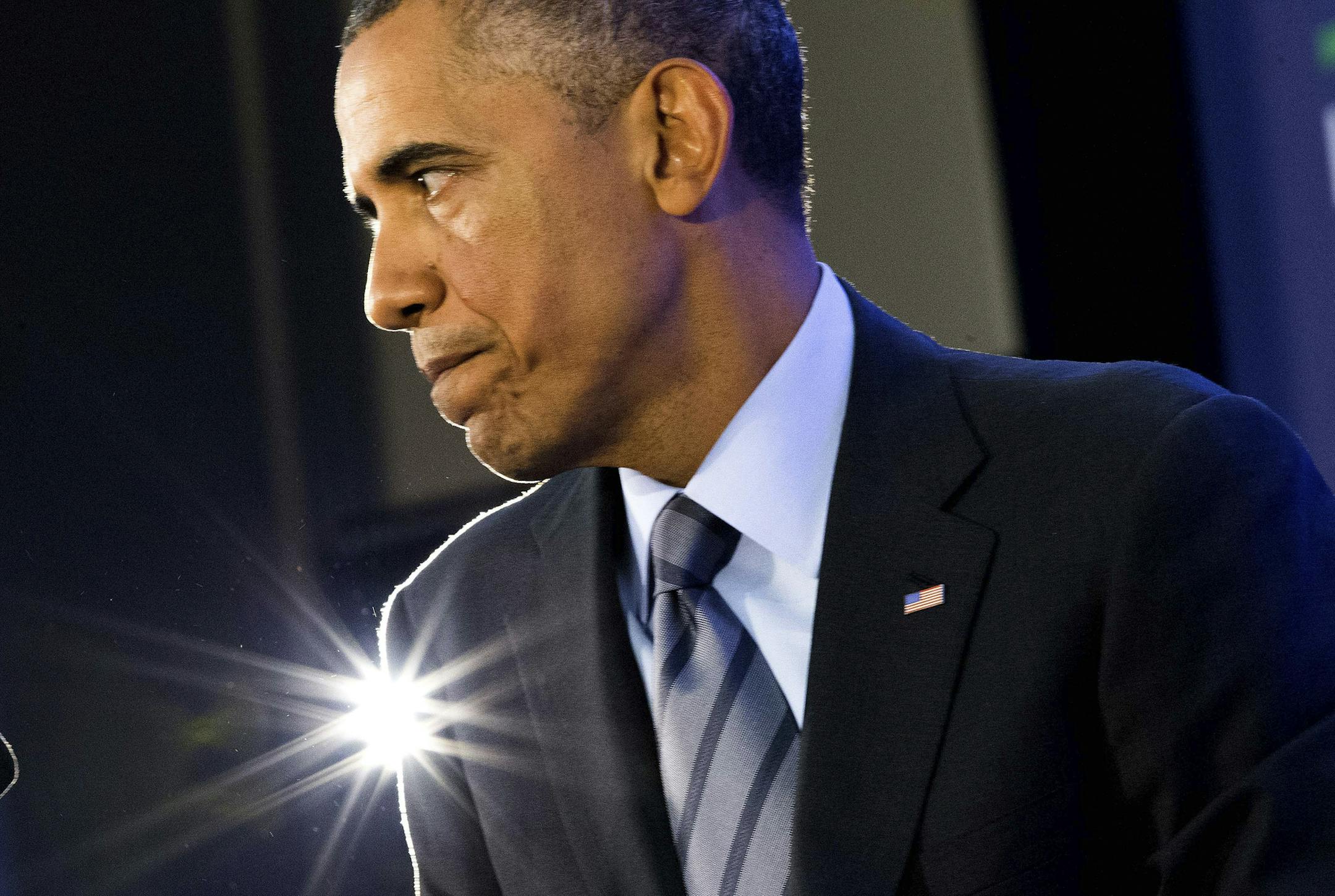
It's about how my president talks to me. More and more, it's caught my eye that Barack Obama often doesn't catch my eye. I like people who look at me when talking to me, even when doing so through the miracle of TV and especially when talking about important stuff like war.
The Obama I saw on the campaign trail in 2008 was one of the best public speakers I'd ever seen, right up there with Bill Clinton, Ann Richards and Henry Cisneros, perhaps the best three I've seen. Somewhere between the 2008 campaign trail and now Obama became Teleprompter Man, dependent on the clear glass panes that tell him what to say.
This hit a disturbing level as I watched Obama's Aug. 7 statement about his decision to authorize airstrikes in Iraq. As every president says, there's no decision they take more seriously than putting our troops in harm's way. All Americans feel the same way about that. That's why we want straight talk about that topic.
And that's why presidents should look straight at us when they discuss such decisions. Obama never did that on Aug. 7.
In eight minutes and 37 seconds, he never once looked directly into the camera and, by extension, at me and at you. Instead, his head swiveled from the teleprompter to his left to the teleprompter to his right. Having too much time on my hands, I went back and counted. The unofficial count I came up with showed he looked to his left 71 times and to his right 71 times.
He looked to his right, not at us, when he said the words I especially expect a president to say into my eyes: "My fellow Americans … ."
To me, teleprompters work well when a president — or anybody — talks to a large crowd. Speakers can appear to be looking at audience members to the left and right when they actually are just reading text from the device. I get it, though I still appreciate folks who can speak from their heart and brain rather than a text that somebody else might have written for them. Could it be that extemporaneous speaking has become too risky for our leaders?


