

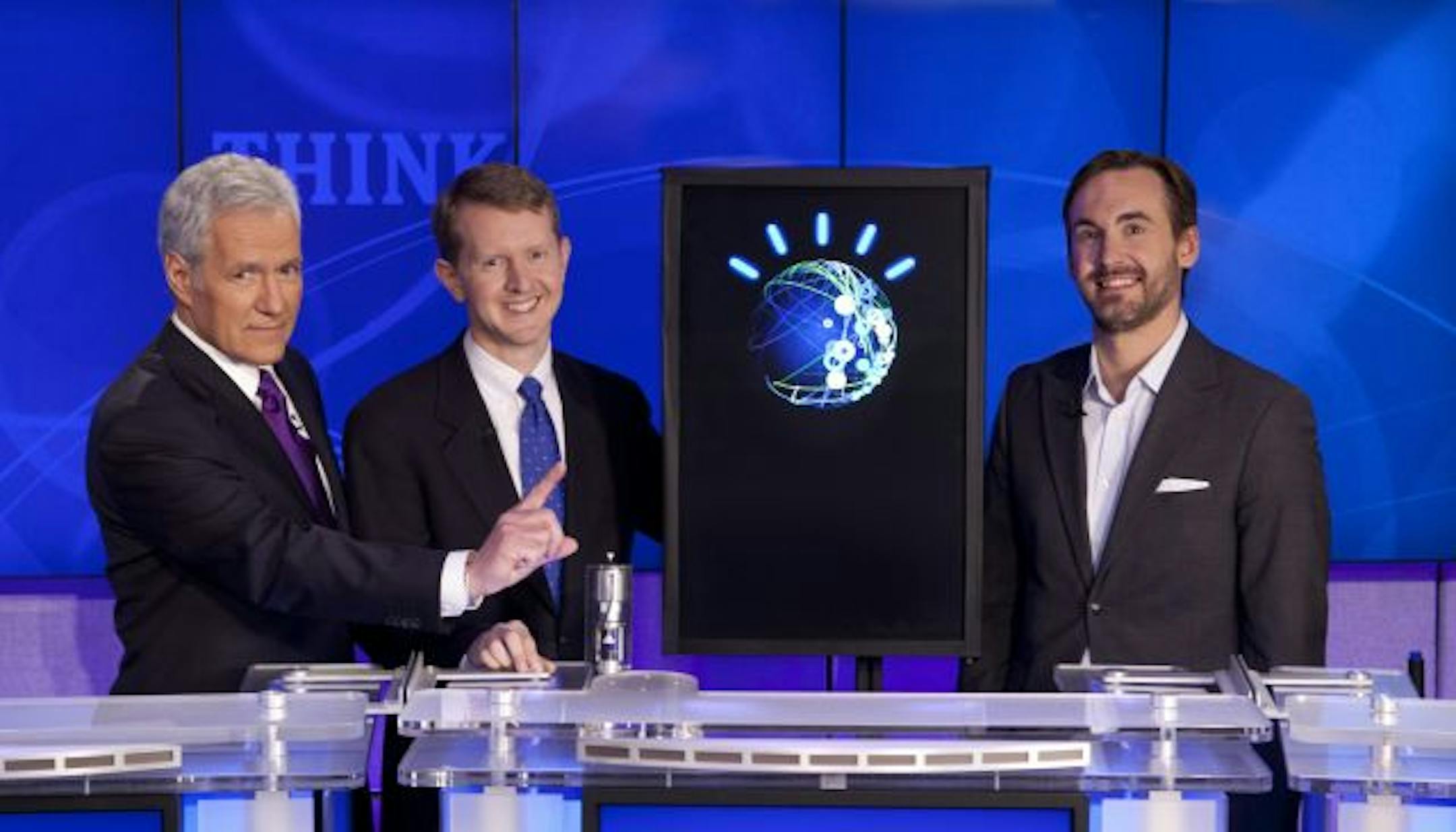
Winning "Jeopardy!" may be just the beginning for International Business Machine Corp.'s Watson computer, which features technological advances that might help the government respond to pandemics and make airplanes safer.
"Every single time I've had a government customer see the computer in action," that person comes up with "a million examples" of how Watson's technology can be adapted to solve the government's data-processing problems, said David McQueeney, vice president of IBM Research.
The machine that won "Jeopardy!" last week had to be able to answer questions in less than three seconds to compete with Ken Jennings and Brad Rutter, the show's most successful contestants. After two matches, Watson bested the champs with winnings of $77,147, compared with Jennings' $24,000 and Rutter's $21,600.
Watson's capability would be useful at agencies that handle "vast volumes" of information, said David Shepler, program manager for the IBM Jeopardy! Challenge. For the government, "any improvement in analytics is going to help you in terms of your IT load," he said.
Watson's performance marked an advance for IBM in the field of artificial intelligence. In an e-mail circulated to IBM employees last week that was obtained by Bloomberg News, IBM Chief Executive Officer Sam Palmisano praised what he called an "extraordinary achievement."
"As exciting as Watson's victory is, we didn't invest four years and millions of dollars simply to win a television game," he said. "We did so because this remarkable system represents the new frontier of information science."
Understanding language
The Armonk, N.Y.-based company sought to develop a machine capable of understanding natural human language. The technology isn't like a search engine, Shepler said. Instead of returning results listed by the likelihood of containing the desired answer, Watson just gives you an answer, he said.

