
Waterville sandbags; state braces for more rain

Around Minnesota, the floodwater is starting to recede, but fresh storms are rolling in for the weekend.

June 28, 2014 at 12:02AM
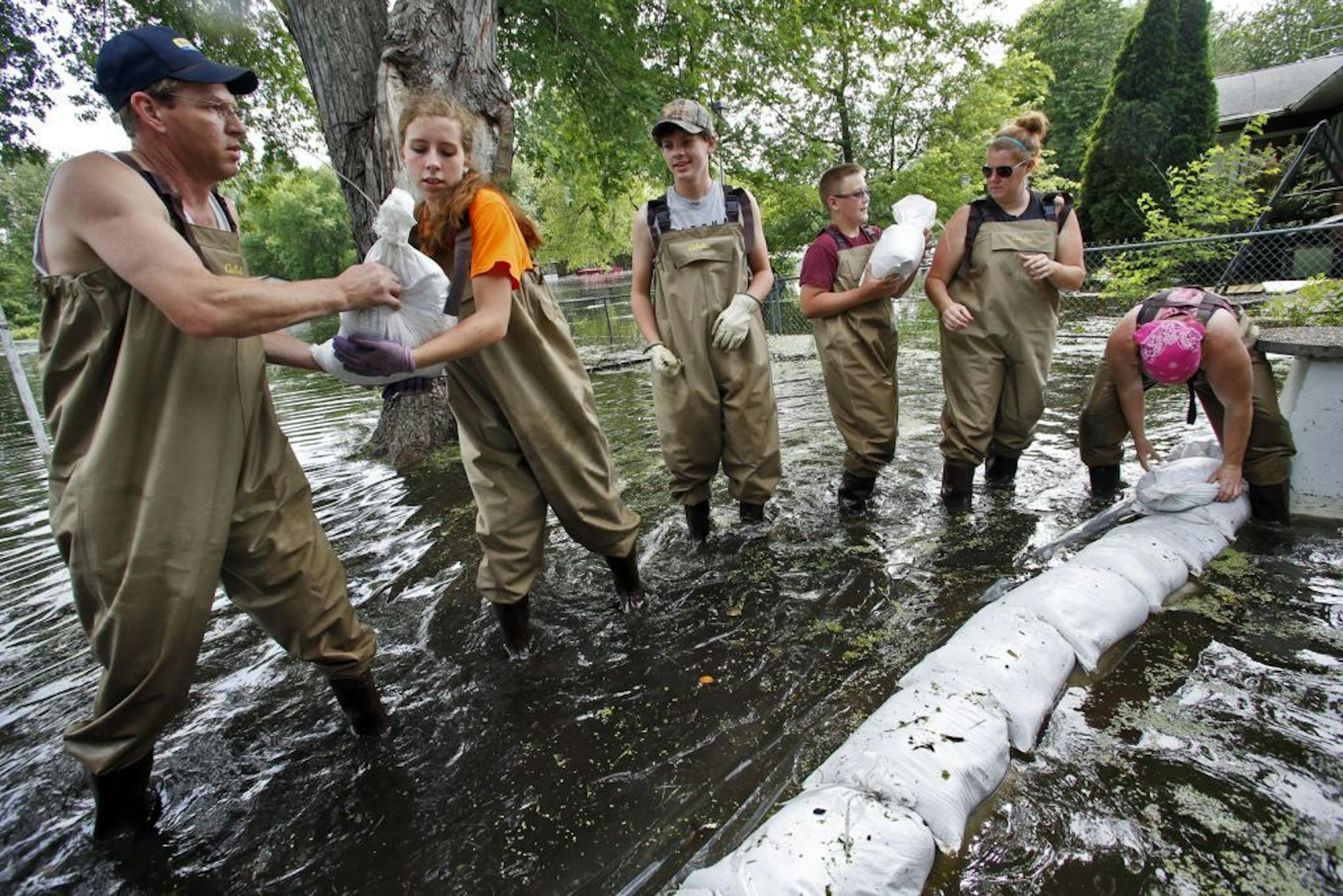
Waterville residents sandbag homes along the shoreline of Lake Tetonka where homes are being flooded as a result of recent heavy rains.
Waterville residents sandbag homes along the shoreline of Lake Tetonka where homes are being flooded as a result of recent heavy rains. (Dml - Star Tribune/The Minnesota Star Tribune)

In waterlogged Waterville, residents are filling thousands of new sandbags, grimly preparing for more rain.

"We've filled 2,500 sandbags in the past hour alone. It's been a remarkable effort," said Waterville Mayor Stephen Mihalik, who was out filling sandbags with other volunteers from the community Friday morning. "The town has come together."

More than just the town, he added. Volunteers have rushed in from every nearby county and city to help fill and stack sandbags. Work crews have braved high water, bad weather and attack by swarms of biting chiggers to work on the cleanup before the next storms hit.

If there's a bright spot in the storm clouds bearing down on Minnesota this weekend, it's the fact that the state won't get quite as much rain as forecasters had feared. The National Weather Service has downgraded its weekend predictions from four to five inches of rain to just one or two.

"The weather has turned," Mihalik said. "We were expecting to be the bulls-eye of up to 5 inches of rain in the next 48 hours."

The forecast was welcome news in communities like Waterville, where the floodwaters had just begun to inch down.

Another inch or so of rain might slow the receding floodwaters, but at least it shouldn't cause the rain-swollen rivers, streams and lakes to rise again, said National Weather Service hydrologist Craig Schmidt. A few areas, however, could be in for intense, isolated thunderstorms that could dump considerably more rain, along with a chance for heavy hail, high winds and even tornadoes.

Adding to the region's misery, the forecast calls for rising temperatures toward Sunday, so the crews out working on storm cleanup could face heat indexes in the 90s, Schmidt said.

"Be careful," he warned Minnesotans.

The worst storms are most likely to hit in the bottom third of Minnesota, which includes Waterville, a lakeside resort community of 1,800, where flooding has already damaged or destroyed a number of homes. The city's aging water treatment plant is pumping more than a million gallons of storm water a day through a system designed to handle a fraction of that flow, Mihalik said.

This is usually a beautiful time of year to be in Waterville, tucked between Lakes Tetonka and Sakatah. Now, the lakes are flooded and polluted with upstream runoff. Visitors are being asked to stay out of the water, and if they head out on their boats, to keep their speeds to a puttering 5 mph.

"We're a resort town. This is our time to shine. This is the time of year when we have boats in the water, people water skiing, tubing. We have incredible fishing -- all of which is being impacted now," Mihalik said. Small businesses in town are suffering as well. "The tourists aren't coming."

The city has already heaped tens of thousands of sandbags around the lakeside homes and the water treatment plant, he said. But he worries that the $3 million the state has already set aside for disaster relief won't be enough for the nearly three dozen counties that have declared weather-related states of emergency. He urged Gov. Mark Dayton to call a special session of the Legislature to allocate more money for storm relief.

"Tornadoes come and go and once they leave, you can go in and start cleaning up. Floods stay," Mihalik said. "It's like watching a tornado happen for months."

about the writer

about the writer

jenbrooks

More from No Section

See More
FILE -- A rent deposit slot at an apartment complex in Tucker, Ga., on July 21, 2020. As an eviction crisis has seemed increasingly likely this summer, everyone in the housing market has made the same plea to Washington: Send money — lots of it — that would keep renters in their homes and landlords afloat. (Melissa Golden/The New York Times) ORG XMIT: XNYT58
Melissa Golden/The New York Times

It’s too soon to tell how much the immigration crackdown is to blame.