

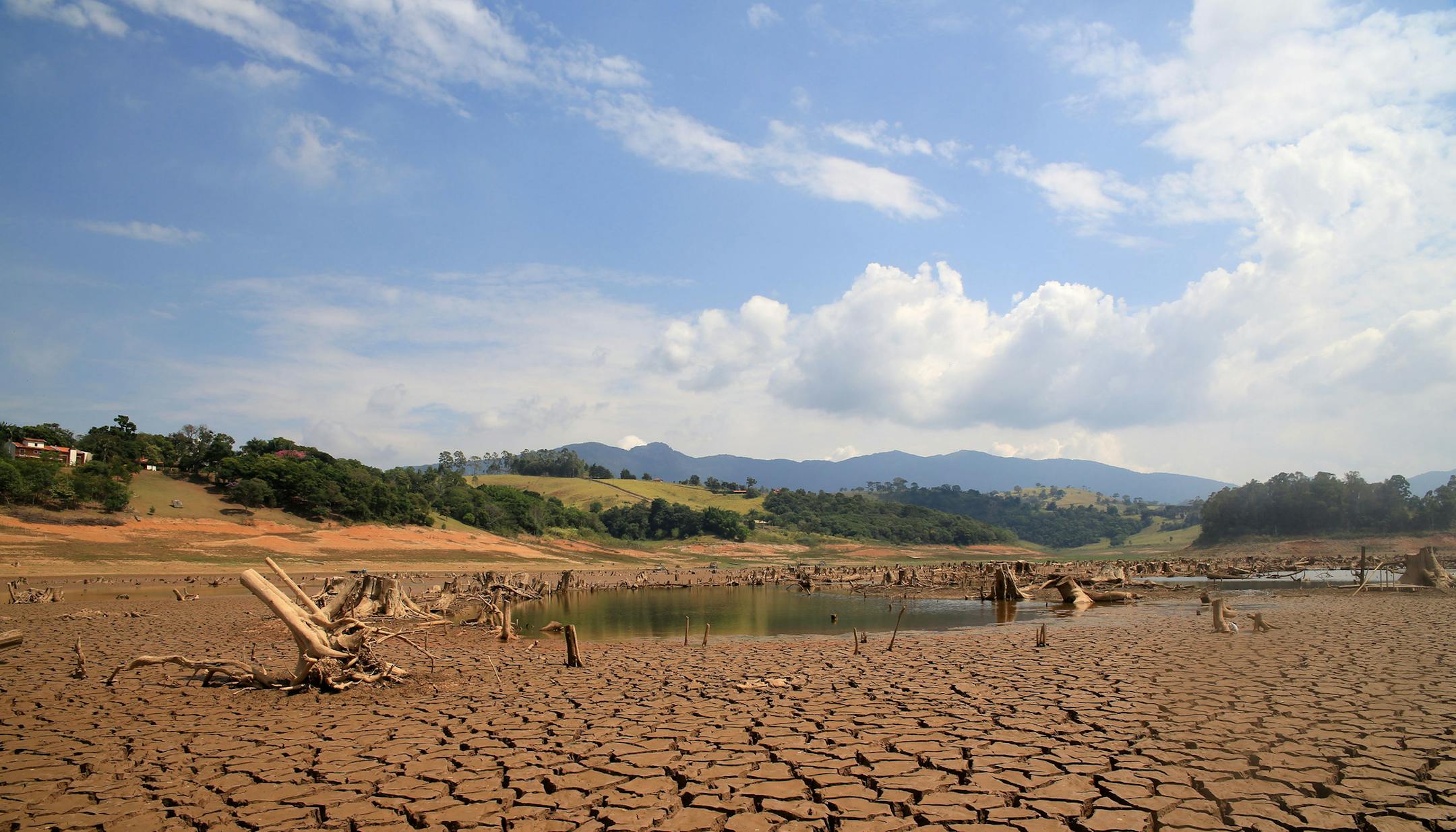
SAO PAULO, Brazil – Tourists visiting Brazil's largest city for this year's soccer World Cup may face water shortages as the area suffers the worst drought in at least four decades.
Water levels in the Cantareira basin, which supplies almost half of the 20 million residents of metropolitan Sao Paulo, fell to 15 percent of capacity March 17, the lowest since the data series began in 1982, according to the National Water Agency. The deficit means rationing is inevitable and will last through the tournament, said Joao Simanke, a Sao Paulo hydrologist.
"We can't get back the rain we missed in January and February, and March isn't going well either," said Simanke, the former head of the Brazilian Association of Groundwater. "We're going to have to save a lot of water for the World Cup."
The threat of water shortages is the latest setback leading up to the world's biggest soccer competition, including cost overruns and delays.
Guarulhos, home to Sao Paulo's airport, cuts off water to 850,000 residents every other day, the city's water and sewage service said. It's calling on residents to take shorter showers and refrain from washing cars, as the lowest rainfall in 84 years has been exacerbated by rising water usage due to heat.
Sao Paulo will host six World Cup matches in June and July.
The flow of water into Cantareira was 13 percent of the historic monthly average in February, according to the National Water Agency. The water level will be below the suction pipes by July.
Sabesp, Latin America's largest publicly traded water utility, will install pipes to allow it to tap the bottom of reservoirs and already is reducing the supply of water to distributors outside the metropolitan area, Estado newspaper said.


