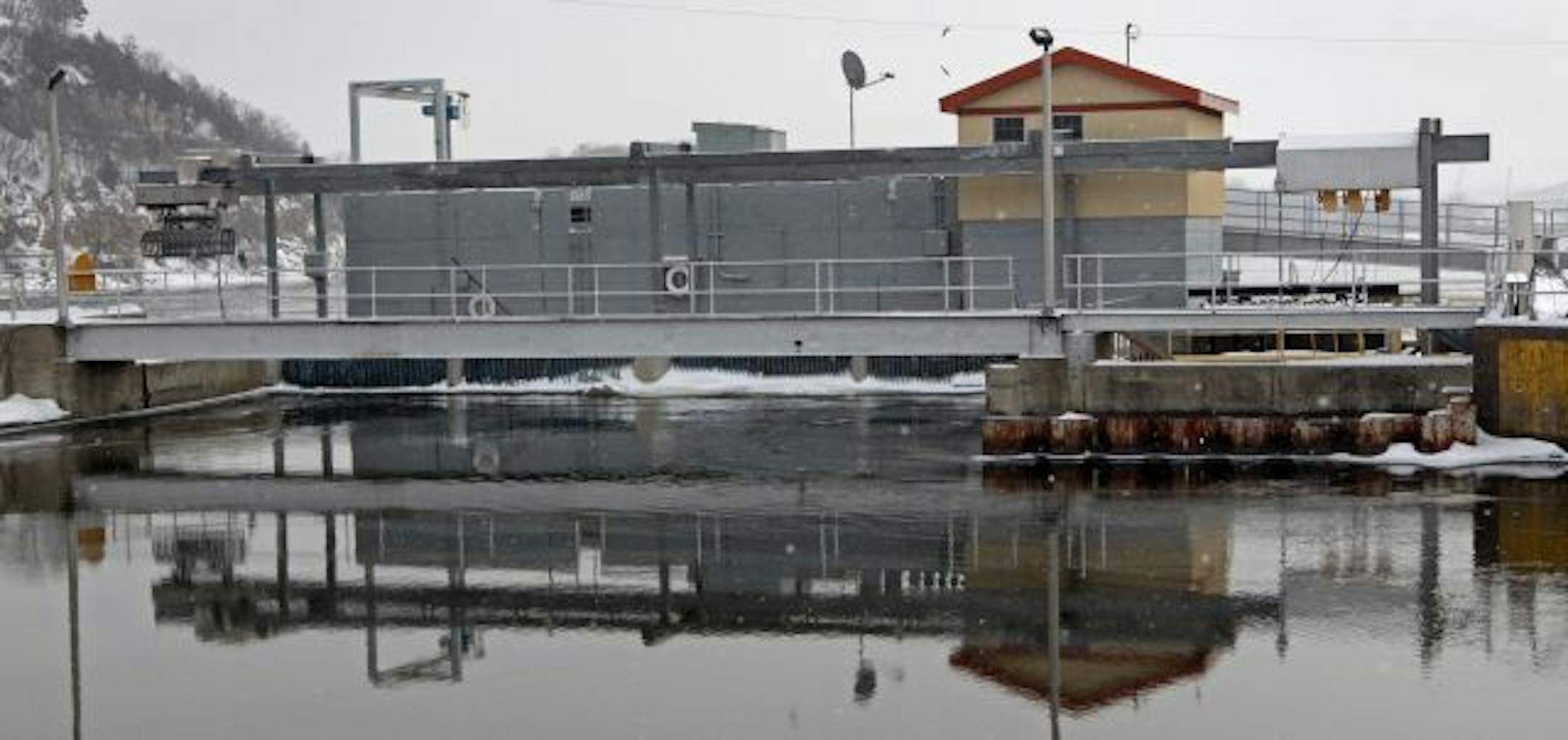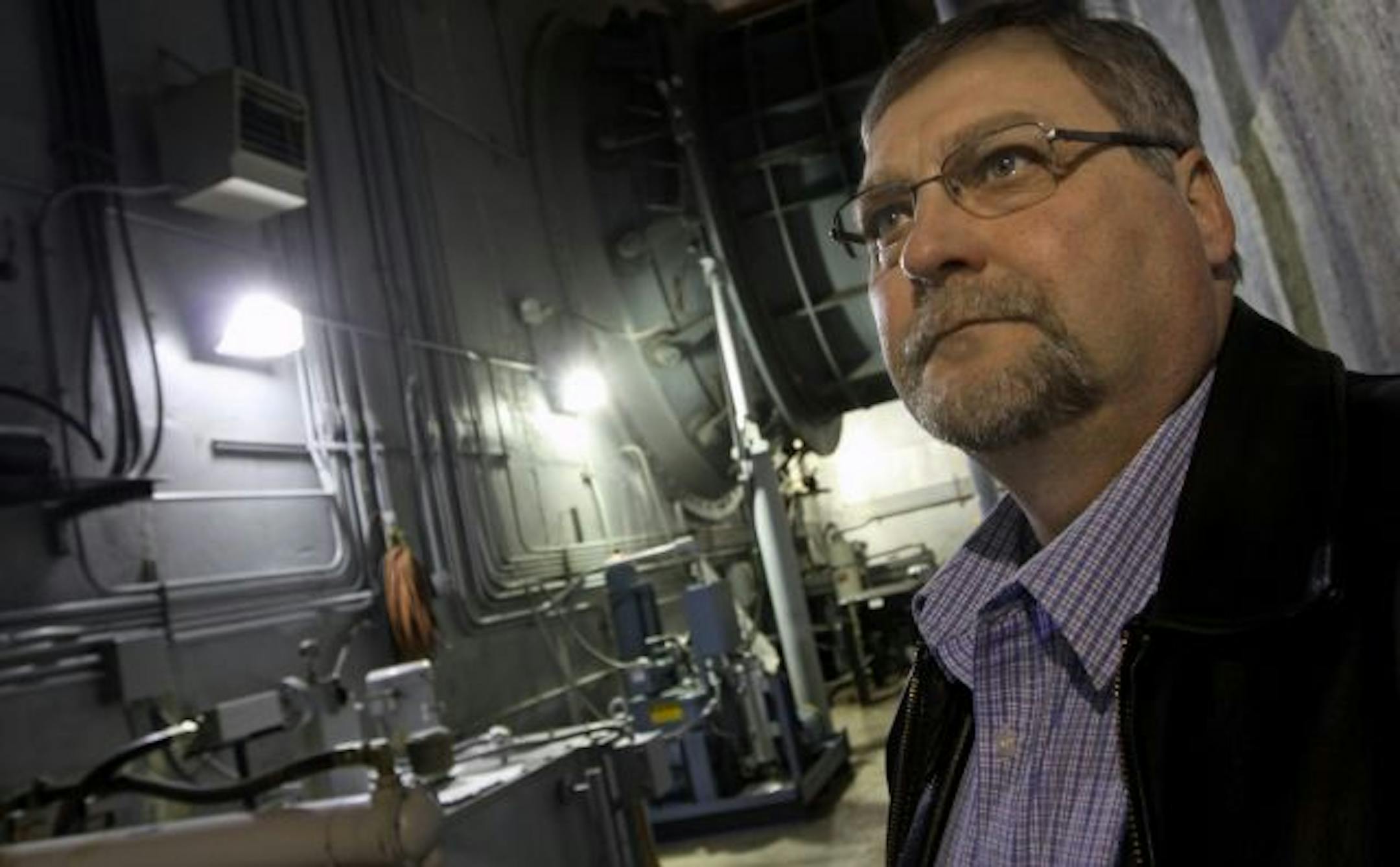
At the lock and dam above Hastings, the mighty Mississippi plunges down and through the wicket gates to spin 5-foot blades in underwater turbines, which power generators that produce green electricity -- and cash.
The river town is one of seven Minnesota cities with a hydroelectric plant, and it is probably the most profitable. Since plant debt was paid off in December 2009, the 4-megawatt plant has earned about $450,000 for the city and is expected to contribute $600,000 in 2011, said Finance Director Char Stark.
"It was a big dream when they opened it in 1987," said Public Works Director Tom Montgomery. "It was almost a white elephant for the first decade. Some years we were in the hole, some years we barely broke even."
A few years of drought in the 1980s didn't help hydro production, added city Public Works Superintendent John Zgoda. He said the plant, nestled between the U.S. Army Corps of Engineers' locks and dam, produces enough electricity to serve about 3,000 of Hastings' 5,500 homes. The city sells its power to Xcel Energy.
So does St. Cloud's plant, more than 100 miles up the Mississippi. That 8.5-megawatt plant is the largest city-owned hydroelectric plant in Minnesota, according to the Department of Natural Resources (DNR).
St. Cloud generates more than twice as much power as Hastings, the next largest city-owned plant. St. Cloud is still paying off its plant debt but has built up a healthy reserve fund. The 22-year-old plant is expected to contribute, for the first time, about $300,000 to city coffers this year, said Public Service Director Patrick Shea.
"The city is at the beginning of the hydro utility starting to pay off," Shea said. "Green energy has only become more valuable as we move forward."
Hydro power is generated by capturing the energy of falling water. Minnesota has plenty of lakes and rivers, but it has few of the tall falls needed to economically produce large amounts of electricity.