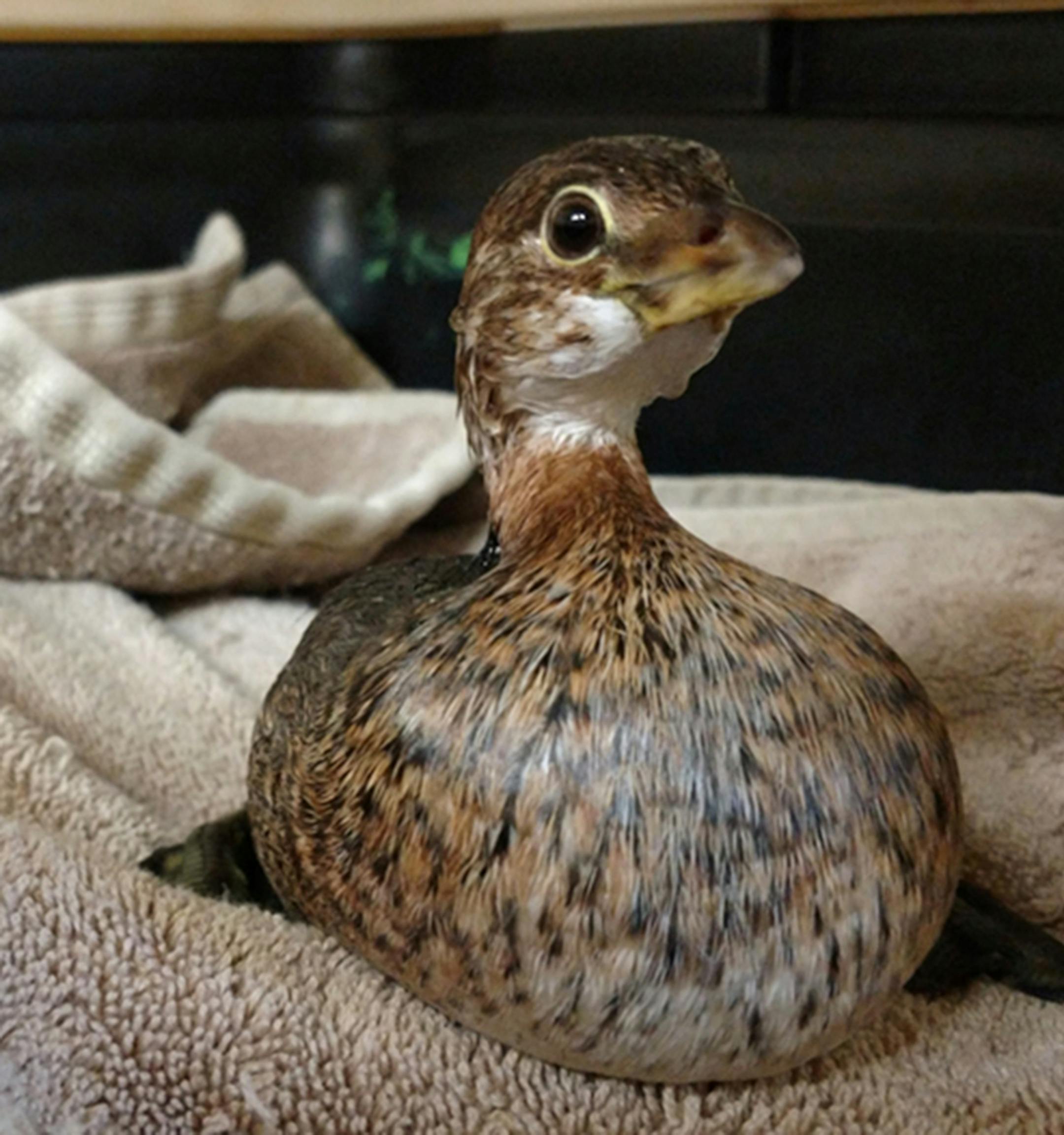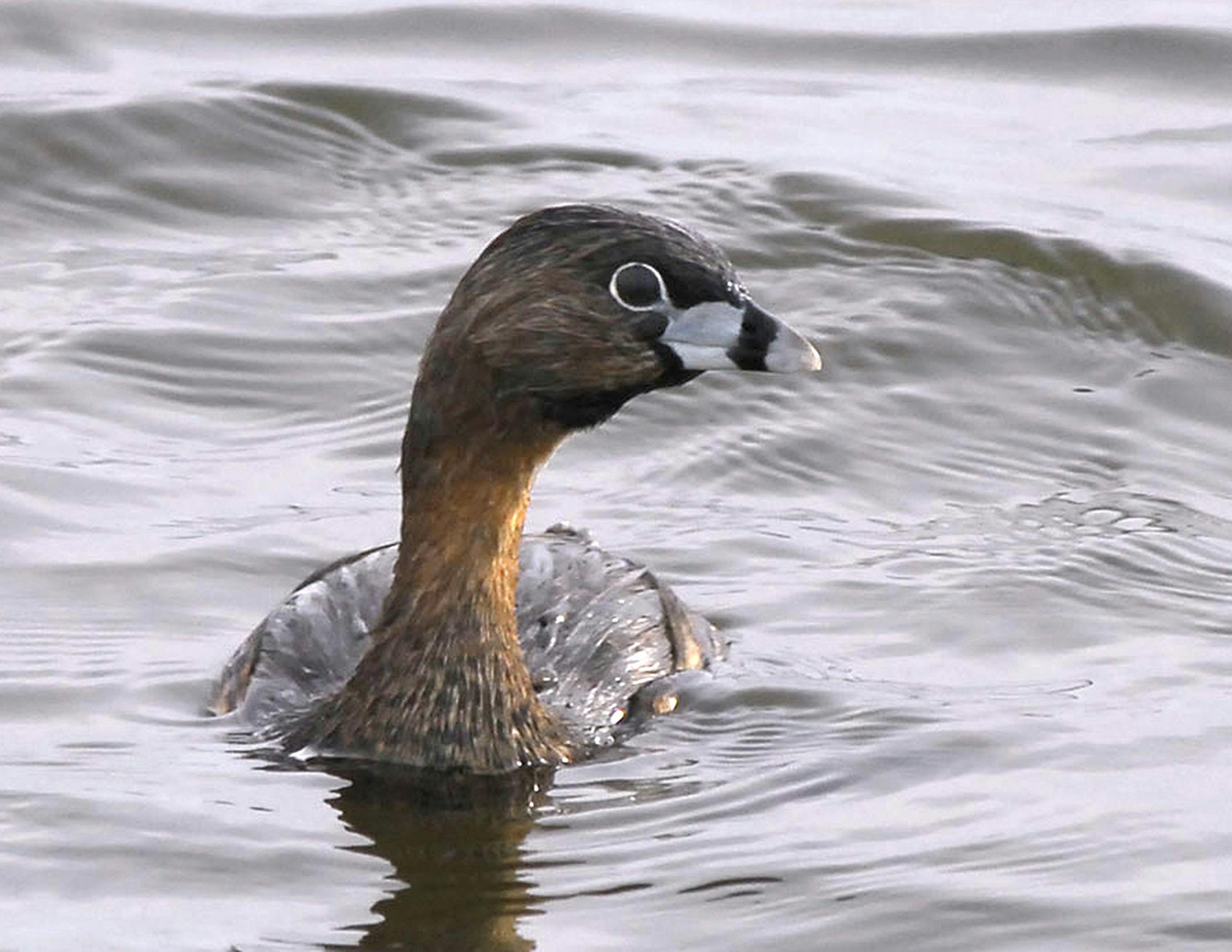
A juvenile pied-billed grebe — a tiny fall migrant — crash landed in a parking lot in St. Paul in November. Found hiding under a car, it was taken to the Wildlife Rehabilitation Center in Roseville.
It was the victim of mistaken identity: Birds can mistake wet paved surfaces for safe water when conditions are right. Or wrong. Roads, parking lots, runways, any stretch of pavement wet by rain or melting snow can be confusing, particularly at night. Even an expanse of wet grass can be a problem, and fog makes it worse.
There have been reports this fall of loons grounded in Wisconsin. A few years ago, thousands of migrating eared grebes crashed on at least two occasions in Utah. This mistake can be made by several wading or swimming / diving bird species.
Tami Vogel, communications director at the rehabilitation center, explained the phenomena and told me the grebe story. The little bird — cute is how Vogel described it — suffered only a scrape.
It was treated, then spent four days in a plastic pool the rehab center uses for recovering diving birds. The pool is large enough for loons and cormorants to dive. There, the grebe was fed live minnows and dead crickets.
The grebe, fit to go, was released at Vadnais Lake into a mixed waterfowl flock. It was expected to continue migration. By now it could be in Mexico.
Stranded birds need rescue, and often medical attention. The rehab center has admitted eight grebes this year, and 17 loons, six of which made unfortunate road landings. (Some of these species, like loons, have long, pointed bills. They will strike when held by rescuers. To disable a threat they aim for eyes. If you find such a stranded bird you might want experienced rescue help.)
Divers need to run across the water to gain liftoff speed. Loons might need a hundred yards or more. They cannot run on concrete; they also cannot walk. The legs of divers are set far back on the body, placed for swimming, not walking. These birds struggle when out of water, scrambling forward using legs and wings.