

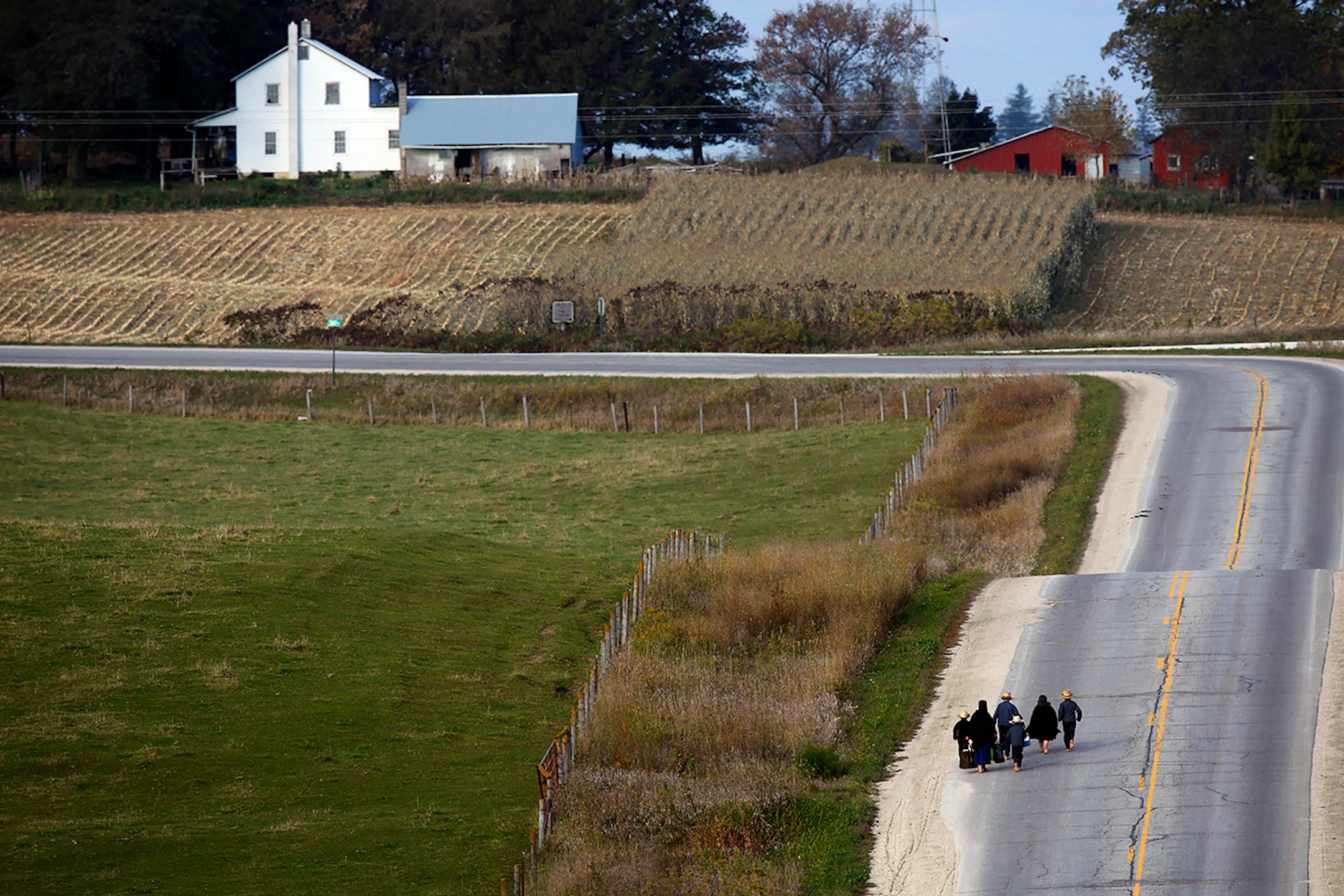
Living simply is a tenet of the Amish faith. But when one couple in southeastern Minnesota tried to build a house without a basic system for disposing water used to do laundry and wash dishes, county officials demanded they stop.
It raised a muddled question of religious rights vs. environmental safety in a case that is now in court.
Ammon and Sarah Swartzentruber are facing misdemeanor charges in Fillmore County for failing to get a building permit before starting construction on the house a couple of miles outside the small town of Harmony.
A permit would have required the couple to install a "gray water system." It's a modern convenience that, the couple argues, doesn't comply with their religious beliefs.
It's an issue that has been popping up around the country in recent years as state and local governments implement new standards for wastewater treatment, designed to tackle growing concerns about safe drinking water. Results have been mixed.
"It's a thorny, complicated thing," said Donald Kraybill, a professor and expert on Amish life at Elizabethtown College in Pennsylvania. While the conflict is often resolved at the local level, in some cases Amish people have gone to prison over the issue, or moved, he said.
Religious variation
Forty Amish affiliations in the United States apply their faith differently, passed on through oral tradition, Kraybill noted. Most Amish families have indoor plumbing, for instance, while some conservative affiliations view it as unnecessary. The key question, Kraybill said, is whether the local church district is backing the Swartzentrubers' stance.
"Then it becomes an issue of 'Are they free to practice their religion?' " Kraybill said. "The state would have to provide a compelling reason for not making an exception."


