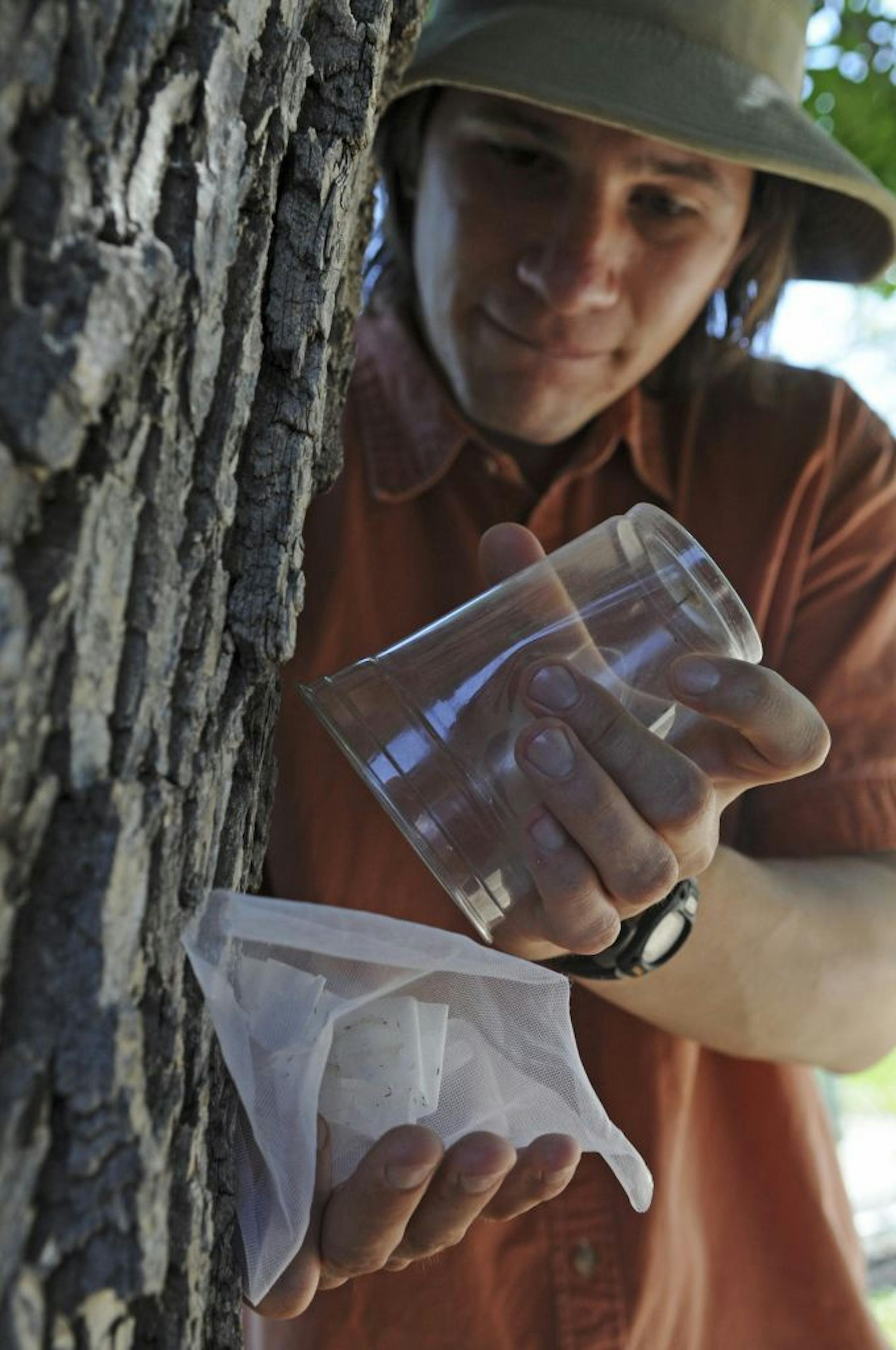
The emerald ash borer was reunited Wednesday with an old nemesis from the homeland as part of Minnesota's attempts to impede the tree killer.
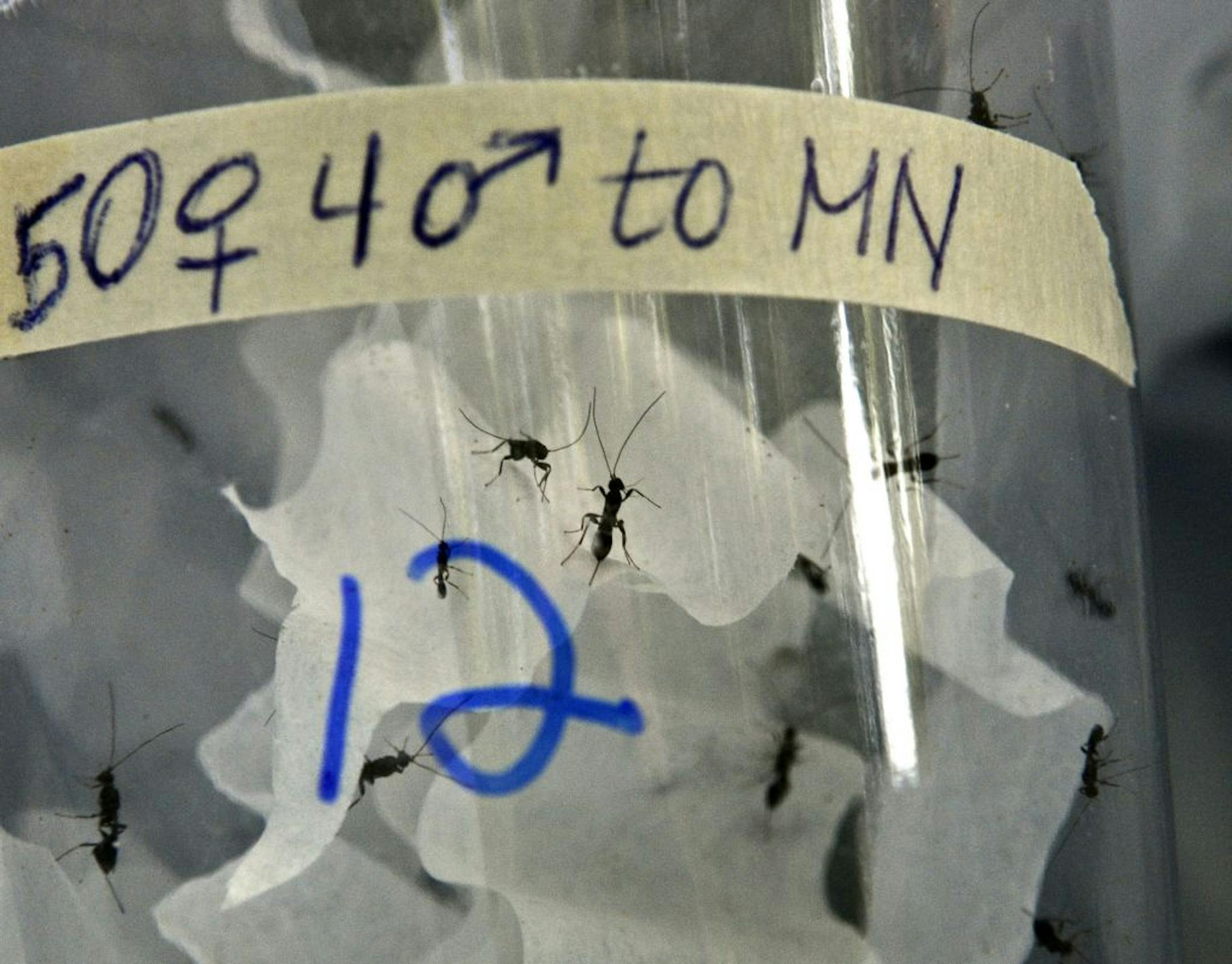
State Department of Agriculture scientists released nearly 2,500 stingless Chinese wasps onto infested ash trees in Langford Park in St. Paul's St. Anthony Park neighborhood. More releases are planned at four sites in Minneapolis over the summer.
The gnat-size wasps are the natural predator to the ash borer in their native Asia. Here, scientists call the wasps a "biocontrol agent." Thousands of them will be let loose on trees this summer.
Monika Chandler, biological control program coordinator, said since the state didn't have to pay for the wasps, the cost is minimal. "They work for free," she said of the wasps. "Once you get your bugs out there, they're self-sustaining."
In contrast, department spokeswoman Liz Erickson said, the cost to cut down or treat infected trees in the Twin Cities would be at least $1.5 billion from 2009 to 2015.
Chandler said the wasps were studied extensively to ensure their release wouldn't create an unintended deleterious effect of its own. But scientists will need years of results and study before they can determine whether the wasps save trees.
In China, the wasps have been able to kill from 30 percent to 90 percent of ash borer larvae in a year.
Other control methods, such as preemptive removal of trees and treatment, will continue to be used. "It's something we're not going to eliminate, unfortunately," said Geir Friisoe, director of the plant protection division at the Agriculture Department.