

MIAMI -- Half the money world governments pledged to Haiti never showed up. Half the money American private donors raised for Haiti hasn't been spent. And many millions went to things such as gasoline, car rentals and salaries.
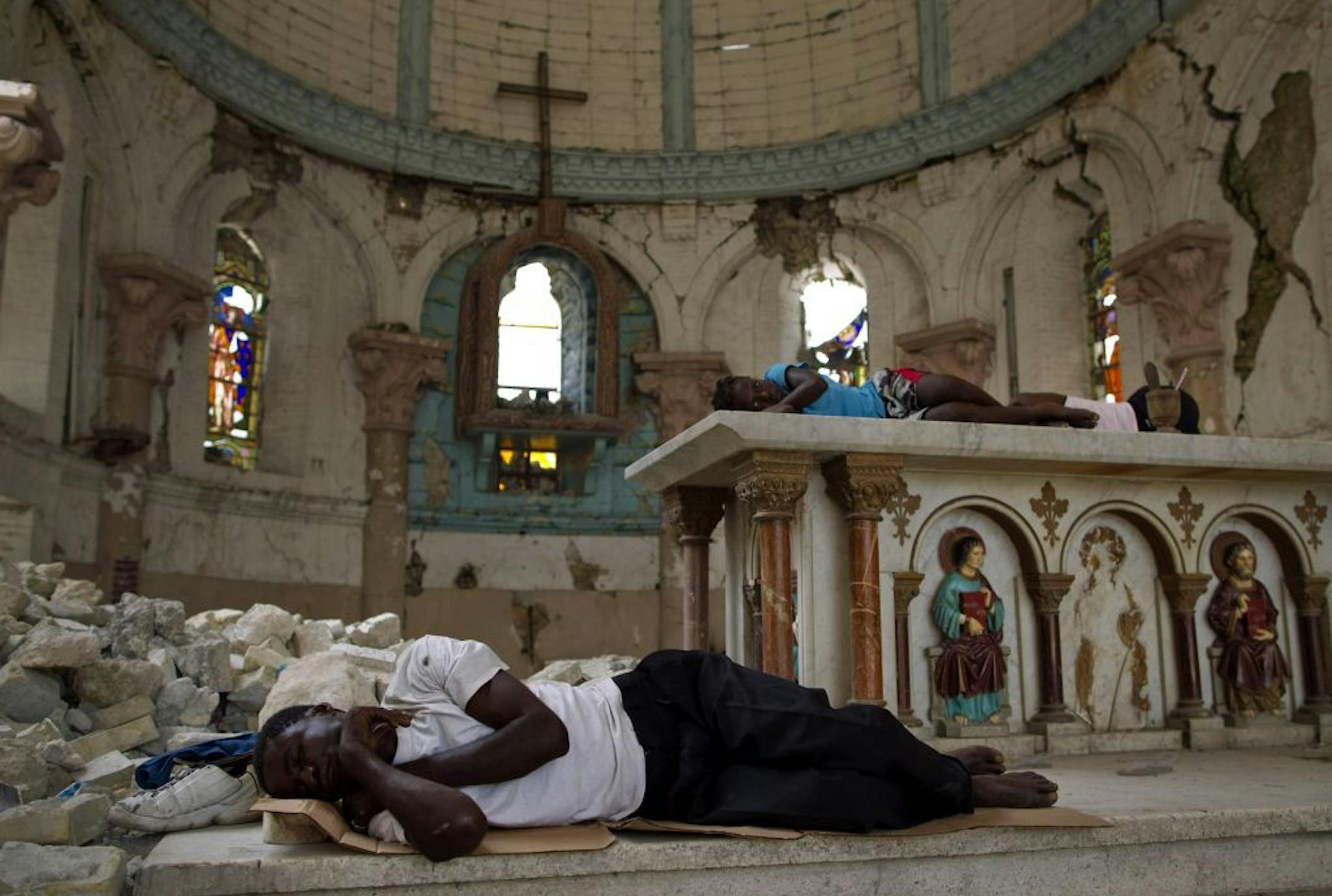
Two years after the ground shook in Haiti, more than 500,000 people remain on the street, many of them wondering why all that assistance did not lift them out of dire straits. In a nation where the minimum wage is $5 a day, international aid groups say seven-figure donations aimed at rebuilding the health care, housing and school systems were just not enough to alleviate a country mired in poverty.
So while families continue to live in plastic tents, some organizations are running dry and major reconstruction projects are taking years longer than anticipated. Even after the billions were spent and billions more promised, experts say it will be another 10 years of spending before people see serious results.
"The world's response to the disaster is slowly coming to an end," said Sam Worthington, who heads InterAction, an umbrella group of international aid groups. "I look at what's left to be done and how much money is left -- $360 million -- there's no way that much amount of money can address the problems."
A 7.0-magnitude earthquake devastated the capital of Port-au-Prince two years ago this week, killing 316,000 people and toppling hundreds of buildings. The world rushed to Haiti's aid, sending money via text message, telethon, debt relief and through foreign ministries.
The International Red Cross alone raised more than $1 billion. Just in the United States, Americans actually donated more than they pledged, chipping in $1.36 billion. Of that, $725 million was used to keep quake survivors alive, under tents and free from disease, Worthington said. The rest is on long-term-planning drawing boards.
But just as many Haitians suspected, huge amounts of money went toward supporting the relief and recovery operation in intangible ways that were difficult for most Haitians to accept or understand. The lack of an educated civil society meant agencies had to send in experts for everything from accounting to human resources, feeding the perception that the aid benefited foreigners as much as it helped Haitians.
The Center for Economic Policy Research (CEPR), a Washington-based think tank, found that D.C. area for-profit development companies received 83 percent of the U.S. Agency for International Development's Haiti contracts. About 2 1/2 percent of the funds went to Haitian companies, and less than a half of 1 percent went to Haitian nonprofit groups.

