

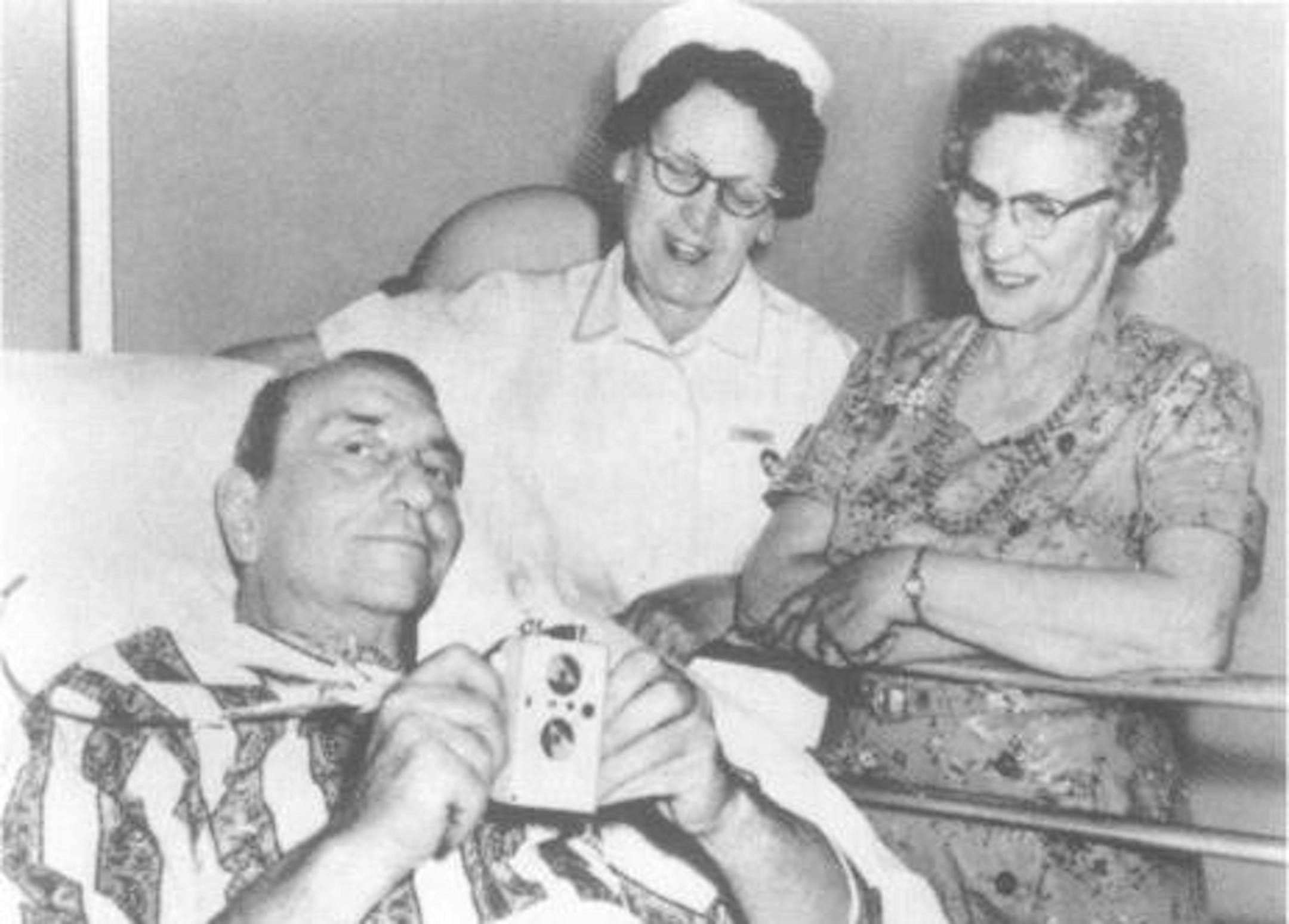
Fifty years ago, retired car salesman Warren Mauston drove 60 miles from his home on St. Paul's East Side to watch the 1966 World Series with his son in Lake City, Minn. The Baltimore Orioles beat the Los Angeles Dodgers in Game 1 en route to a series sweep.
Mauston died the next day of heart failure at 79. For all intents and purposes, he should have died more than six years earlier.
In the spring of 1959, Mauston became the first U.S. patient to be fitted with an external pacemaker during a four-hour surgery at St. Paul's Bethesda Hospital.
Two years earlier, Medtronic founder Earl Bakken and University of Minnesota heart surgeon Walt Lillehei devised a battery-operated external pacemaker they hoped could control a human heart's rhythm. And Bethesda surgeon Samuel Hunter and early Medtronic engineer Norman Roth had noodled with connecting pacemaker wires to dogs' hearts.
But Mauston, at 72, was now the man on the operating table. He suffered from a serious cardiac problem called heart block that had stopped his heart more than 25 times in 24 hours at Bethesda, rendering Mauston unconscious and all but dead.
Doctors used drug injections and heart massage to keep him alive. Figuring they had nothing to lose, Hunter and Roth packed their apparatus in a truck and headed to the hospital.
"We pushed Mr. Mauston, who was unconscious, into the operating room and opened him up," Hunter recalled in 1979. "The heart looked sick — large and blue with grayish fat — and it didn't look like it would go."
He attached the heart device to Mauston's right ventricle. The pacemaker was supposed to send electrical currents into the heart through stainless steel wires, providing so-called long-term pacing that was supposed to prevent the muscle from pumping too slowly or erratically.


