

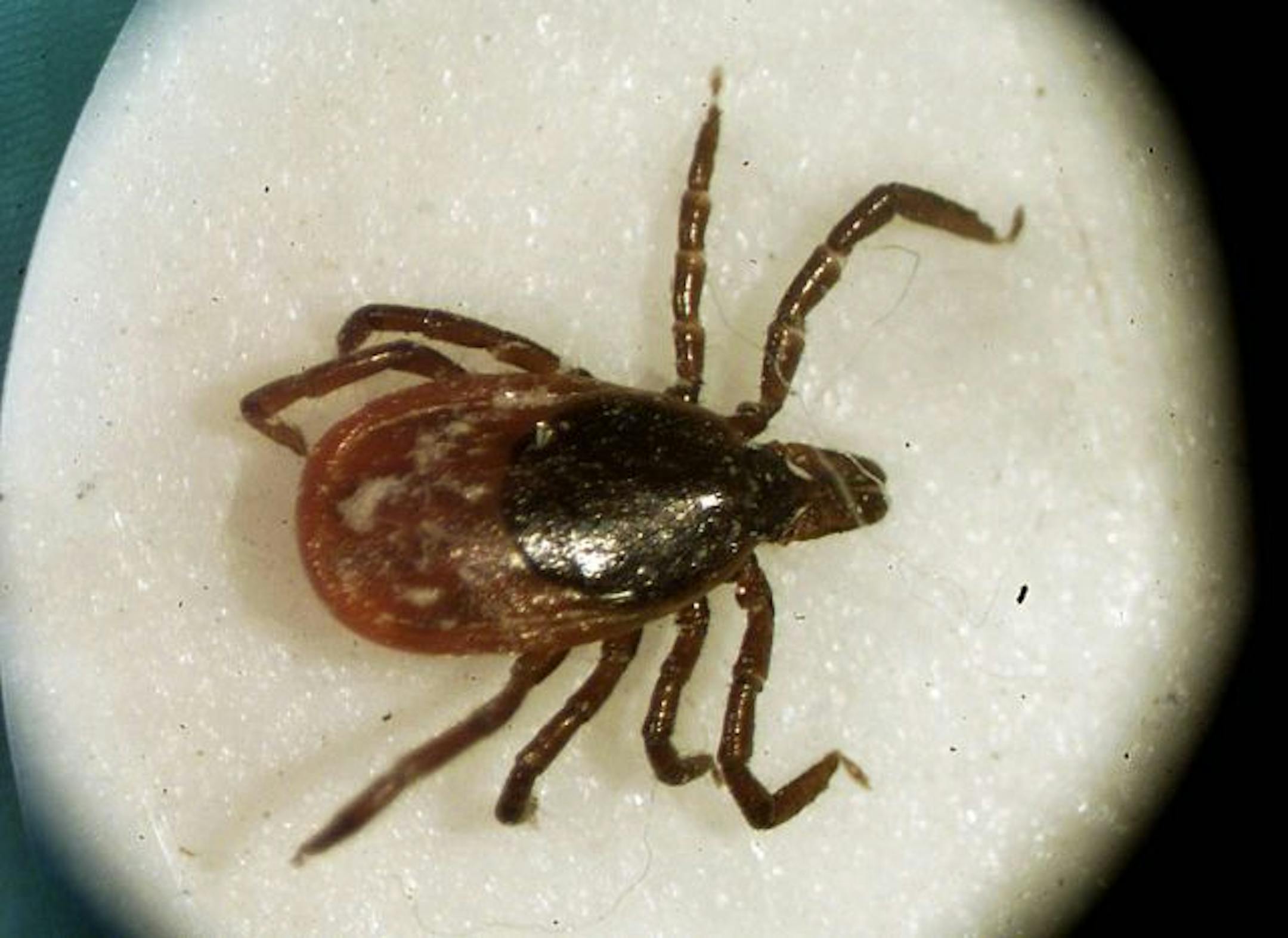
If this exceptionally warm winter passes without an extended hard freeze, spring could bring an explosion of black-legged ticks, those tiny pests that transmit Lyme disease.
That promises trouble for outdoors-loving Minnesotans already being diagnosed in record numbers with tick-borne illnesses.
"The trend is that we're seeing more deer ticks at our sampling locations, and more sampling locations have deer ticks present," said Jim Stark, executive director of the Metropolitan Mosquito Control District (MMCD), which monitors tick populations year-round.
"Their mortality is much lower when the temperatures are more moderate."
Except for Thursday's subzero weather, black-legged ticks, also known as deer ticks, have slept in relative warmth below blankets of fallen leaves, Stark said. Their already substantial numbers could multiply this spring without an extended cold snap -- and in that regard, forecasters don't offer much hope.
"I suspect we've just gone through what will probably be the coldest of winter," said meteorologist Paul Douglas, who said the odds of colder days in February will diminish rapidly as the sun climbs higher in the sky.
Warnings about black-legged ticks have swept across the nation as warmer winters have allowed them to expand their habitat. Most states have issued alerts to hunters, hikers and other outdoor enthusiasts about the dangers of Lyme disease.
In Minnesota, black-legged ticks have expanded their territory since 2007. More people live in wooded areas where ticks thrive, more mice and other rodents that carry Lyme disease survive warmer winters, and more ticks "hitchhike" on birds and humans.


