Warmer Thursday with storms overnight into Friday

A warmer day is expected on Thursday with highs climbing back above average into the low 80s with sunshine. Rain and isolated storms with a cold front Thursday Night into early Friday usher in 70s for the weekend with lots of sun behind it. - D.J. Kayser

September 14, 2023 at 12:00AM
(The Minnesota Star Tribune)

Chilly Wednesday Morning
(The Minnesota Star Tribune)

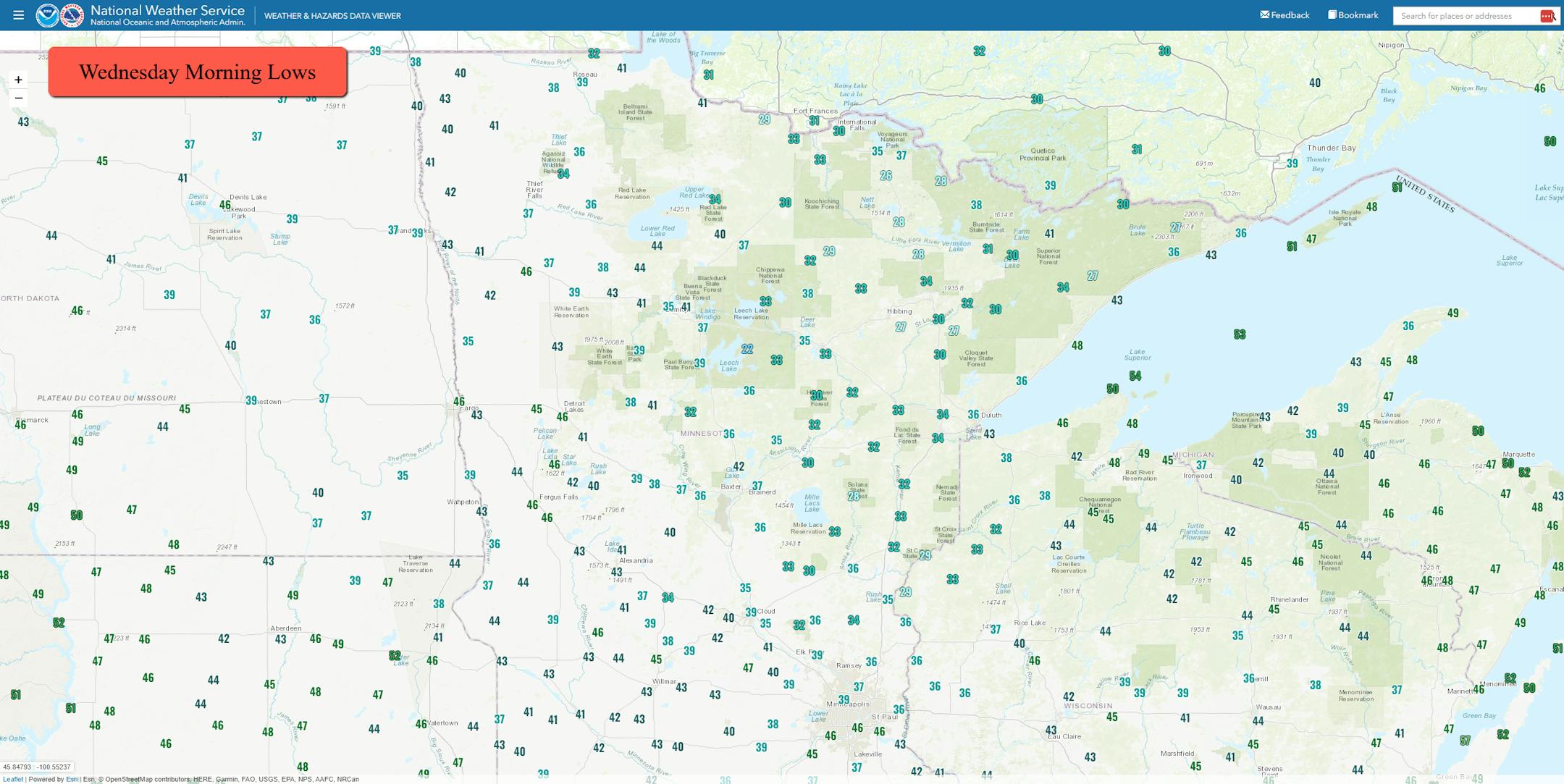
It was the chilliest morning in a while across much of the region Wednesday morning, with MSP dropping to 47F. That was the coolest morning since May 20th, when it dropped to 44F. We saw some 20s up in northern Minnesota to begin the day, with the coolest low being 26F at the Ash Lake MNDOT station.

_______________________________________________

Warm Thursday In The Metro - Some Afternoon Rain Up North
(The Minnesota Star Tribune)

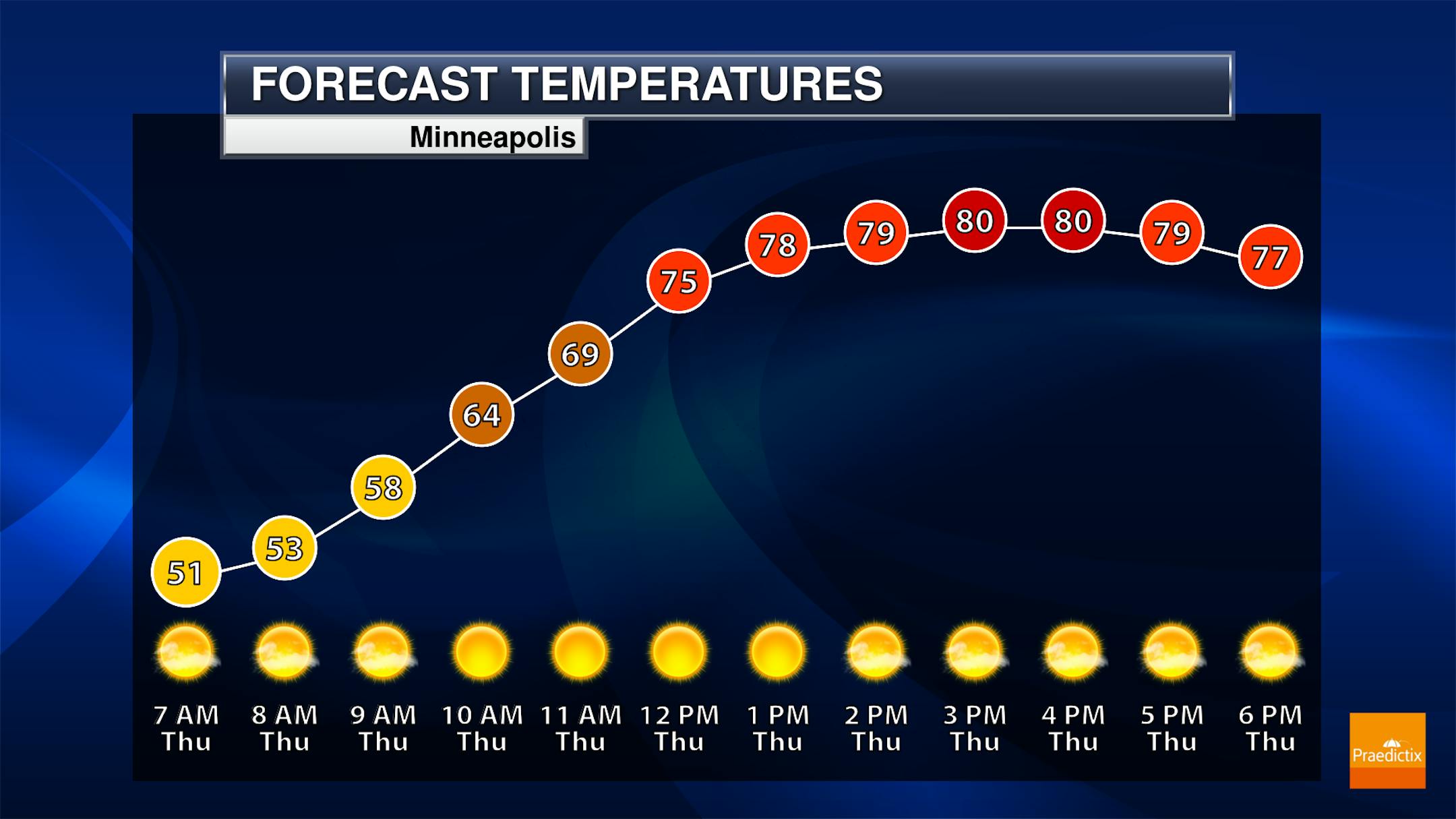
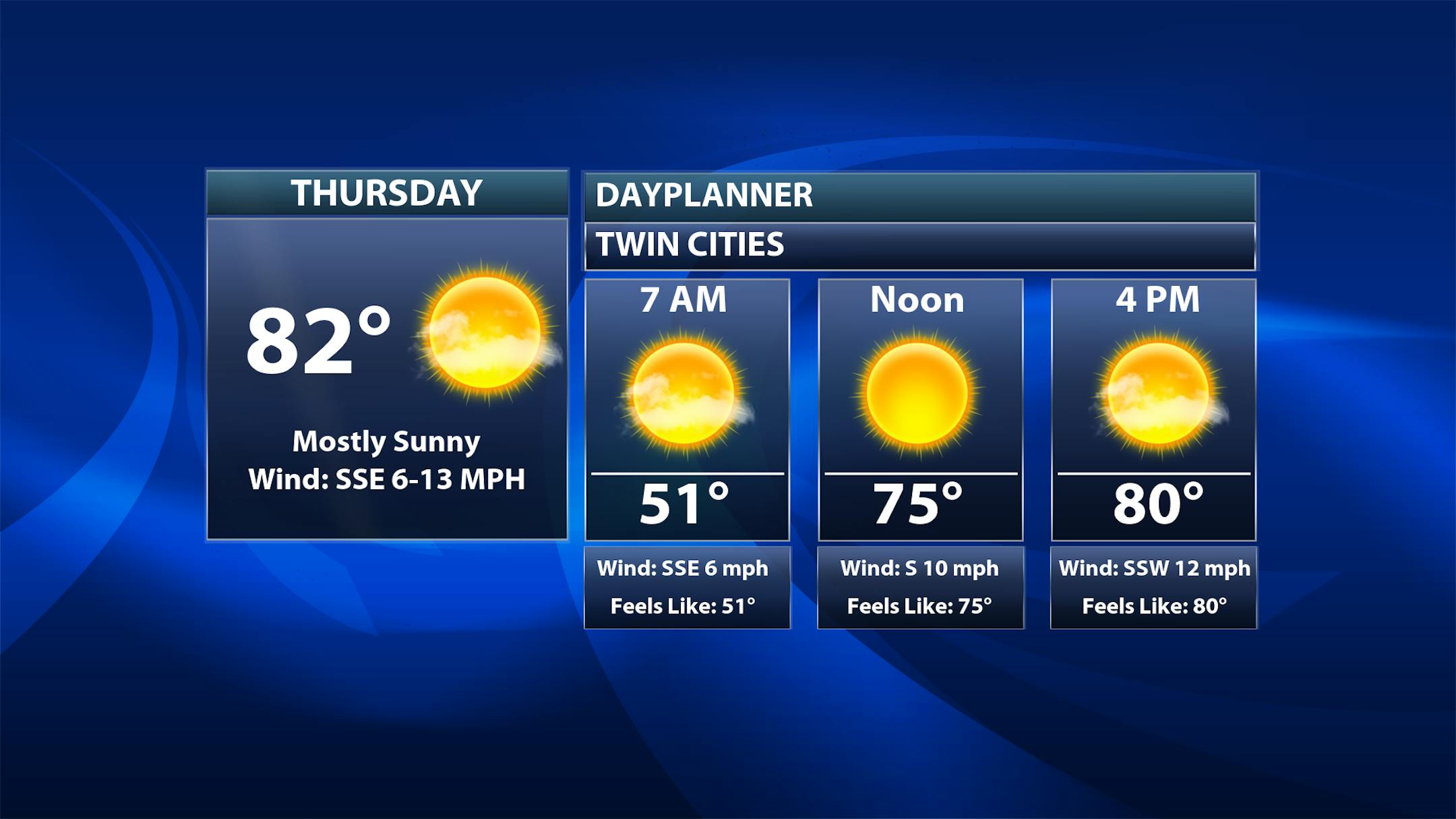
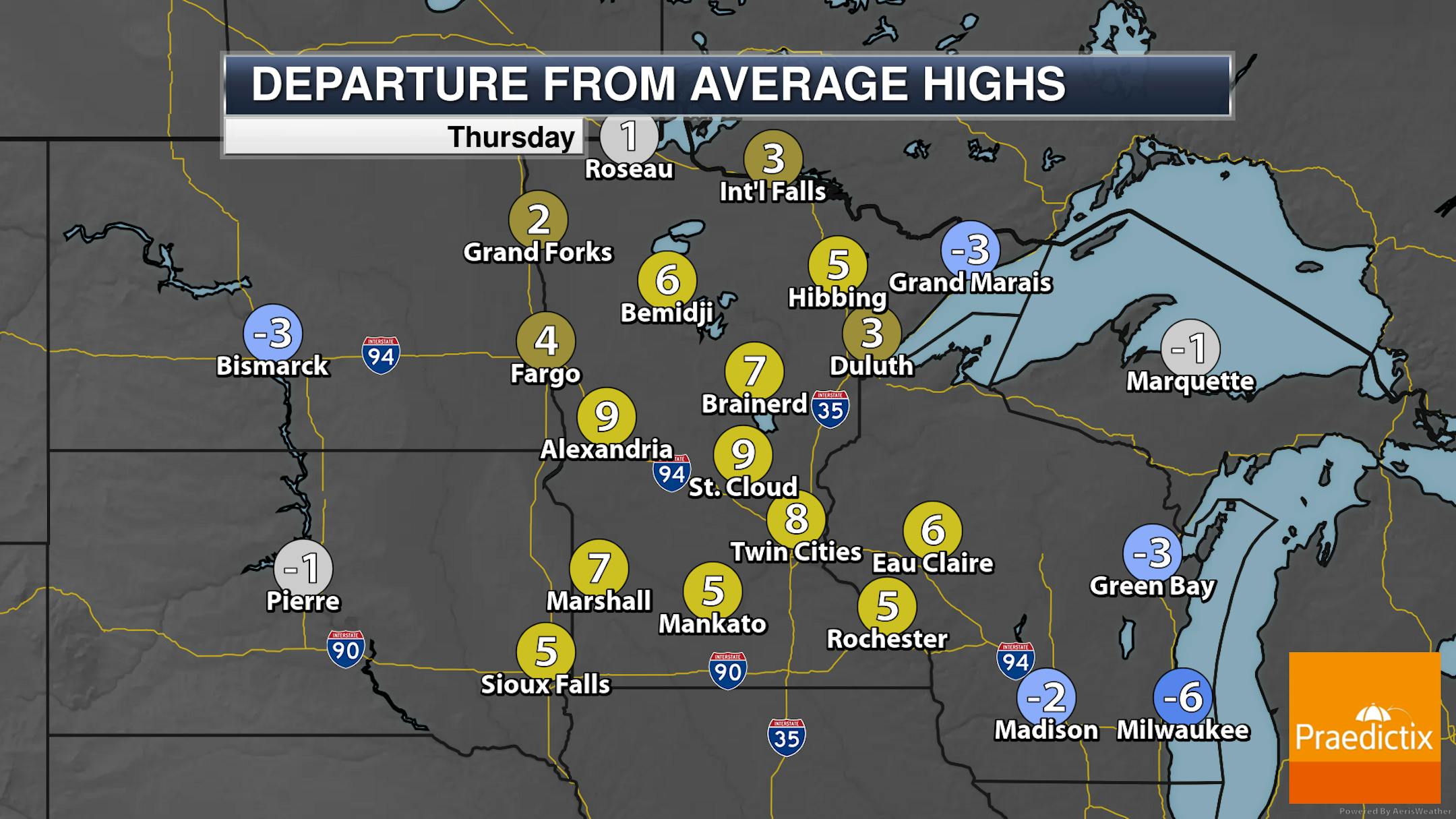
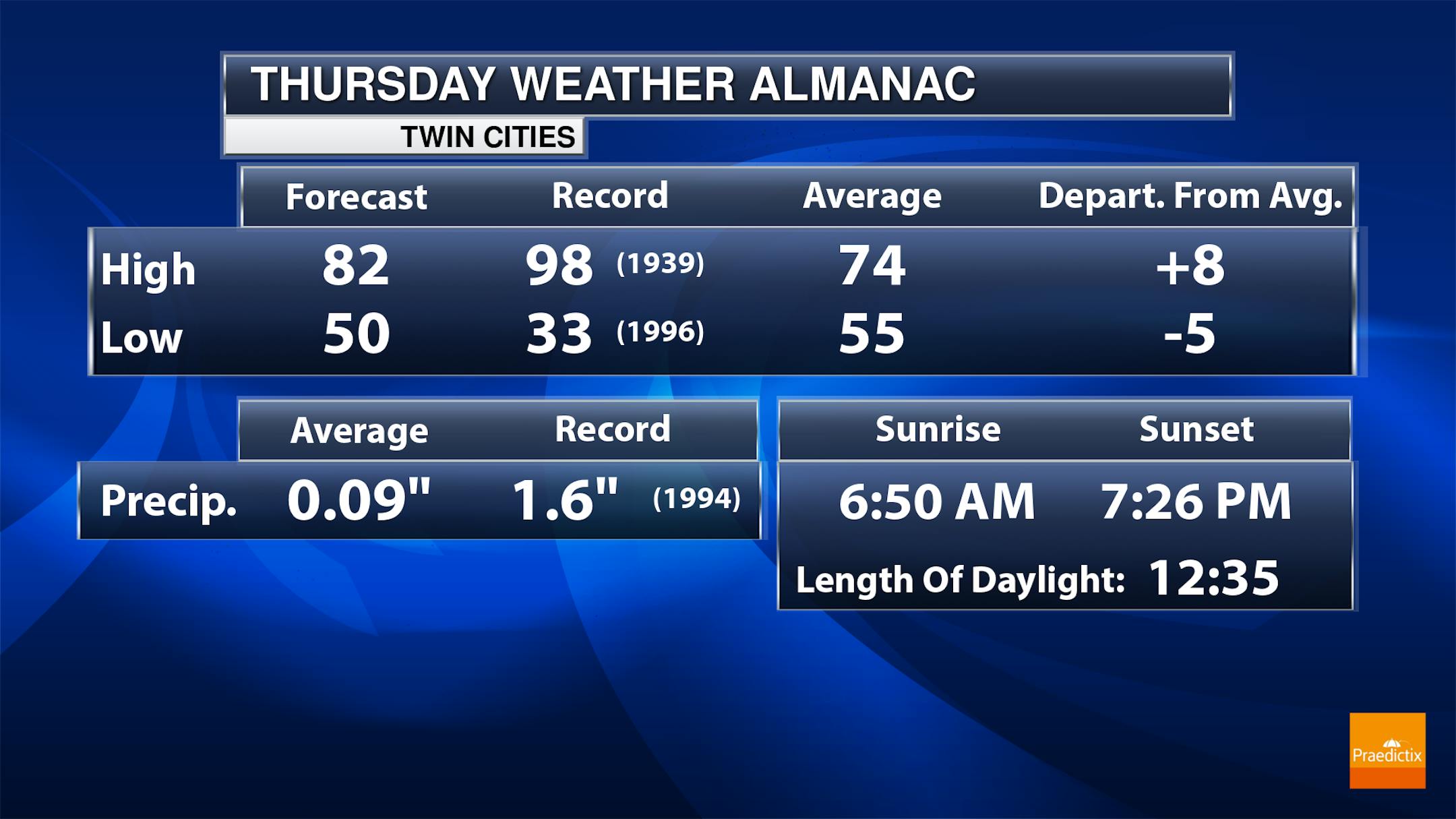
A quiet, sunny, and warm mid-September day is expected in the metro on Thursday. Morning temperatures will start off around 50F with highs in the low 80s.
(The Minnesota Star Tribune)

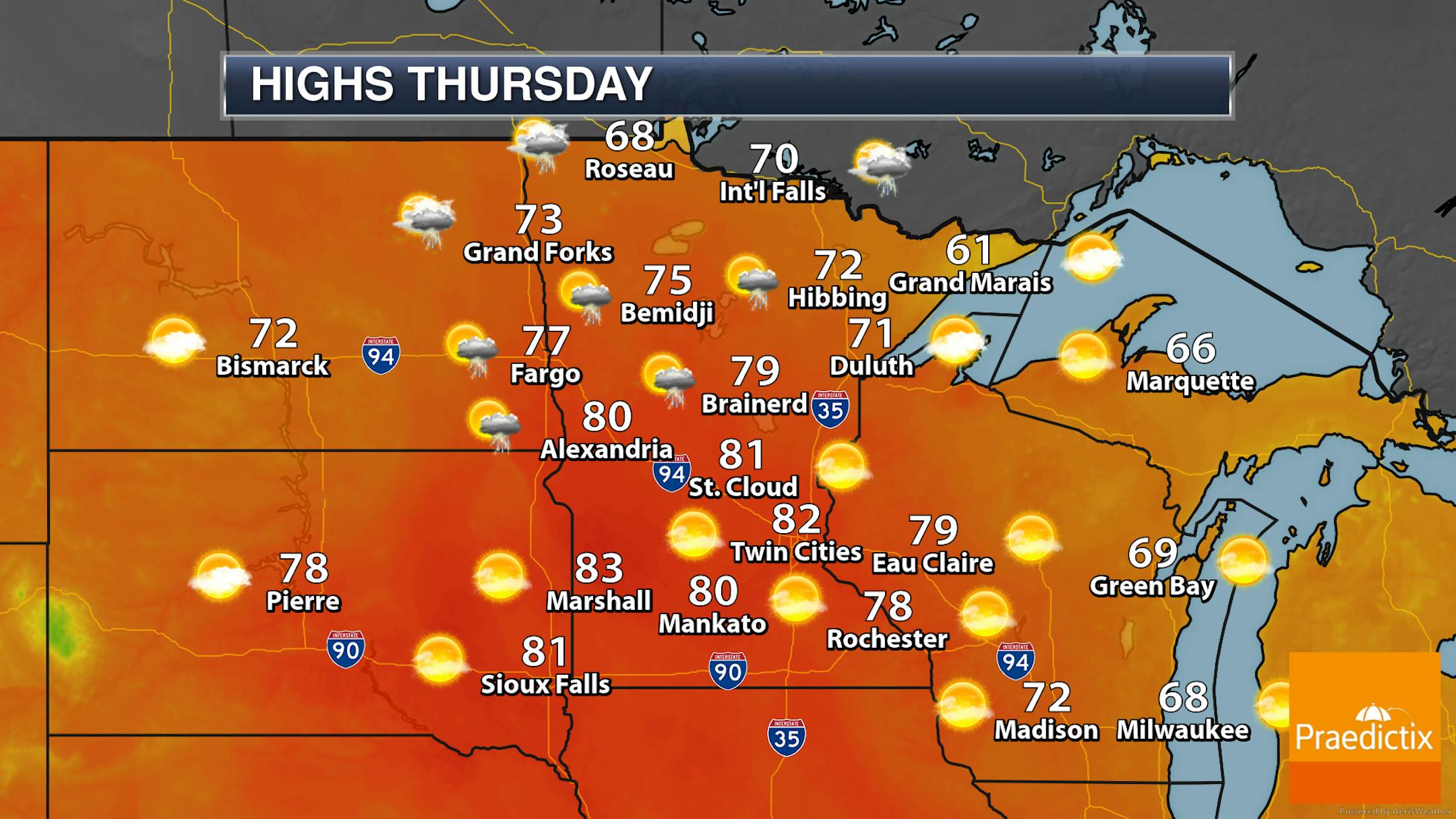
As a cold front starts to move into the state, parts of northern Minnesota will see showers and a few thunderstorms Thursday afternoon and evening. Rain chances don't move into the metro until later Thursday Night into early Friday morning. Highs range from the 60s up north to 80s in central and southern Minnesota.

_______________________________________________

Rain Early Friday, Then A Quiet Weekend
(The Minnesota Star Tribune)

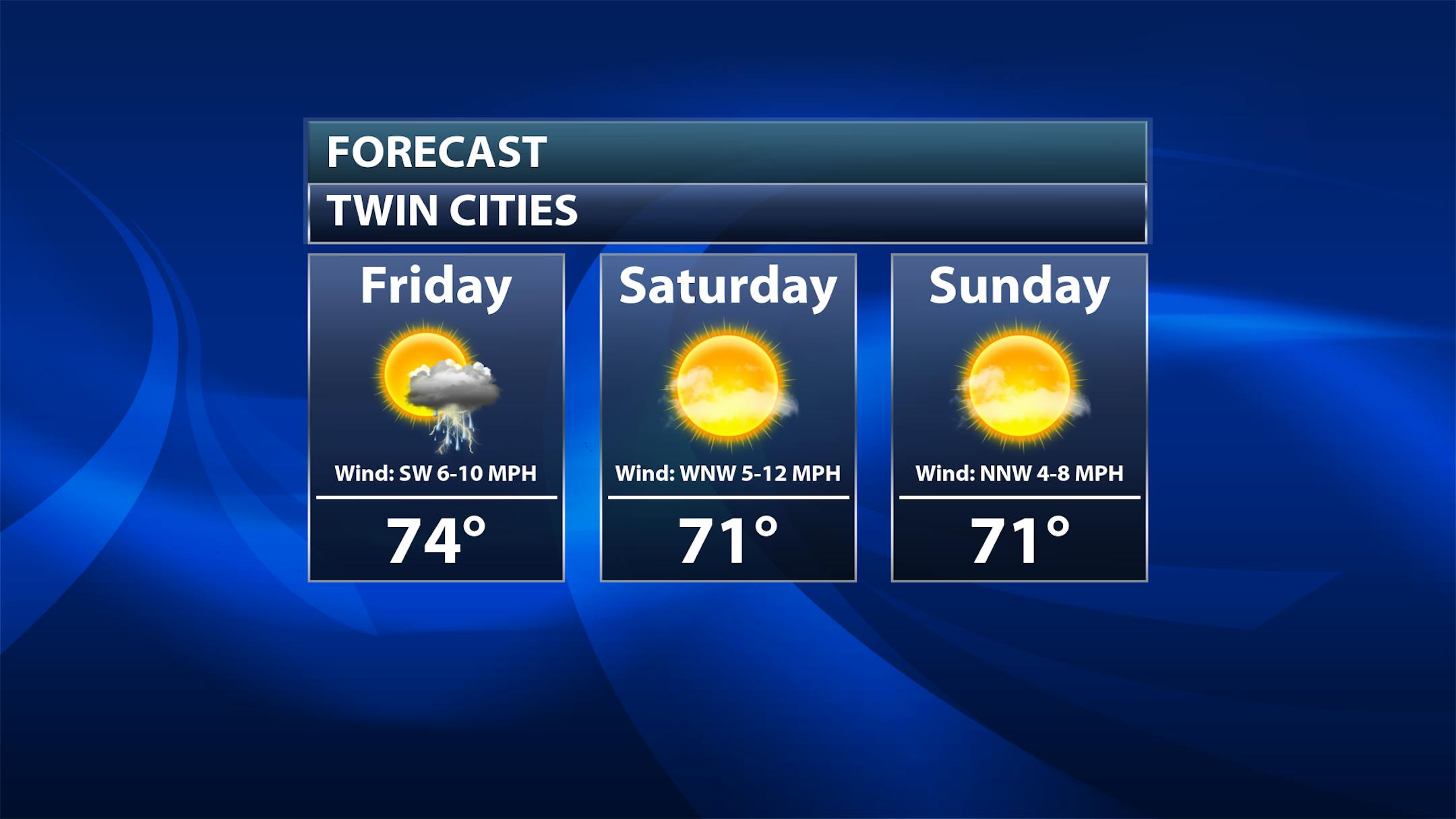
Friday: A cold front moving across the state will bring shower and storm chances as we head through Thursday Night into at least Friday morning in the metro. Otherwise, cloudy skies are expected with highs in the mid-70s.

Saturday and Sunday: Quiet, sunny weather is expected with highs in the low 70s.

_______________________________________________
A Quiet Lukewarm Pattern Into Next Week
By Paul Douglas

I owe my career to Agnes. Tropical Storm Agnes stalled over my hometown (Lancaster, PA) in 1972, resulting in historic flooding that swamped the lowest level of our home. In 2004 I flew on a "Hurricane Hunter" aircraft into Hurricane Frances off the coast of Florida. It was uncomfortably bumpy and cold, but I've been on scarier commercial flights. I can't say I miss storms with names.

Scientists say the number of hurricanes hasn't increased, but the storms that do form, naturally over the oceans, are hitting the US coastline with greater ferocity, thanks in large part to warmer ocean water. Hurricane Lee may brush Cape Cod, Maine and the Canadian Maritimes as a destructive nor'easter Saturday.

No drama close to home with warm sun today (80 degrees and low humidity). A few badly-needed showers arrive late tonight and Friday morning, but rainfall amounts will be meager. No relief from drought in sight.

No frost, no flakes or wild winds either. Just a quiet sky with 70s and a few more 80s next week.

_______________________________________________
Paul's Extended Twin Cities Forecast

THURSDAY: Warm sunshine. Wake up 52. High 81. Chance of precipitation 10%. Wind S 10-15 mph.

FRIDAY: Morning showers, then slow clearing. Wake up 61. High 77. Chance of precipitation 60%. Wind W 8-13 mph.

SATURDAY: More clouds than sun, breezy. Wake up 57. High 74. Chance of precipitation 10%. Wind NW 10-20 mph.

SUNDAY: Partly sunny and pleasant. Wake up 52. High 72. Chance of precipitation 0%. Wind NW 5-10 mph.

MONDAY: A mild blue sky. Wake up 53. High 76. Chance of precipitation 0%. Wind SE 10-15 mph.

TUESDAY: Sunshine, warming up. Wake up 58. High 83. Chance of precipitation 20%. Wind SE 8-13 mph.

WEDNESDAY: Hazy sun with a stray T-storm. Wake up 62. High 86. Chance of precipitation 30%. Wind S 15-25 mph.

_______________________________________________
Minneapolis Weather Almanac And Sun Data
September 14th

(The Minnesota Star Tribune)

*Length Of Day: 12 hours, 35 minutes, and 40 seconds
*Daylight LOST Since Yesterday: 3 minutes and 5 seconds

*When Do We Drop Below 12 Hours Of Sunlight? September 26th (11 hours, 58 minutes, 25 seconds)
*When Are Sunrises At/After 7:00 AM? September 23rd (7:01 AM)
*When Are Sunsets At/Before 7:00 PM? September 28th (6:59 PM)
_______________________________________________
This Day in Weather History
September 14th

2099: The next total solar eclipse will take place over Minnesota. It will be visible in the Twin Cities, depending on the weather.

1964: The earliest official measurable snowfall occurs in Minnesota with 0.3 inches at International Falls.

1852: Early frost hits Ft. Snelling and ends the growing season.

_______________________________________________
National Weather Forecast

(The Minnesota Star Tribune)

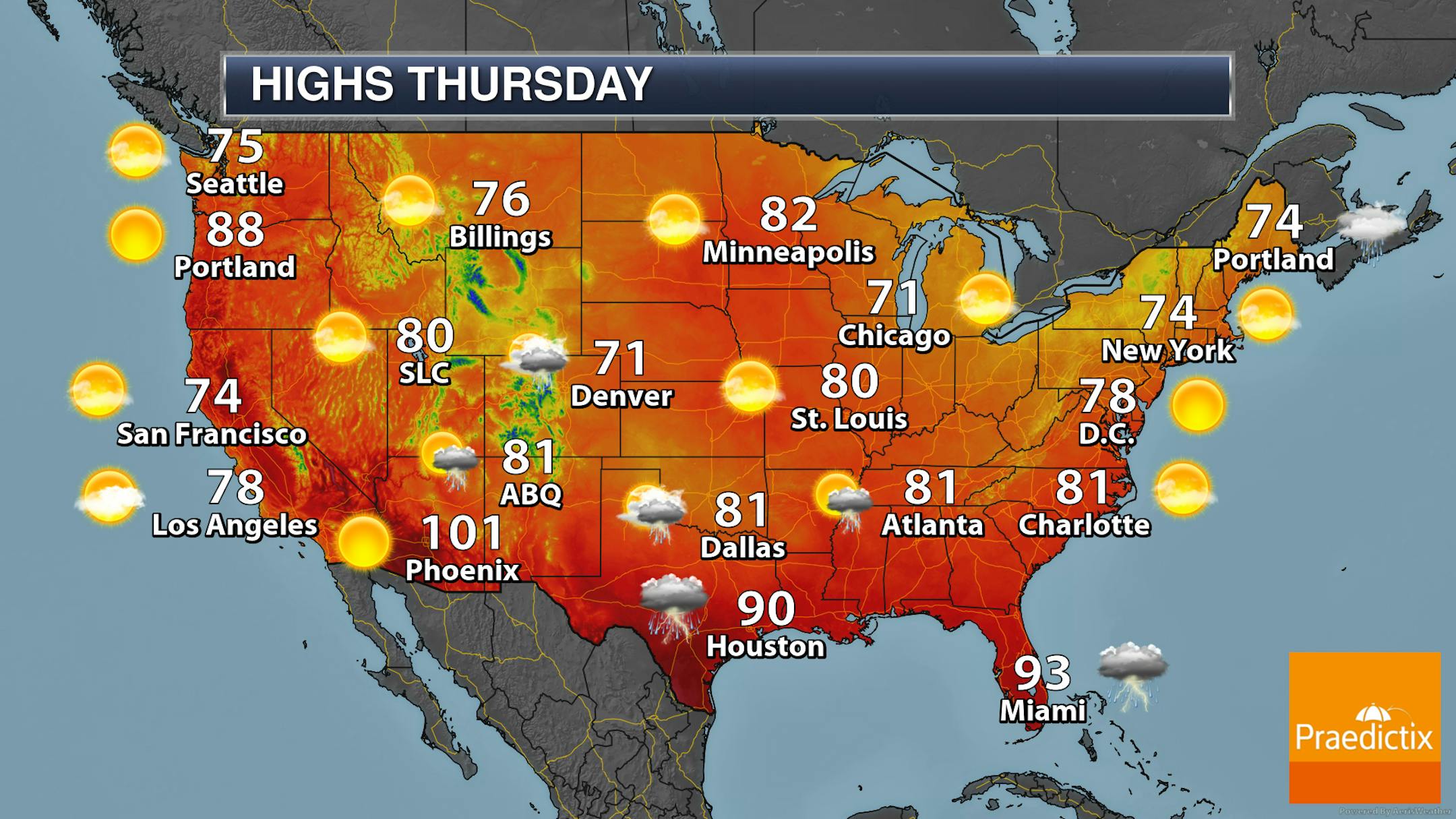
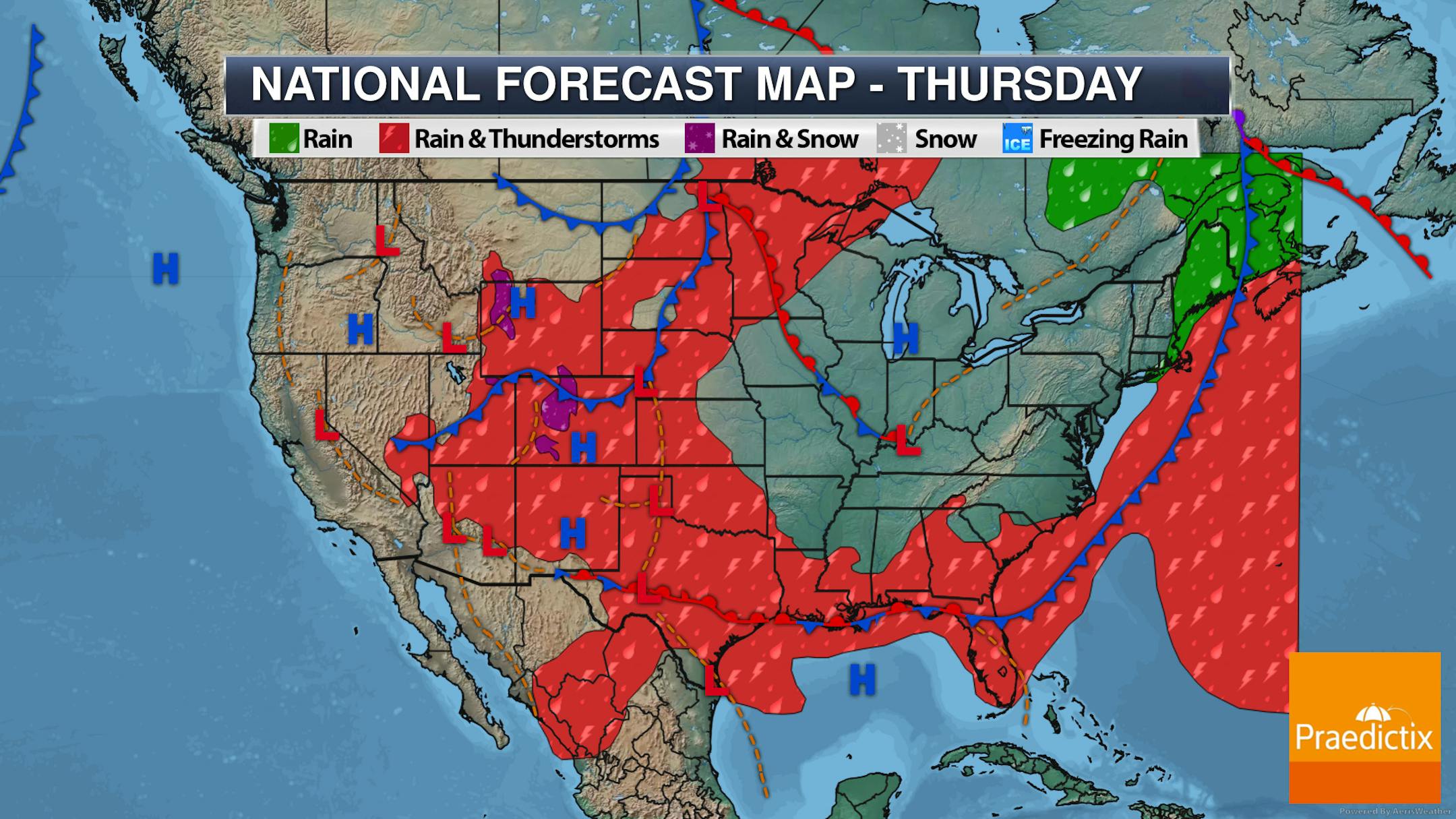
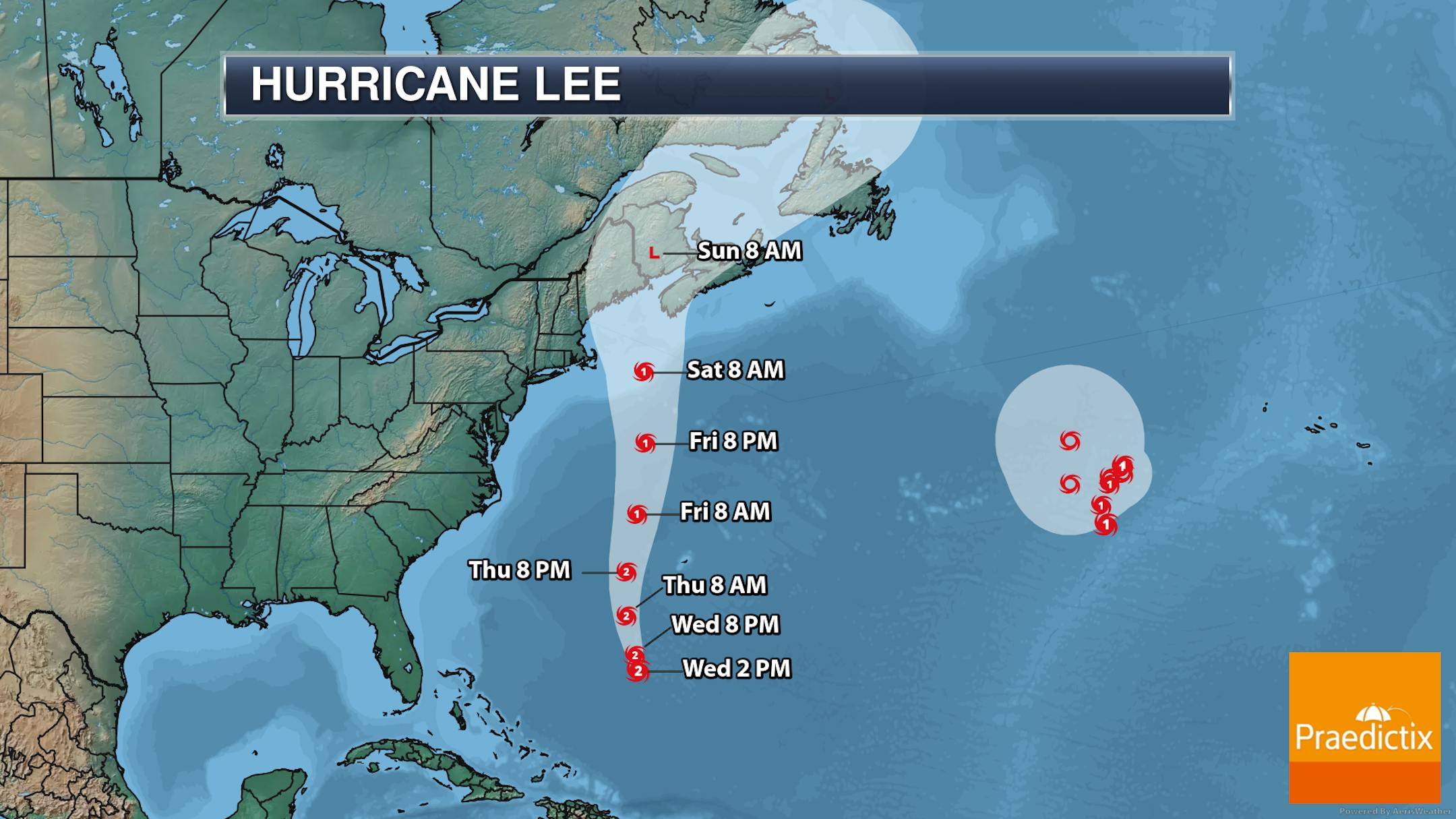
On Thursday, showers and thunderstorms are expected across the Plains and along the Gulf Coast states. Some rain will also be expected in New England. Some snow could mix in across parts of the Rockies. Meanwhile, Lee will still be situated southwest of Bermuda, but starting to move northward at a faster forward speed.

(The Minnesota Star Tribune)

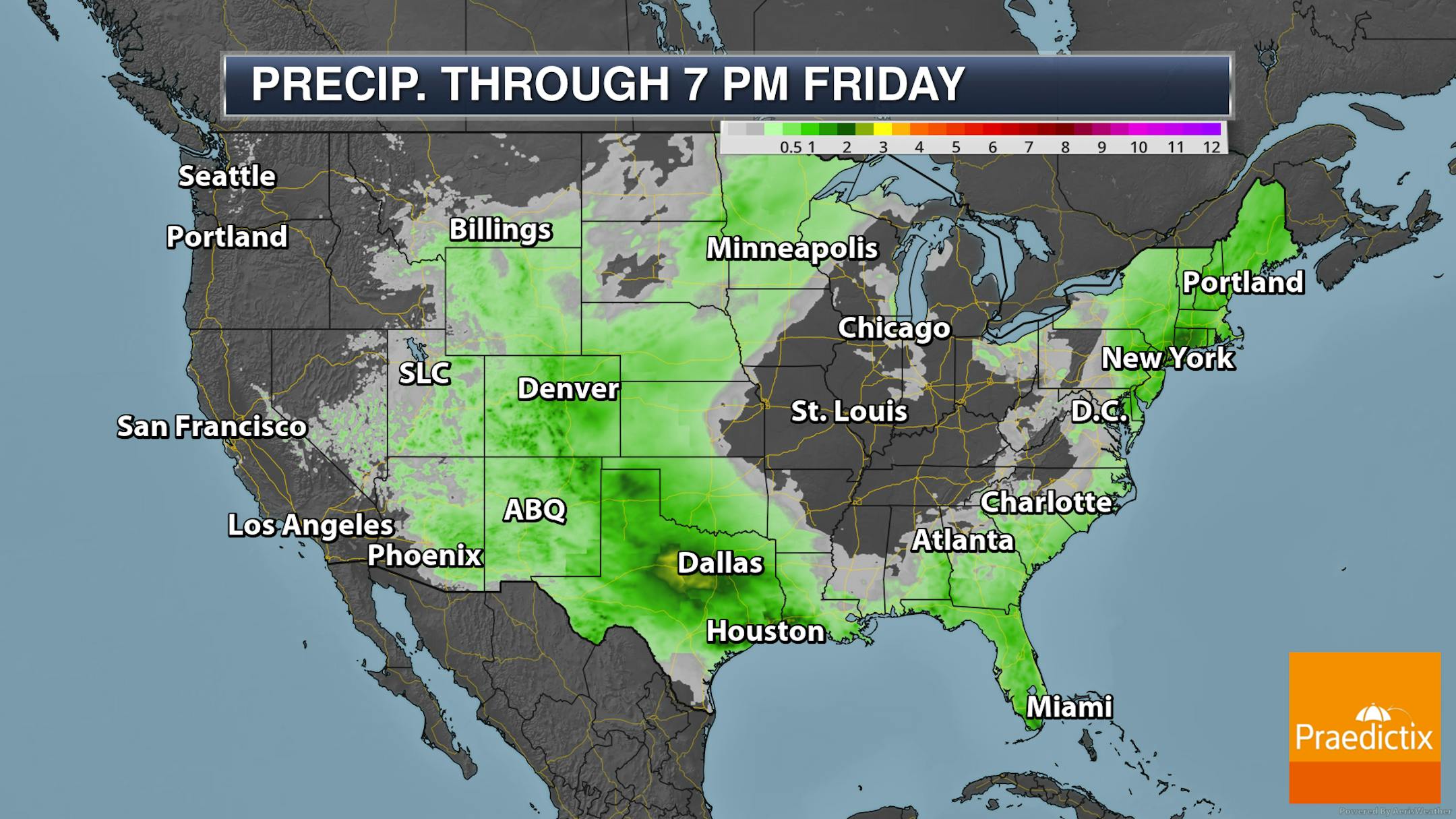
Two areas of heavier rain are expected through the end of the week: one in central Texas, and another in parts of the Northeast. In both of these areas, rainfall amounts of 2-4" are possible.

(The Minnesota Star Tribune)

Lee is expected to approach the Northeastern United States and Atlantic Canada as a strong system late Friday into the weekend. I would expect to see high wind impacts that could knock out power and trees (partly due to leaves still on the trees to catch the wind) - especially in coastal areas. Flooding rains will also be possible - as even 1-5" of rain on saturated soils could cause flooding issues. Storm surge along the coast will also be possible.

_______________________________________________

Fall snow levels can predict a season's total snowpack in some western states

More from the University of Washington: "Spring break can be a good time for ski trips — the days are longer and a little warmer. But if people are booking their spring skiing trips the fall before, it's hard to know which areas will have the best snow coverage later in the season. Researchers who study water resources also want to know how much snow an area will get in a season. The total snowpack gives scientists a better idea of how much water will be available for hydropower, irrigation and drinking later in the year. A team led by researchers at the University of Washington has found that in some western states, the amount of snow already on the ground by the end of December is a good predictor of how much total snow that area will get. This prediction works well in northern states such as Alaska, Oregon and Washington, as well as in parts of Utah, Wyoming and Colorado. Other states, such as California, Nevada, New Mexico and Arizona, were harder to predict — these regions either had too much variation in their weather patterns and/or got the most of their precipitation after December."

US behind more than a third of global oil and gas expansion plans, report finds

More from The Guardian: "The US accounts for more than a third of the expansion of global oil and gas production planned by mid-century, despite its claims of climate leadership, research has found. Canada and Russia have the next biggest expansion plans, calculated based on how much carbon dioxide is likely to be produced from new developments, followed by Iran, China and Brazil. The United Arab Emirates, which is to host the annual UN climate summit this year, Cop28 in Dubai in November, is seventh on the list. The data, in a report from the campaign group Oil Change International, also showed that five "global north countries" – the US, Canada, Australia, Norway and the UK – will be responsible for just over half of all the planned expansion from new oil and gas fields to 2050."

Heat pumps outperform boilers and furnaces — even in the cold

More from Canary Media: "Not only do heat pumps function in freezing temperatures — they work far more efficiently than fossil-fuel heating systems in the cold. That's according to a team of researchers in Europe affiliated with the independent nonprofit Regulatory Assistance Project. They published a study in Joule this week that provides yet more evidence to debunk the myth that heat pumps can't handle cold climates. Electric heat pumps both heat and cool indoor spaces by moving warmth into or out of them as needed. And while global sales grew by 11 percent in 2022, according to the International Energy Agency, heat pumps still only account for about a tenth of the world's building heating. To achieve the Paris Agreement's target of net-zero emissions by 2050, heat pumps will need to replace far more fossil-fuel boilers and furnaces — including in places with frigid winters."

_______________________________________________

Follow me on:

Thanks for checking in and have a great day!

- D.J. Kayser

(The Minnesota Star Tribune)
about the writer

about the writer

D.J. Kayser

See Moreicon