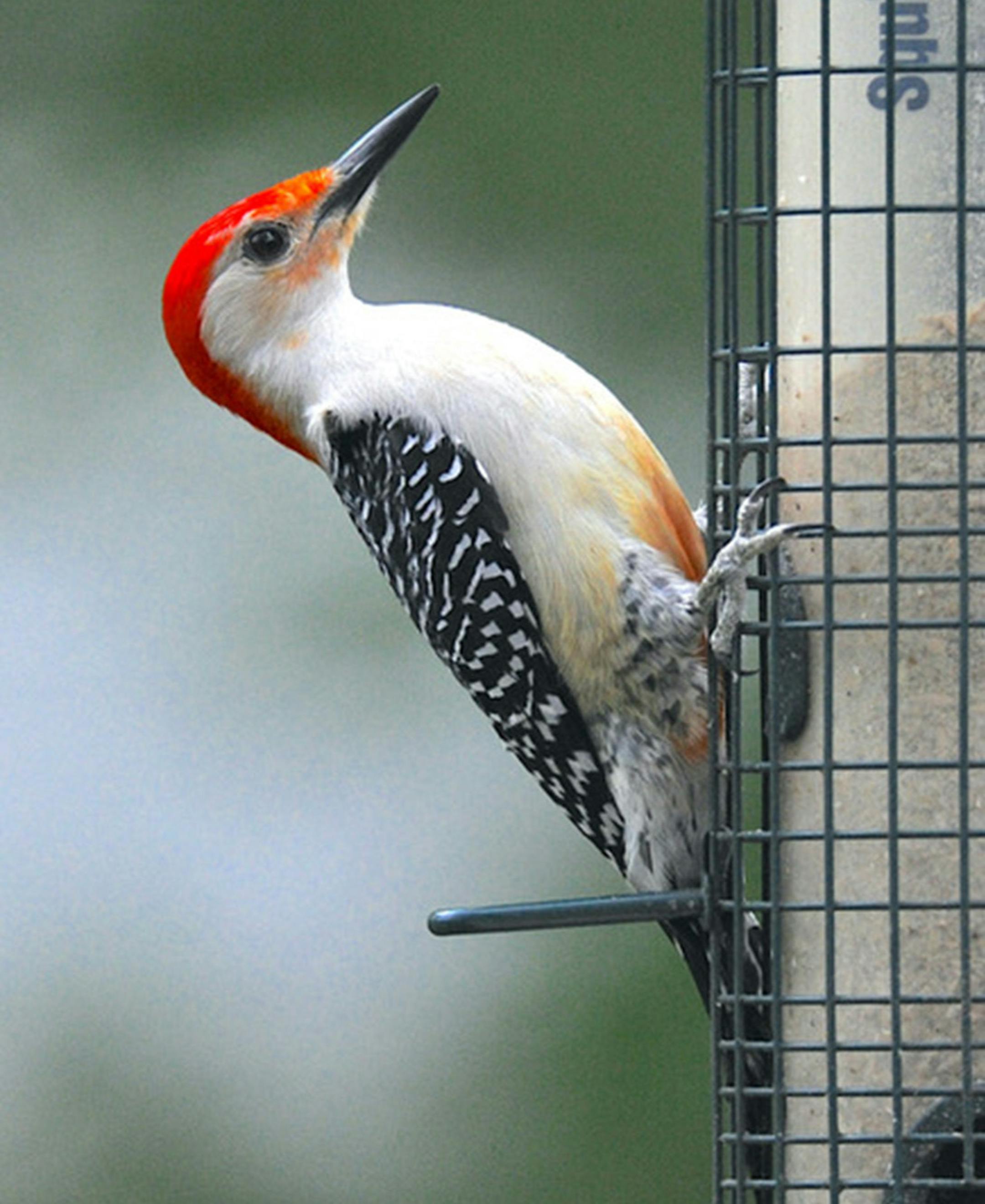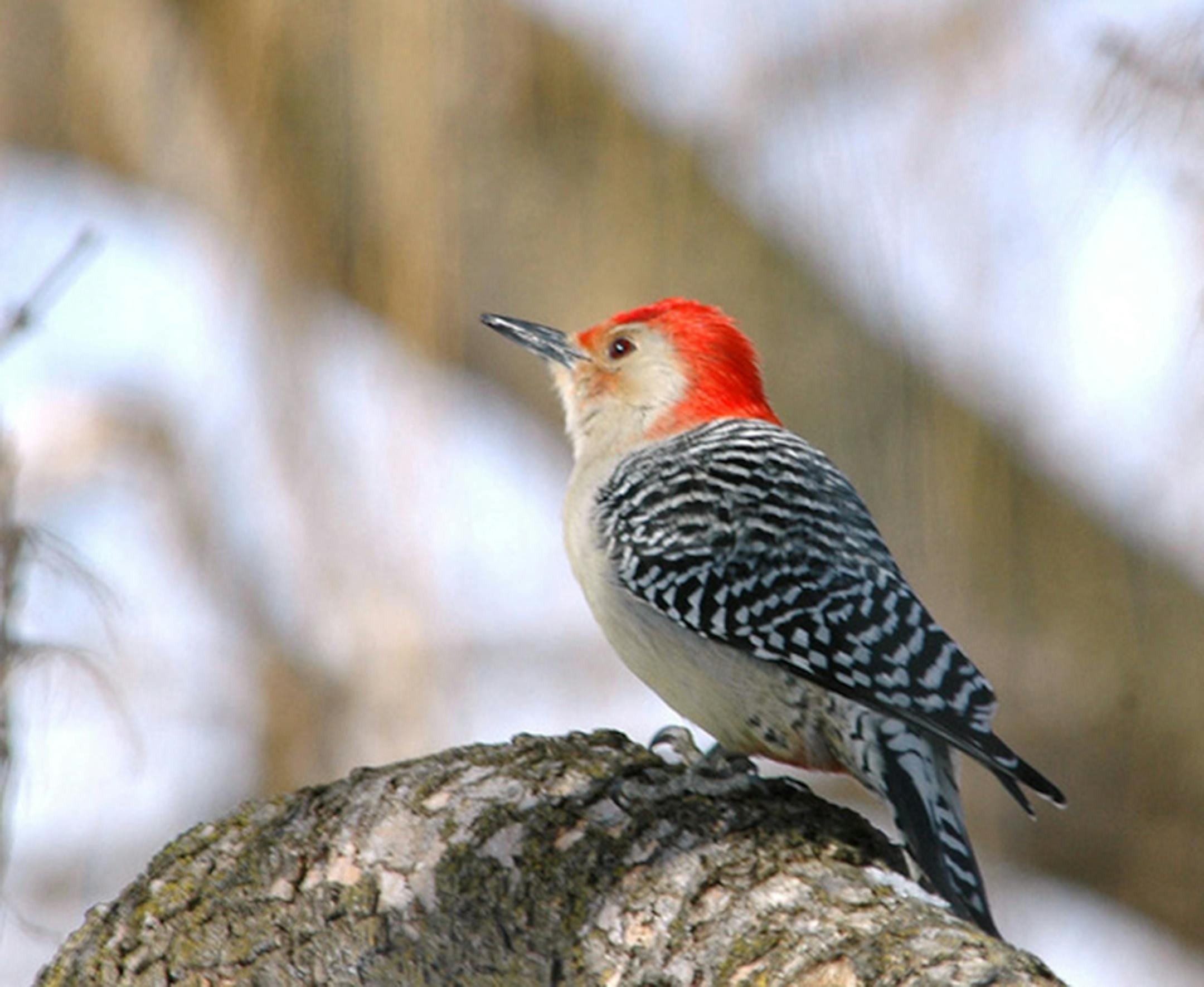
Q: This winter for the first time I've had a red-bellied woodpecker coming to my feeders.
I'm hoping she might find a mate and nest nearby in the spring, since I love having more varieties of woodpeckers visiting my feeders.
A: Red-bellied woodpeckers are gorgeous birds and a nice addition to the backyard. Like most woodpeckers in our region, this species doesn't really migrate, although severe cold weather may cause them to move southward for a while. Range maps provided by the Cornell Lab of Ornithology show that this bird is at home in the lower two-thirds of Minnesota, so yours might well attract a mate this spring and continue to visit your feeders. Minnesotans never used to see this species at all, but in the early 1900s this Southern woodpecker began to expand its range, and they're now found year-round in much of Minnesota. Their rich, "churr" call livens up backyards and woodlands, especially in spring and summer.
Night roost
Q: A chickadee has been sleeping on top of a pillar under our porch roof every night. Does this mean its nest was destroyed?
A: Chickadees roost at night in tree holes, if they can find them, or crevices, dense shrubbery or other spots that provide cover and at least some protection from the elements. Your smart little chickadee must feel that nesting up under the roof of your porch suits him/her just fine, since the bird returns each evening.
One winter a chickadee flew each evening to my feeders as it began to get dark, then ducked into a hole in the nearby maple tree, where it would spend the nights. He very noisily announced his presence as he arrived at twilight, coming a few minutes later each evening as the days lengthened. Although chickadees nest inside cavities, such as tree holes and nest boxes, they don't tend to spend time in them after the nesting season.
Bough bird
Q: I tossed some pine branches from the holiday tree onto the picnic table outdoors. Weeks later I noticed some birds, don't know what kind, flying in and around the branches. Could they have been thinking about nesting?
A: This is an interesting question, and one that has me slightly stumped. Since this occurred in early January the birds almost surely weren't getting ready to nest. But in a possible scenario, these could have been house finches, a common backyard bird. They might have been checking out the branches as a possible nest site for the coming spring. House finches nest two or more times in a season, so they start fairly early, in late April or early May. And they so often build nests inside holiday wreaths left on doors that some call them the "wreath bird." The pile of branches might have looked like a wreath to them.