
Warm weather keeps pools open longer, but hits farms with extreme drought

The warm weather has resulted in public swimming pools staying open later, but also drought conditions around much of Minnesota.

September 6, 2013 at 1:46AM
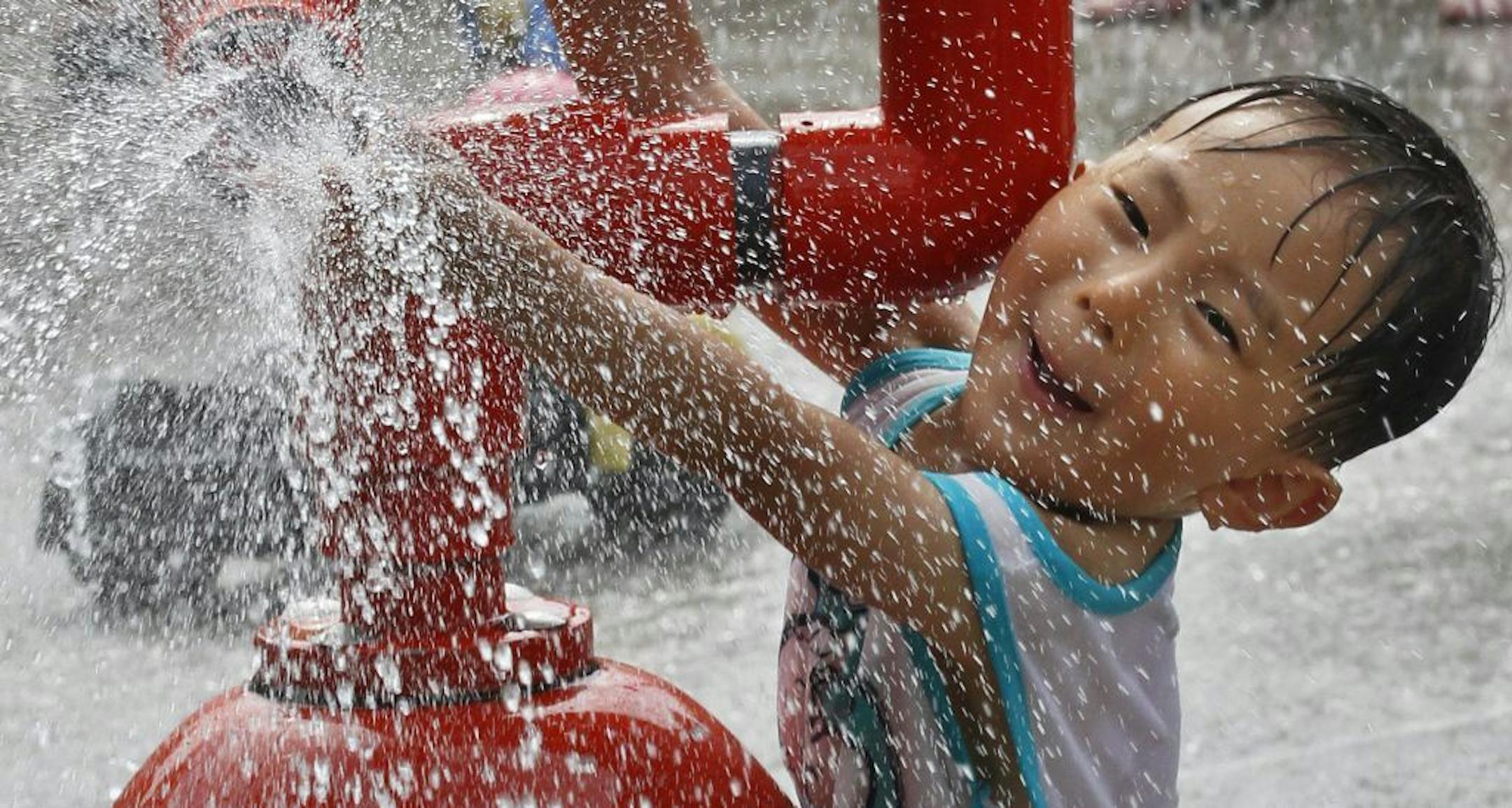
Hyuntae Yun of St. Paul cooled off in the Como Park Zoo wading pool as he commanded a water canon in the midst of numerous water sprays.
Hyuntae Yun of St. Paul cooled off in the Como Park Zoo wading pool as he commanded a water canon in the midst of numerous water sprays. (Dml - Star Tribune/The Minnesota Star Tribune)

Summer weather arrived late this year — and is now sticking around a little longer.

The unusually hot September weather is worsening drought conditions across Minnesota, especially in the central part of the state — disappointing for farmers who dealt with one of the most severe droughts in state history last year.

In the metro, though, swimmers are rejoicing at the extra dry warmth. Beaches will remain open and Minneapolis is keeping wading pools open extra long this year thanks to the above-average temps.

"People need a place to cool off," said Robin Smothers, with the Minneapolis Park & Recreation Board.

The Park Board decided Thursday to keep 31 wading pools open through Sept. 8 and another seven wading pools open past Sept. 8 until the weather cools, possibly until the end of the month — an unprecedented move, Smothers said.

Water parks and another 30 wading pools near or on school property closed Aug. 26 when school resumed in Minneapolis, but beaches will still be open to swimmers every day from 6 a.m. to 10 p.m., despite docks being removed and lifeguards no longer staffing them.

But while swimmers may be eagerly soaking up the atypical September weather, it's complicating crops for farmers across the state.

According to data released this week in the new U.S. Drought Monitor map, 53 percent of the state is in a moderate to severe drought, with several counties in central Minnesota hit hardest.

"It's a bit disconcerting," said University of Minnesota Extension climatologist Mark Seeley. "That's pushing them right back into the predicament they were in last year."

In fact, last year's drought that hit Minnesota from midsummer into early winter was among the worst in state history. In April 2012, nearly 98 percent of the state was in some kind of drought condition.

A wet later part of winter and spring alleviated that, but now drought has returned after a streak of little rainfall and lingering heat. Since July, Seeley said, rainfall for central Minnesota is 5 to 7 inches short of average, stressing crops.

"They've been sucking the water out of soil," he said.

Fields 'worse and worse'

For farmers like Nick Lilleberg, who has 5,000 acres of land in Kandiyohi County near Atwater, it's hard to quantify yet how much the drought will affect yields, but it has already hit soybeans hard. "We're definitely feeling the effects," he said. "Every time I drive by, the fields look worse and worse, and that's hard to watch."

Irrigation has helped, he said, and corn crops have stayed in good shape. But with little rain in the forecast, the extreme drought is likely to get worse and expand to more of the state. The National Weather Service in Chanhassen predicts little or no rain next week as temperatures continue to be above normal, with highs into the 80s and 90s.

"The weather extremes are the hardest to deal with," Lilleberg said, adding that planting in the wet spring was difficult and now, "Boom, the faucet was turned off — it's a double whammy."

Kelly Smith • 612-673-4141 Twitter: @kellystrib

about the writer

about the writer

Kelly Smith

News team leader

Kelly Smith is a news editor, supervising a team of reporters covering Minnesota social services, transportation issues and higher education. She previously worked as a news reporter for 16 years.

See Moreicon

More from No Section

See More
FILE -- A rent deposit slot at an apartment complex in Tucker, Ga., on July 21, 2020. As an eviction crisis has seemed increasingly likely this summer, everyone in the housing market has made the same plea to Washington: Send money — lots of it — that would keep renters in their homes and landlords afloat. (Melissa Golden/The New York Times) ORG XMIT: XNYT58
Melissa Golden/The New York Times

It’s too soon to tell how much the immigration crackdown is to blame.