
Wanted: Crystal-ball gazer

As the economy stumbles and people flail for answers, futurists take center stage.

May 3, 2009 at 7:05PM
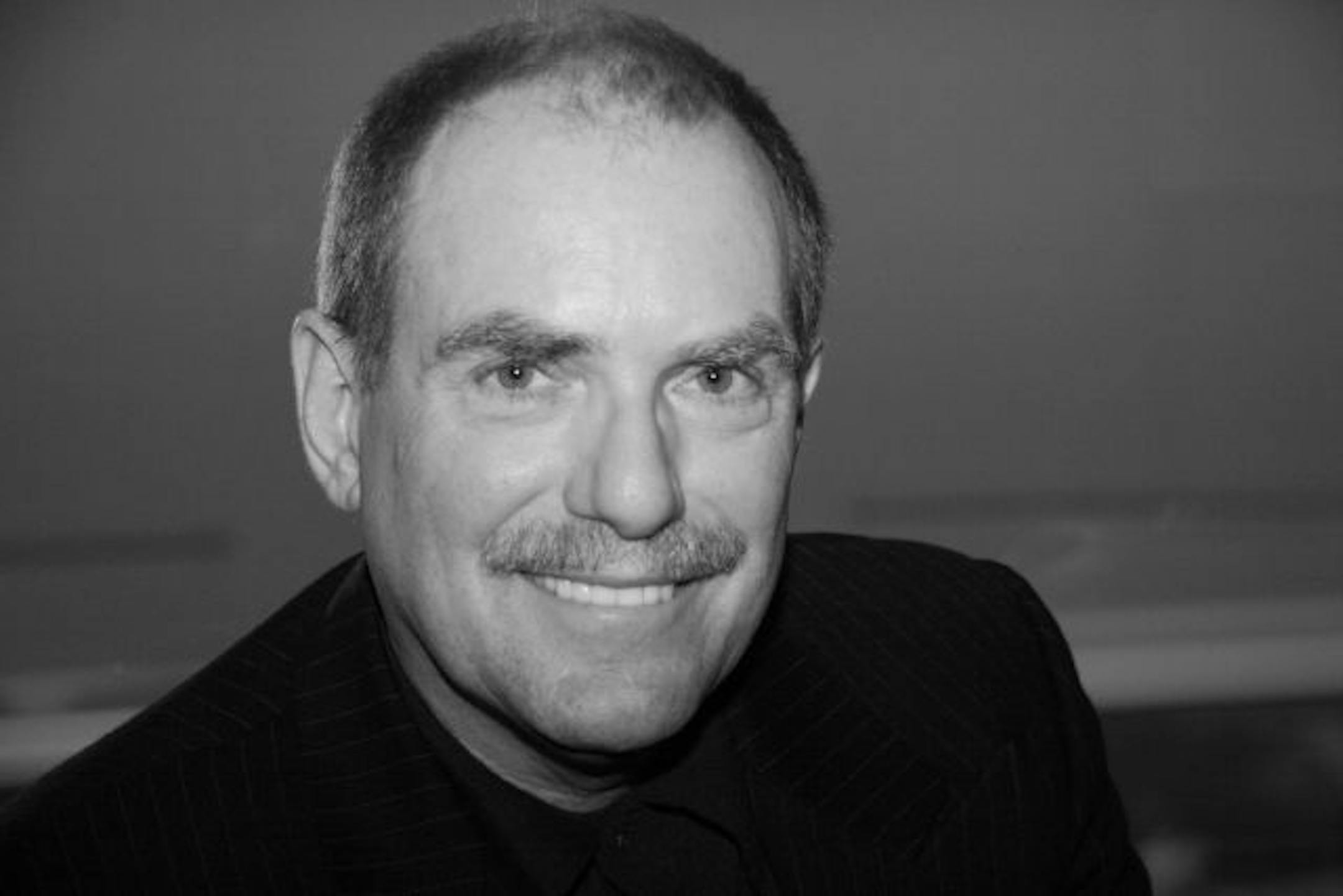
Provided image / photographer unkwon Author David Houle, - accompanies karen yuso story 'houle0507'
Provided image / photographer unkwon Author David Houle, - accompanies karen yuso story 'houle0507' (Star Tribune/The Minnesota Star Tribune)

Futurist David Houle talks about the future, and he can't talk fast enough.

"Ever since the economic meltdown, I've been swamped with requests," said the Chicago native on a recent trip to Minneapolis.

Clamoring for his attention are corporate CEOs, trade groups and others. He's spoken 15 times in three countries in one month alone. The shout is "find me a futurist," said Houle, "and they don't want to hear about colonizing Mars, they want to know about the next three to 10 years."

Who doesn't? So we asked Houle a few questions:

Q Why are you, a futurist, in demand now?

A A lot of the conversation of the current crisis is fear-based; people are nervous about the future. They want to hear a perspective of hope, and that's what I have. I don't believe it's the beginning of the end. Humanity is in a transition between two ages, from the Information Age to the Shift Age. Whenever humanity is in transition, there's a lot of disruption.

Q What's the Shift Age?

A That's what it feels like now, so that's what I call it and I made it the title of a book. In all aspects of our lives, everything is changing.

Q So what is going to happen in the next 10 years? Can you give a couple of big headlines?

A The years between 2010 and 2020 will be one of the most transformative decades in the history of medicine and health. It will be the most historically important in history when it comes to energy.

Q Can you elaborate?

A We are on the threshold of incredible discoveries. Innovations in nanotechnology combined with stem cell research will mean that by 2012 or 2015, somebody with osteoarthritis or missing cartilage will get an injection into the joint to grow new cartilage. We'll be treating cancer without invasive surgery or chemotherapy by 2012 to 1214. Instead of subjecting the entire body to lethal doses of chemical therapies, a tumor is killed by a nonbiological agent injected directly into it.

Health care will be more about prevention. By 2012, anybody in the U.S. will be able to get a genetic code map for $1,000. Say you're a 25-year-old man with a high probability for heart disease. You take statins, eat a low-fat diet and work out four times a week -- whatever research suggests to prevent disease -- and health insurance will pay for it. Health becomes more an issue of length of life and quality of life. Babies born after 2015 will come with a genetic map. In addition to medical breakthroughs and discoveries, we will confront moral questions we've never had before.

Q What sort of moral questions?

A If you know a child's entire genetic map, when they fall in love, does genetic knowledge trump love? Who has the right to live forever and what are the ethics of cloning?

Q The second headline has to do with energy. What is it?

A Renewable or alternative energy is one of the greatest wealth-creation opportunities in history. Think of John D. Rockefeller. He's an excellent example of generational wealth in America. He got wealthy by creating millions of users of oil. The oil companies created enormous wealth from what was then just tens of millions of users. Those who create the new energy sources, what will the value be to them of 5 to 6 billion users now on the planet? It will dwarf the wealth Rockefeller created.

Q You sound upbeat about the future when lots of others aren't. Why?

A We are at the global state of human evolution. We are experiencing accelerating connectedness. With 4 billion cell phone subscribers on the planet, there is no longer time or distance as it pertains to communication. In the last 15 years, there is no place. If I call a person 15 feet away, it takes 5 seconds to connect; if I call a person in China, 15,000 miles away, it takes 10 seconds. There are no more geographic barriers with the Internet. If there's an earthquake in China, in real time we're right there with the parents outside the collapsed school. A decade ago, that earthquake would have been a headline on page eight of the newspaper.

Within the next three to six years, some form of new global government will emerge. It's not government in the terms of a new infrastructure, rather an electronically connected entity. It will be the most intelligent chat room on the planet, for example. It could give us direction on climate change, international finance, shortages of natural resources such as water. Water is the next big issue. Only 3 percent of the water on the planet is fresh. At least a billion or more people don't have access to fresh, safe water. Water shortage isn't on people's radar, but it will be.

This is just a transition to a new age where wonderful things will be discovered, opportunities will abound. Humanity will face very serious problems in the next 10 years, but by solving them, we will transform ourselves into global consciousness and a new golden age.

Karen Youso • 612-673-4407

about the writer

about the writer

KAREN YOUSO, Star Tribune