
Want to visit Apostle Island ice caves? It'll cost you

The Park Service, which spent almost half a million dollars dealing with the crowds last year, will now impose a $5 visitor's fee.

December 18, 2014 at 10:10PM
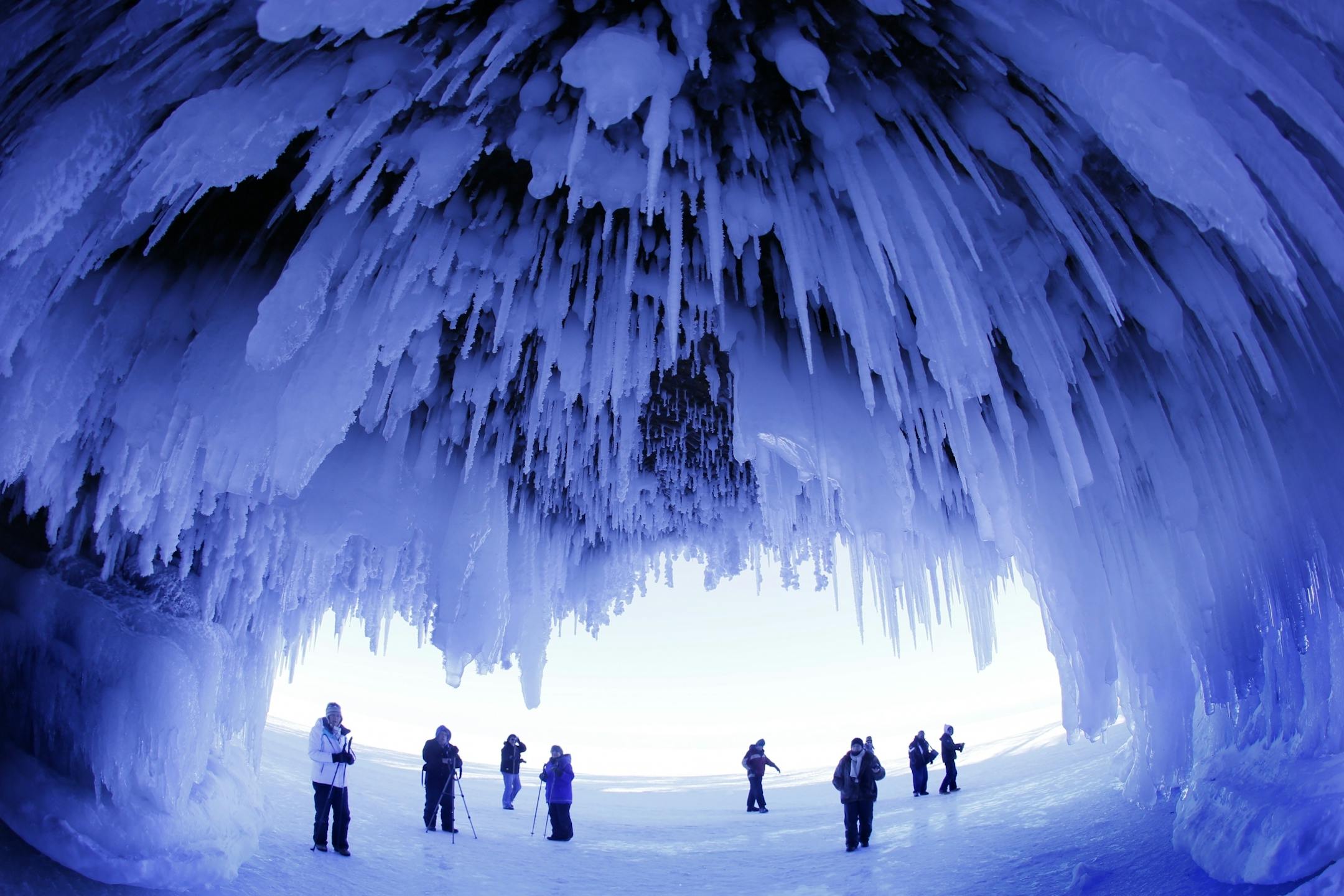
During one 2014 weekend, more than 8,000 people made the pilgrimage along the frozen shore of Lake Superior to witness and photograph the Apostle Islands ice caves.
It's been 5 years since the ice has frozen along the south shore of Lake Superior, creating access to the wonders of the Ice Caves of the Apostle Islands National Lakeshore. Over the weekend over 8,000 people made the pilgrimage, a mile walk along the frozen shore, to witness and photograph the crystal wonders of the caves. (Dml - Star Tribune/The Minnesota Star Tribune)

If you want to play in the Apostle Island ice caves, you'll have to pay.

From now on, the National Park Service plans to charge a $5 fee to visitors ages 16 and older who want to visit the ice caves.

That is, if the weather gets cold enough to re-create last year's winter spectacle.

Last year, 138,000 visitors trekked across a frozen-solid Lake Superior to wonder at the glittering ice caves along the Wisconsin shore. The Park Service spent $450,000 dealing with the crowds and only charged a $3 parking fee that raised just $47,000 and was bypassed by many visitors who simply parked along Highway 13 or in temporary lots nearby.

Last winter was the first time in five years that conditions were cold enough to make the caves accessible. Images of the icy wonderland went viral, drawing record numbers of visitors. In a press release Thursday, the park service noted that "visitation of this magnitude may be the norm, rather than the exception."

The next time conditions are right, visitors can either pay for a $5-per-person day pass in the Meyers Road parking area or purchase a $10 annual park pass from the Apostle Island park headquarters in Bayfield.

about the writer

about the writer

jenbrooks

More from No Section

See More
FILE -- A rent deposit slot at an apartment complex in Tucker, Ga., on July 21, 2020. As an eviction crisis has seemed increasingly likely this summer, everyone in the housing market has made the same plea to Washington: Send money — lots of it — that would keep renters in their homes and landlords afloat. (Melissa Golden/The New York Times) ORG XMIT: XNYT58
Melissa Golden/The New York Times

It’s too soon to tell how much the immigration crackdown is to blame.