In St. Paul's Lowertown neighborhood sits the Northwestern Building, a drab eight-story brick edifice that once housed railway administrative offices. It seems the most unlikely place to go hunting for interesting musical experiences.
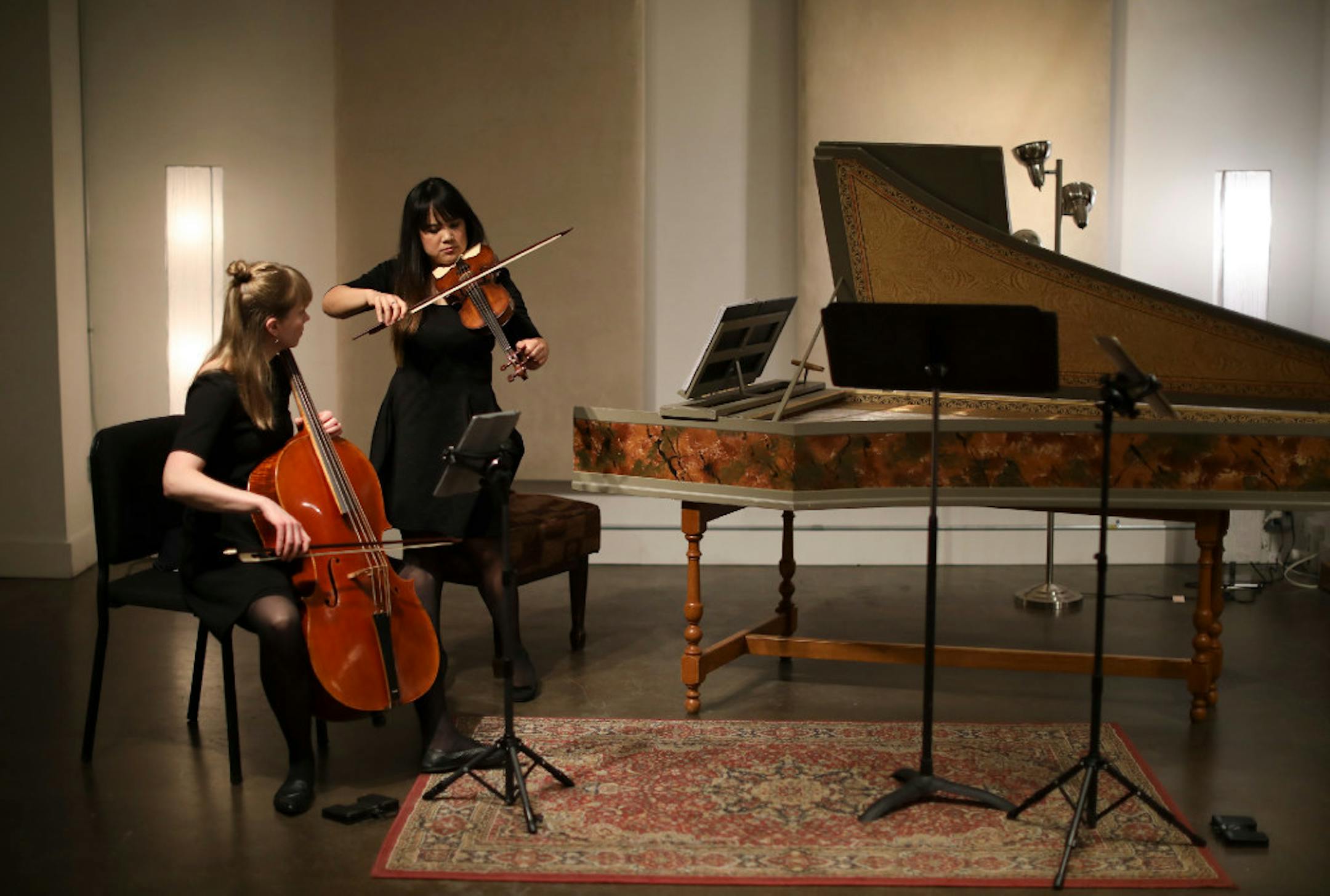
On the second floor, however, along a tiny maze of bland institutional corridors, a listener finds the Baroque Room, a hidden gem of the Twin Cities classical scene.
The Baroque Room and other small groups are like craft breweries for the classical industry. They take music away from the grandiose settings of major concert halls and into more intimate, even domestic environments. The up-close and personal experience is appealing to new audiences, plus it's a boon for musicians who crave attentive listeners.
"A thin gray carpet and drop-down fluorescent lights" was the uninspiring sight that first greeted violinist Marc Levine when he entered the Baroque Room seven years ago. But Levine and his wife, harpsichordist Tami Morse, had a vision for transforming the defunct office space. They hoped the room would help them build what they called an "inclusive movement" for diversifying the Twin Cities early-music scene. They wanted to fill it with carefully curated presentations of baroque music, with plenty of post-concert socializing.
Graduates of Stony Brook University on Long Island, the pair were eking out a living as freelance musicians in New York City when they decided to relocate to Levine's hometown and hatch their musical start-up (he grew up in Mendota Heights). With "nothing to lose," as he put it, they hired an architect to plan a remodeling of the unattractive space. Thanks to grant funding, they swiftly opened the Baroque Room, a bright, welcoming cocoon of musical activity.
Since 2011, it has grown to host about 50 concerts a year in its intimate performance area, measuring little more than a generously sized living room.
For Levine, the venue's size is crucially important. "The biggest comment we get is that the musicians are so close," he said. "You can hear everything, and really be part of the event."
That sense of intimacy is particularly important in baroque music — encompassing, roughly, European music from 1600 to 1750, when instruments were quieter and more delicately voiced than their modern counterparts. Music like that can get lost in larger, more conventional spaces.