

You've probably walked or driven past some local gems of Prairie School architecture and wished you could peek inside.
This week you'll have a rare opportunity to do just that. Five private homes — all at least 100 years old and filled with original details such as woodwork, stained glass and hand-painted murals — will open their doors for a bus tour on July 22, a fundraiser for nonprofit Preserve Minneapolis.
"Everybody's curious about what's inside," said architectural historian Dick Kronick, who recruited the homeowners to open up their homes.
Kronick, a Preserve Minneapolis board member and editor in chief of its Minneapolis Historical project to preserve the stories of historic buildings (minneapolishistorical.org), has long been fascinated by the architecture of the late 19th and early 20th centuries, when pioneers such as Frank Lloyd Wright and Louis Sullivan were shaking things up.
"It was a protest movement, a battle of architectural styles," he said. At a time when many buildings were modeled after Greek temples or Gothic cathedrals, Prairie School architects were inspired by nature.
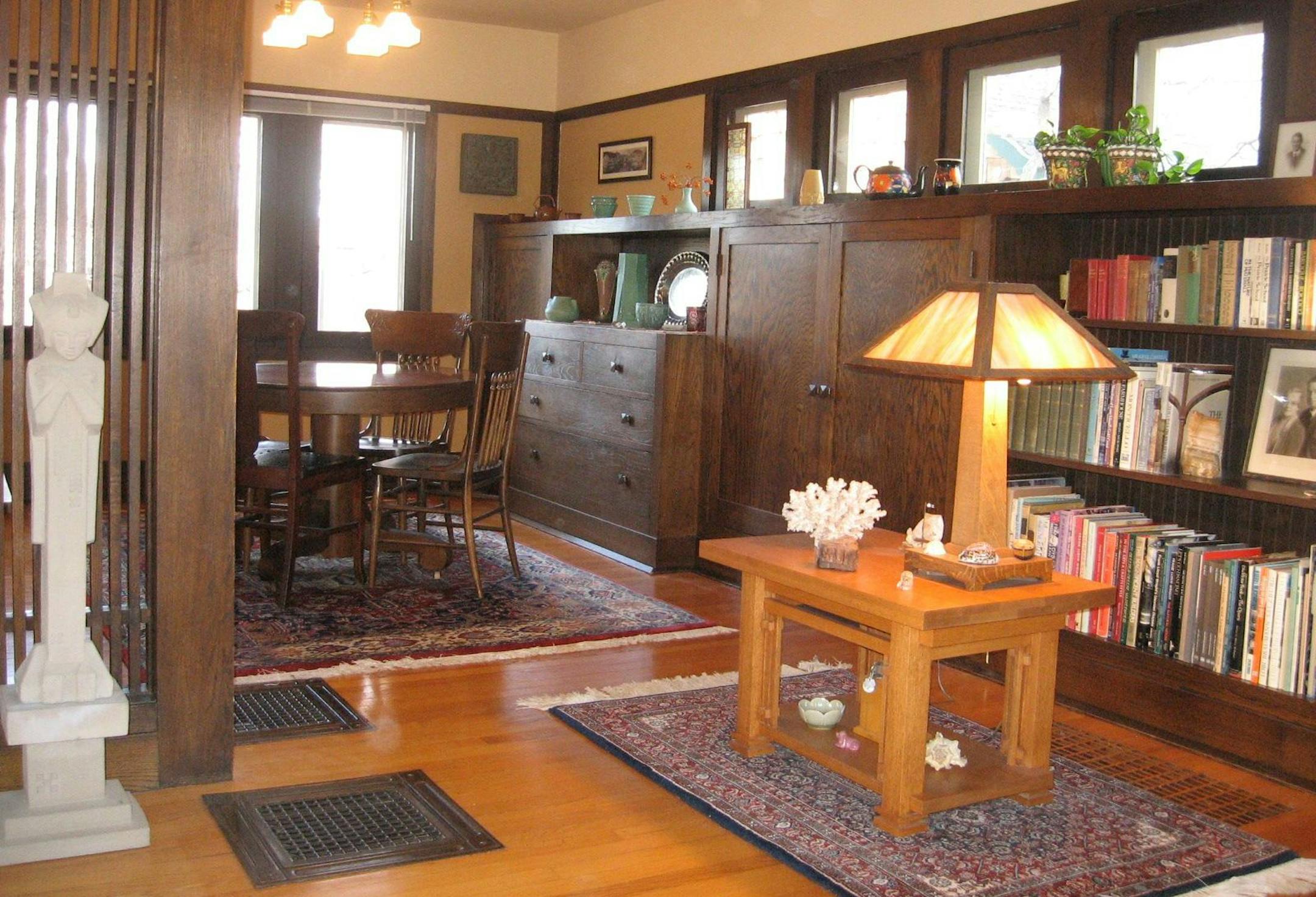
The buildings were designed to integrate with the surrounding landscape, with horizontal lines, bands of windows, open floor plans, exquisite craftsmanship and restraint in the use of decoration.
"You feel the honesty in the materials," said Kronick, such as natural-hued, unpainted woodwork and plaster walls that look like plaster — not scored to mimic stone.
Four of the five houses on the tour were designed by Purcell & Elmslie, the renowned firm formed by William Purcell and George Elmslie, both contemporaries of Wright. Elmslie and Wright worked together in Chicago, under Sullivan, before Wright was fired for taking clients on the side, and Elmslie succeeded him as Sullivan's chief draftsman. Eventually, Elmslie became disenchanted with his boss, who was getting credit for Elmslie's work, said Kronick, so Elmslie moved to Minneapolis to join Purcell, who had started his own practice.


