

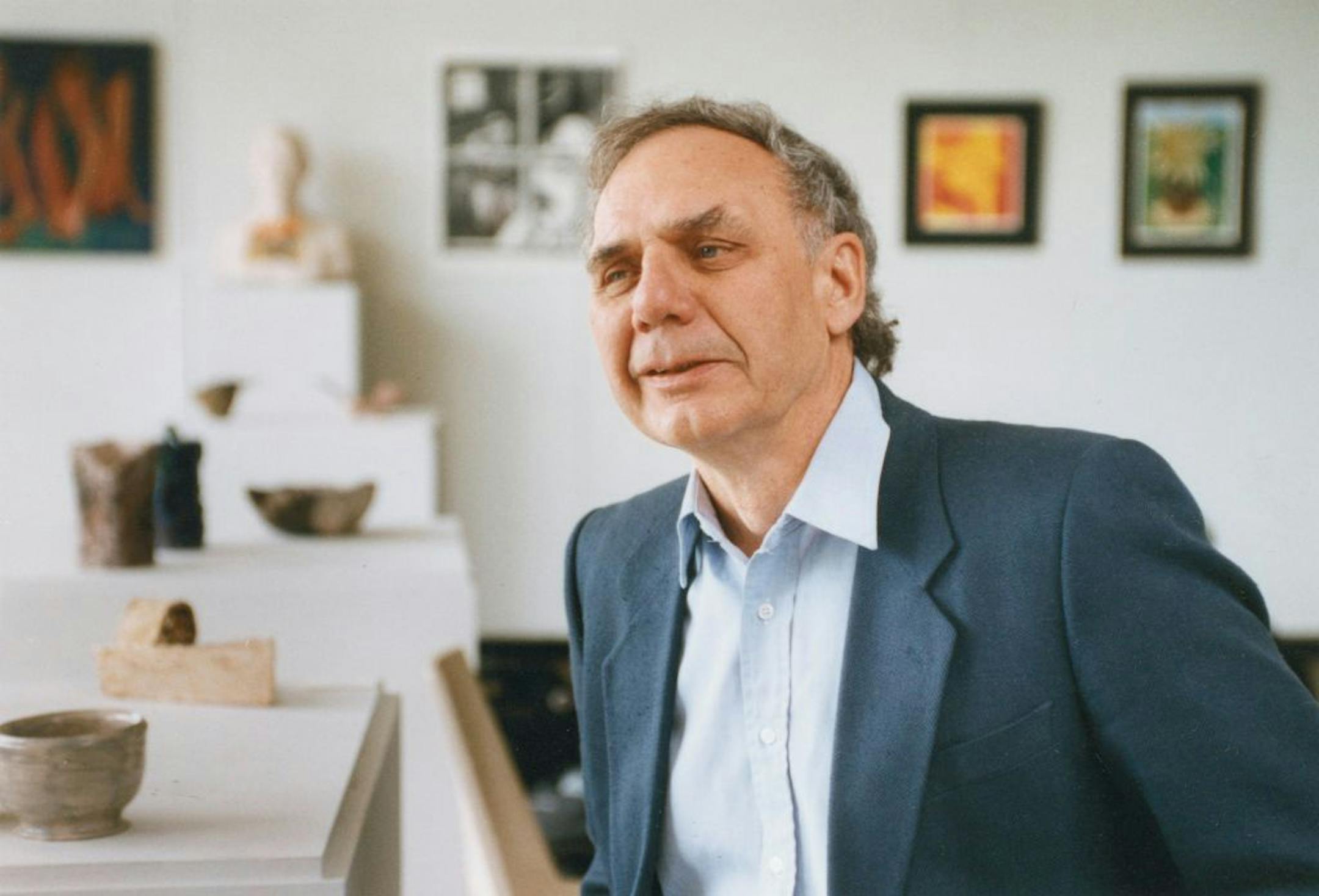
Confident that young people learn best by example, Wallace Kennedy persuaded professional artists, actors and musicians to mentor Minneapolis high school students in a 1970s program that became a national model for arts education.
At the program's peak, hundreds of kids spent part of the school day performing at Minnesota Dance Theatre or Children's Theatre or in programs run by the likes of the Minnesota Orchestra, Walker Art Center and the Minneapolis Institute of Arts.
Some went on to professional careers in the arts. With support from the federal Department of Education, Urban Arts was later replicated by dozens of schools across the country from the Bronx to Chicago to Seattle.
Kennedy died Jan. 10 at his home in Richfield of myelofibrosis, a bone marrow disorder. He was 84.
In recent weeks Kennedy was overwhelmed with letters and notes from former students, colleagues and artists whose lives he touched.
"I'm very moved by the wide web of people who knew and were so deeply influenced by him," said his son John, a composer and conductor based in Berkeley, Calif. "I've known intuitively about his generosity and the integrity with which he did his work, but he very quietly helped a lot of people to see their potential and gave them confidence in themselves."
Kennedy's influence on Minnesota education spanned more than 40 years, starting with a humanities program that he and two colleagues launched at Albert Lea High School in 1957 and continuing into the 1990s, when he helped develop the first curriculum for Minnesota's arts high school, the Perpich Center for Arts Education in Golden Valley.
The Albert Lea program -- considered the nation's first public school humanities course -- was a two-year, team-taught curriculum that wove philosophy, art, music and architecture into courses in American and European history and literature. Everything was taught from original source material rather than textbooks, and field trips took kids to lectures, theater performances and museums in the Twin Cities and elsewhere.

