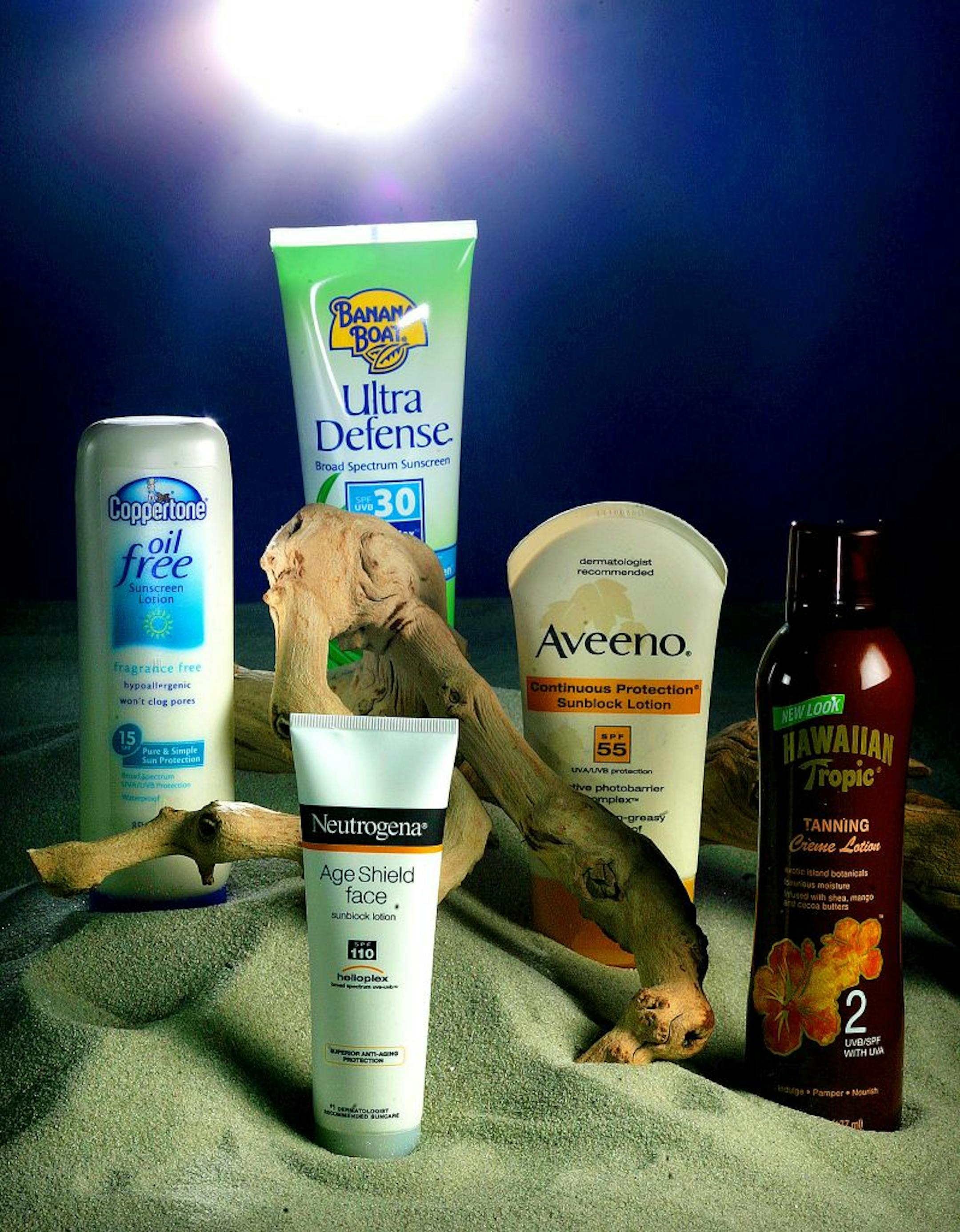
Sunblock or sunscreen? UVA or UVB? Water- or sweat-resistant? Just when the confusion over which sunscreen to buy was set to end in June, the Food and Drug Administration (FDA) decided to extend the frustration. Major manufacturers of sunscreens will now have until December to comply with new labeling requirements. After delays since 2004, manufacturers still complained that a year wasn't enough time to get their bottles re-labeled.
The number of choices -- and choices within choices -- for sunscreens is overwhelming, said Damien Kovac, while shopping at Target. "I usually look for the same brand I bought the last time, just to keep it simple."
Only a few manufacturers, such as Banana Boat, have already simplified some of their labels. What changes will consumers see under the new guidelines? Sunscreens labeled "broad spectrum" must include protection from UVA and UVB rays. Many products on shelves today are already labeled "broad spectrum," but that does not yet guarantee that the product contains UVA and UVB protection unless the label specifically states it, said Michael Hansen, a senior scientist at Consumer Reports.
Also, no sunscreen can be labeled as waterproof or sweatproof, only water- or sweat-resistant. The word "sunblock," which can still be found on many labels, will be banned after the FDA deemed it misleading.
Manufacturers also will be required to prove that a sunscreen provides all-day or instant protection before it can be labeled as such. (Experts say that sunscreen should be applied 15 to 30 minutes before going outside so that skin can absorb it.)
Only 25 percent of the sunscreens on store shelves received a top rating for protection, stability and ingredient safety from Environmental Working Group, a nonprofit research organization based in Washington, D.C.
What can consumers do until December to make the best of an antiquated labeling system? "Not much," said Hansen.
Two resources can help consumers find a better-than-average sunscreen. The June issue of Consumer Reports rated 18 sunscreens and check-rated seven for quality, including All Terrain AquaSort and Walgreens Continuous Spray Sport. For a comprehensive list of 1,800 products, go to ewg.org, which rates each product and includes lists of the best and worst sun protectors.