

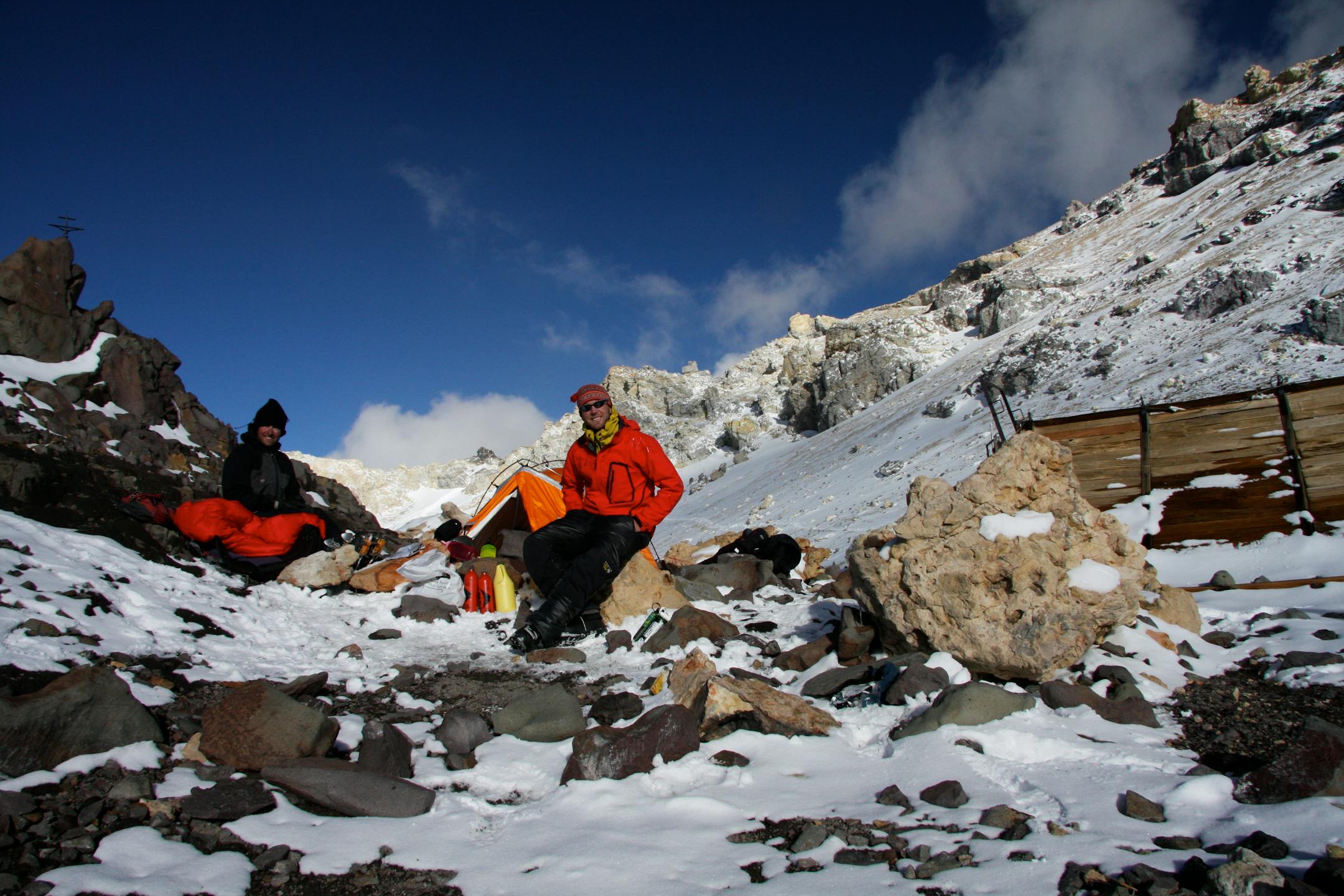
The subzero temperatures didn't deter him. Neither did losing the feeling in the tips of his fingers. But when the hallucinations kicked in as he scaled the highest mountain in the Western Hemisphere, Mount Aconcagua in Argentina, Christian Gilbert of Waconia became a bit concerned: "I didn't know if I was awake or asleep dreaming about being awake." The world geography teacher at Clearwater Middle School in Waconia turned the narrative of his winter break adventure with the 22,841-foot-high mountain into a compelling schoolwide event for students back home.
He and Brian Honkomp, an earth science teacher at the school, sent updates via a portable GPS device, which transmitted their coordinates and daily e-mails. More than 300 students, parents, faculty and staff members at the school followed their exploits in the Andes Mountains via the Internet.
The pair also posted voluntary daily lesson plans for students who wanted to learn more about the area's geology, history and politics.
"We didn't want to make it like school," said Gilbert. "We wanted to make it fun, really cool. We had a really good response, sometimes from kids you wouldn't expect."
When the pair returned to school last Monday, they were greeted like rock stars. Everyone wanted to know more about their adventure.
Despite the hallucinations, Gilbert made the summit after returning to base camp for a day to rest and clear his head. Honkomp, who suffered frostbite on seven of his 10 fingers, made it above 22,000 feet, about 800 feet short of the summit.
"We were lucky," Honkomp said, his fingers heavily bandaged. "At the end of every day's climb it felt like we had run a marathon. Twelve days, 12 marathons."
Mount Aconcagua is one of the Seven Summits, the tallest peaks on the seven continents, which serious mountain climbers hope to scale. Only about 200 climbers have completed all seven. In a remote area of Argentina, the summit is considered the third-most difficult of the seven to climb. Four climbers died on the mountain just last week.


