
Advertisement

Vote with faith in our democratic process

We have a sound election system if it's allowed to function.

November 7, 2022 at 11:22PM
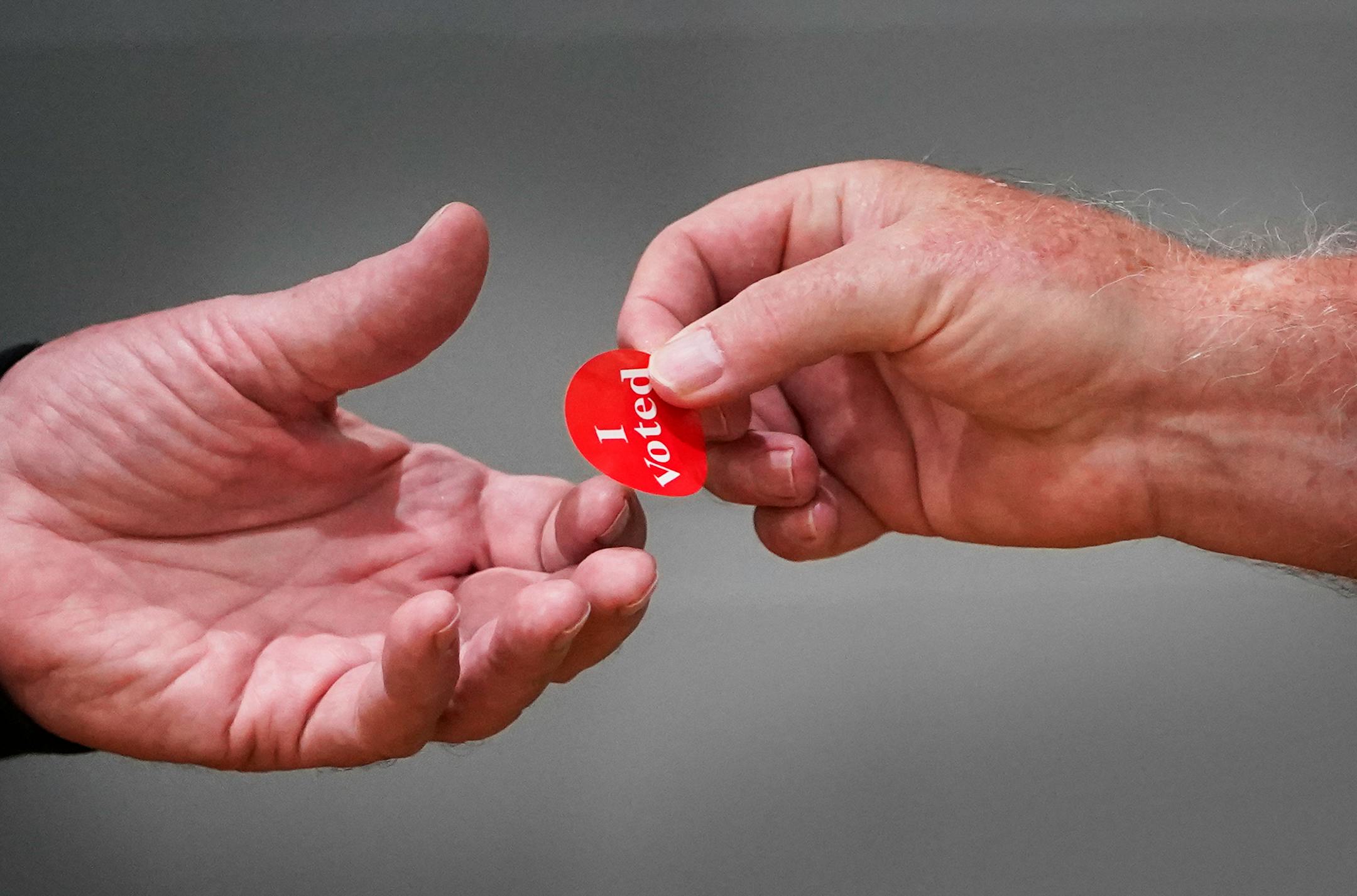
An election worker hands a voting sticker to a voter at Powderhorn Park during the primary election on Aug. 9 in Minneapolis. (David Joles, Star Tribune/The Minnesota Star Tribune)
Advertisement

Opinion editor's note: Editorials represent the opinions of the Star Tribune Editorial Board, which operates independently from the newsroom.

•••

It's Election Day, and our collective civic task of choosing our elected leaders will soon be over. It is a monumental exercise in hope and the underlying faith that the results will be a true and accurate reflection of the ballots cast. Herculean amounts of work at all levels — including the vital efforts of volunteers — go into making this happen.

But too often, this civic exercise has been actively — and baselessly — undermined by some who believe that they stand to gain power by trashing the democratic process that is the very foundation of government for, by and of the people.

They must not succeed.

In the election's closing days, President Joe Biden said in a speech, "As I stand here, there are candidates running for every level of office in America … who won't ... commit to accepting the results of elections that they're running in. This is the path to chaos in America. It's unprecedented, it's unlawful and it's un-American."

Sadly, it's not exactly unprecedented. The path for this Big Lie was paved when then-President Donald Trump — well before the 2020 vote — signaled that he would not accept the results of an election that did not declare him the winner. His drumbeat since then about the "stolen, rigged election" has been as pervasive as it is relentless. Fearful of alienating Trump acolytes, Republican after Republican has amplified this lie and extended it to other races where convenient.

This occurred even though the 2020 election results were the most scrutinized and tested in American history. Court after court rejected legal challenges for lack of evidence. Recount after recount, audit upon audit — all confirmed the results.

Advertisement

Be assured that Minnesota, in particular, has a sound and thoroughly tested means for collecting and counting ballots. Moreover, this state has an established and reliable means of conducting recounts if needed. The state is also tops in voter turnout, proving that an open and inclusive system can be secure and reliable.

Can there be legitimate challenges or questioning of results? Absolutely. And we have a system that allows for such situations. Before you even cast your vote, election equipment here has been tested for accuracy, and those tests are observable by the public.

Despite rumors and conspiracy theories, the state secretary of state's office, which oversees elections, said, "No evidence has ever shown that any voting machines in Minnesota were faulty, hacked or compromised in any way," either in 2020 or previous elections.

After Election Day, all 87 Minnesota counties will conduct a postelection review that includes a hand count of ballots in precincts randomly selected not by the secretary of state but by local county canvassing boards. Those boards must certify the results.

A recount is a process to precisely determine the vote count between two candidates whose vote margin is exceptionally close. During a recount, election officials individually review each ballot that was cast.

When, as happened in the infamous Franken-Coleman Senate race, the results are too close to call, there may be the need for a recount. For federal, statewide or judicial offices, the margin must be less than 0.25% to qualify for a publicly funded recount. State legislative contests must be within one-half of 1%. And any race where the difference is 10 votes or fewer, or less than 400 voters cast ballots, also qualifies.

Advertisement

There is good reason for such stringent guidelines. Despite the hopes of those who call for recounts, the number of votes that change as a result is small. Between 2000 and 2015, out of 4,687 statewide general elections in the U.S., 27 were subject to a recount, according to FairVote. Only three changed outcomes. One of the three was the 2008 race for U.S. senator. After months of recounts and court battles that included the Minnesota Supreme Court, Al Franken was declared the winner by 312 votes over Norm Coleman.

Coleman, to his credit, not only accepted the final determination but called Franken to congratulate him. "I told him it's the best job that he'll ever have," Coleman said at the time, characterizing the call as "a very positive discussion." Franken later said the call was "just a really nice moment between two people who really fought hard. ... It's a nice way to end this."

It is essential to have such options available to candidates. But it is also crucial that such tools not be weaponized and used to delay and deny the people's will. Voter intimidation at the polls by self-appointed — and sometimes armed — "ballot watchers" also should never be tolerated. And intimidation of and actual threats against poll workers and election judges should be off-limits.

The bottom line is this: Those who say they may not accept the results of an election they don't win don't actually believe in the democratic process.

We urge all Minnesota candidates and voters to let a system that is so thoroughly vetted do its work, allow the process to conclude without intimidation or threat, and accept the outcomes.

There will be another chance soon enough.

Advertisement
about the writer

about the writer

Editorial Board

See Moreicon
Advertisement