

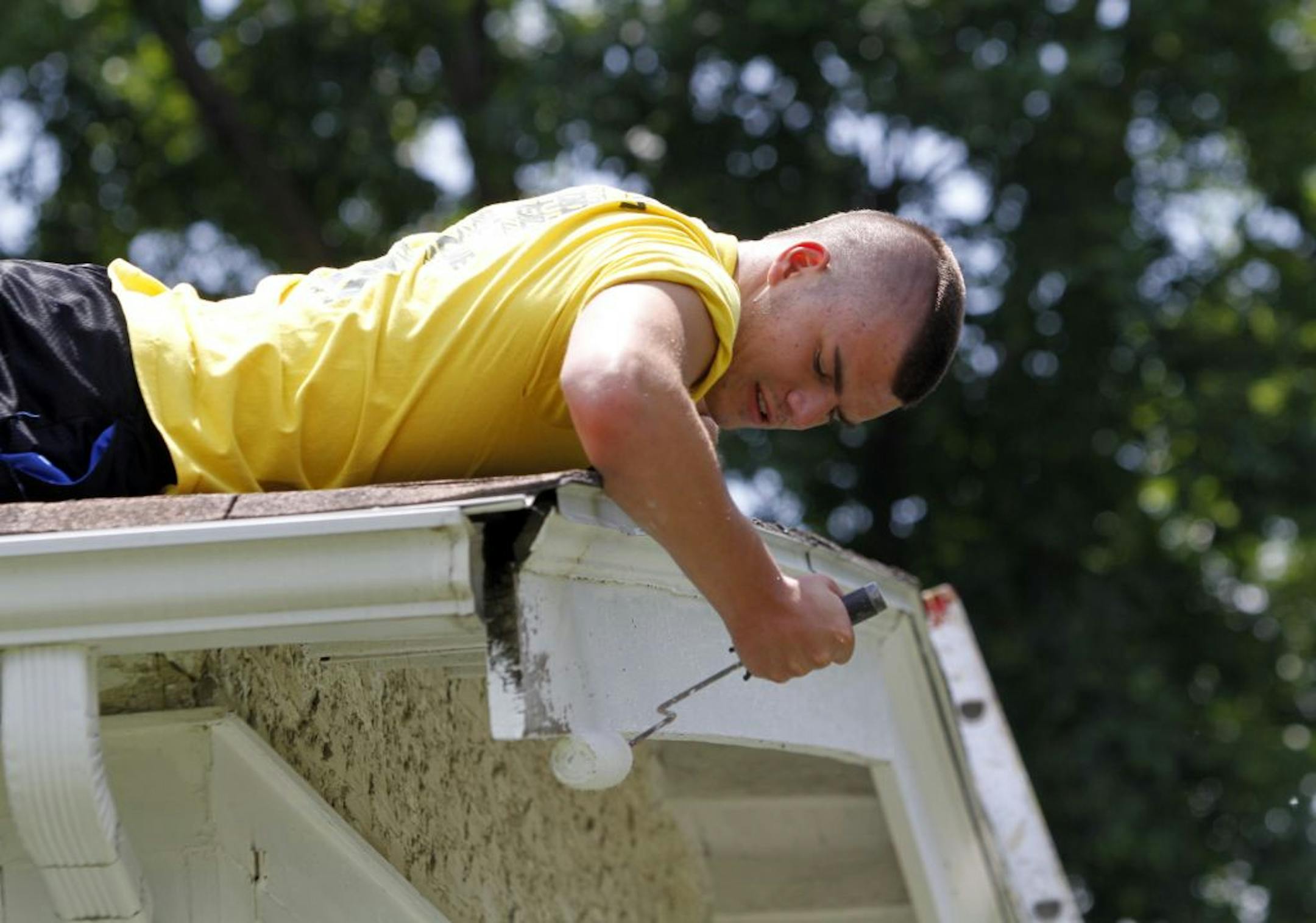
When a crew of teenagers gathered to paint Georgia Bredesen's south Minneapolis home last week, she didn't realize that they were part of a stealth army of 25,000 volunteers.
No, they didn't sneak up to the house in the middle of the night.
The undercover part of the operation is that Bredesen didn't know who was behind it all.
That layer of mystery is a major reason why the program is so successful, organizers say. It's one of a family of assistance programs run by the Greater Minneapolis Council of Churches, which oversees everything from food banks to helping people plant their gardens.
"At least two-thirds of [the recipients of the volunteer work] have never heard of us," said the Rev. Gary Reierson, the council's president. Before the year is over, the volunteer corps will have helped more than 350,000 people.
At first glance, that anonymity seems surprising. With an $8 million budget and 700 member congregations, it not only is the nation's biggest local council of churches, but it's bigger than most state councils. But Reierson is convinced that the council's low profile is a key to its success.
"Taking credit is not what this is all about," he said. "There are some organizations where getting credit is more important than what they do. That's not the way we work. We want our partners to get the credit."
The council acts as a matchmaking service for volunteers: It finds the people who need help and pairs them with the people who are offering it. In many cases, the council even provides the necessary supplies, which, in the case of painting, includes everything from paint to ladders.


