From its opening salvo, Walker Art Center's provocative new show of art from its collection strikes a deeply patriotic chord that echoes and re-echoes as the display unfolds.
Appropriately, the patriotism of "Less Than One" is complex, questioning and as inclusive as the United States itself. It has none of the jingoistic, exclusionary nationalism so common in the political rhetoric of the moment. Instead, it embraces challenging ideas and such core American values as honesty and candor. It is, at heart, an expansive display of "e pluribus unum" patriotism.
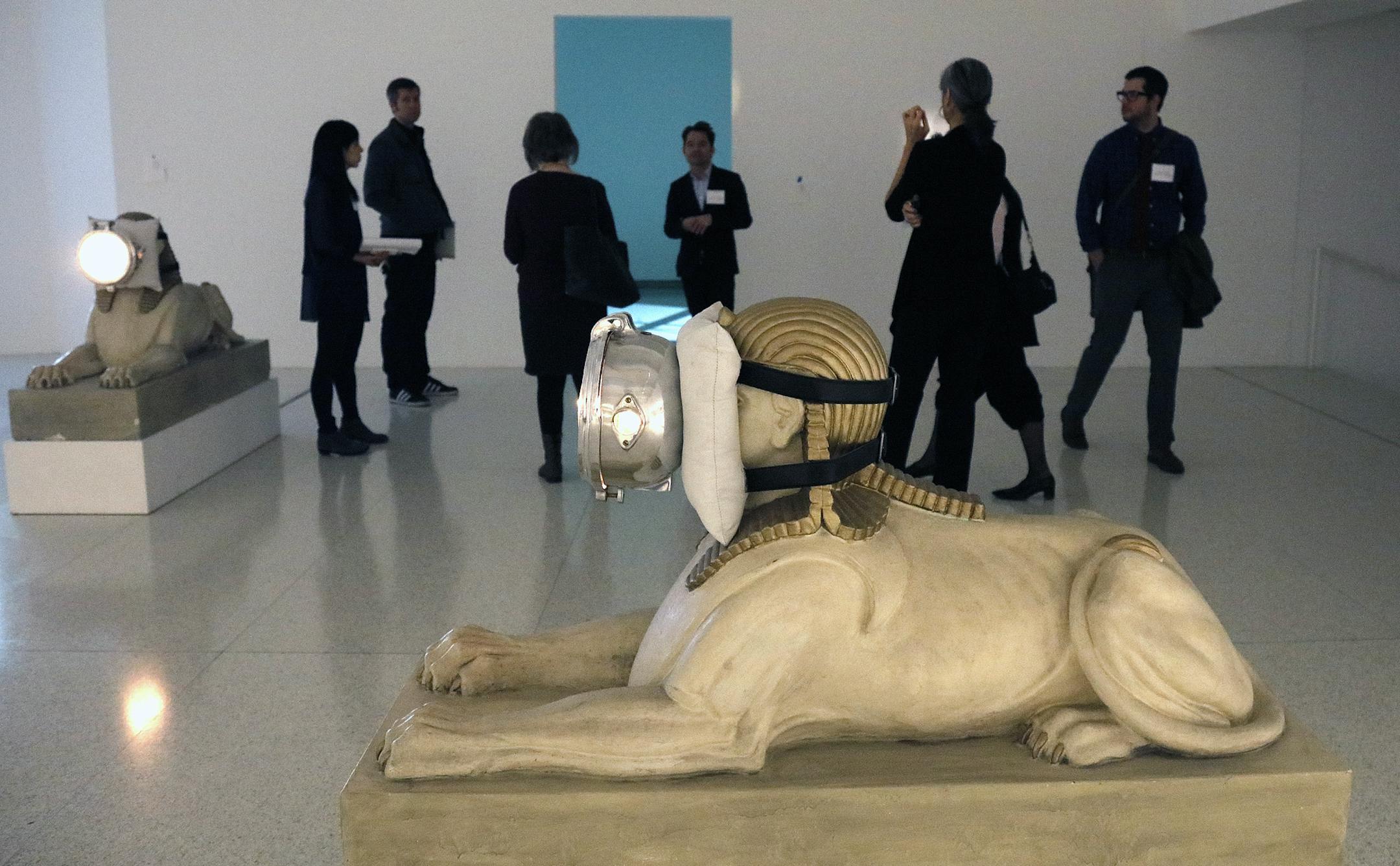
It features just 16 artists whose visuals, voices and ideas delve into perennial hot-button topics ranging from race, ethnicity and sexuality to troubling episodes in the country's recent history including the 9/11 tragedy and the depravity of Abu Ghraib. Incorporating paintings, sculpture, videos and elaborate installations, the show runs through Dec. 31.
Some of the content is unquestionably tough, and the implied psychological and political issues are especially charged in an election year. At the same time, there is real beauty in the lush color and sharp graphic design of many pieces. And, to an unusual extent, the contemporary work ties into the history of art as far back as ancient Egypt and the European renaissance.
Sixty years of talent
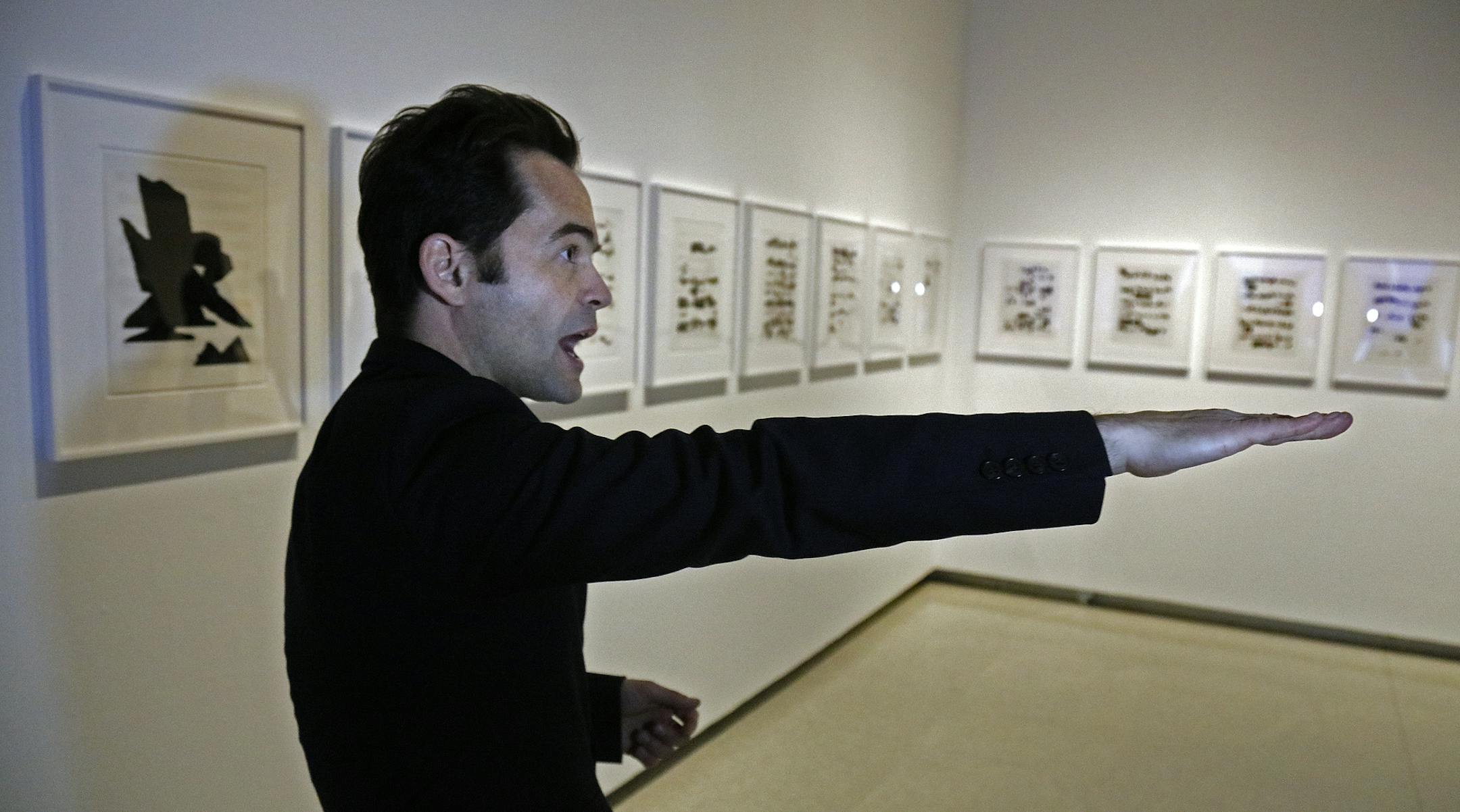
Selecting from the Walker's 10,000-piece collection, artistic director Fionn Meade focused on pivotal artists of the past 60 years, predominantly Americans, and arranged their work as a dialogue with younger talents.
At the entrance hangs Jasper Johns' classic 1965 painting of two American flags, stacked one above the other and rendered in colors that seem at first a desecration — or a mystery. The stripes in the top flag are green and black, while its dark stars hover in a field of orange. The flag below is all in shades of gray. In his typically Delphic way, Johns makes the viewer work to see what he's up to.
Here's the trick: First stare intently at the tiny white dot in the middle of the colorful top flag. Then gaze at the white dot at the center of the gray flag. After a moment the gray flag will likely appear as a red, white and blue mirage. Beyond the perceptual game, Johns metaphorically suggests that the United States is not a singular entity reducible to a lapel pin cliché, but an elusive, multihued concept open to interpretation.
Across the way, paintings by black performance artist William Pope.L mock skin-color obsessions with clever wordplay about "orange people," "blue people" and so on.