Historically, St. Patrick's Day is a holy day, celebrating the patron saint of Ireland. The holiday happens to fall during Lent, a time when Catholics traditionally give up vices such as drinking. But on the feast day of March 17, the Irish tend to celebrate with a pint or two ... or 12, or 13. So it goes that St. Patrick's Day celebrations have moved from the church to the pub.
We wanted to know what makes a genuine Irish pub -- what separates the pots of gold from the blarney? What we found out is that some of the Twin Cities' most successful and respected pubs are, not surprisingly, owned by Irish immigrants. Kieran Folliard, owner of the popular Kieran's Irish Pub and the Local in Minneapolis and the Liffey in St. Paul, hails from the small town of Ballyhaunis in County Mayo, Ireland. Dermot Cowley, who owns O'Donovan's in Minneapolis and Jake O'Connor's Public House in Excelsior, emigrated from Ireland at the age of 18. Tom Scanlon, who owns the Dubliner and Turf Club in St. Paul, is also from Ireland.
Although each of these pubs has its own unique design, both Folliard and Cowley say that the overarching goal of an Irish pub is to provide a sense of community. "At the end of the day, a pub is a gathering place," says Folliard. It's a place where townspeople could relax with a pint and discuss the news of the day with friends and neighbors. The term "pub" is actually short for "public house."
At first, people gathered in friends' and neighbors' homes. Then village shops began selling ale in addition to their usual wares. You could go to the hardware store and have a pint while purchasing a hammer. If your wife dragged you to the drapery store, you could go sit at the bar while she shopped. (Imagine how many guys would go shopping with their wives/girlfriends these days if Victoria's Secret had a bar.)
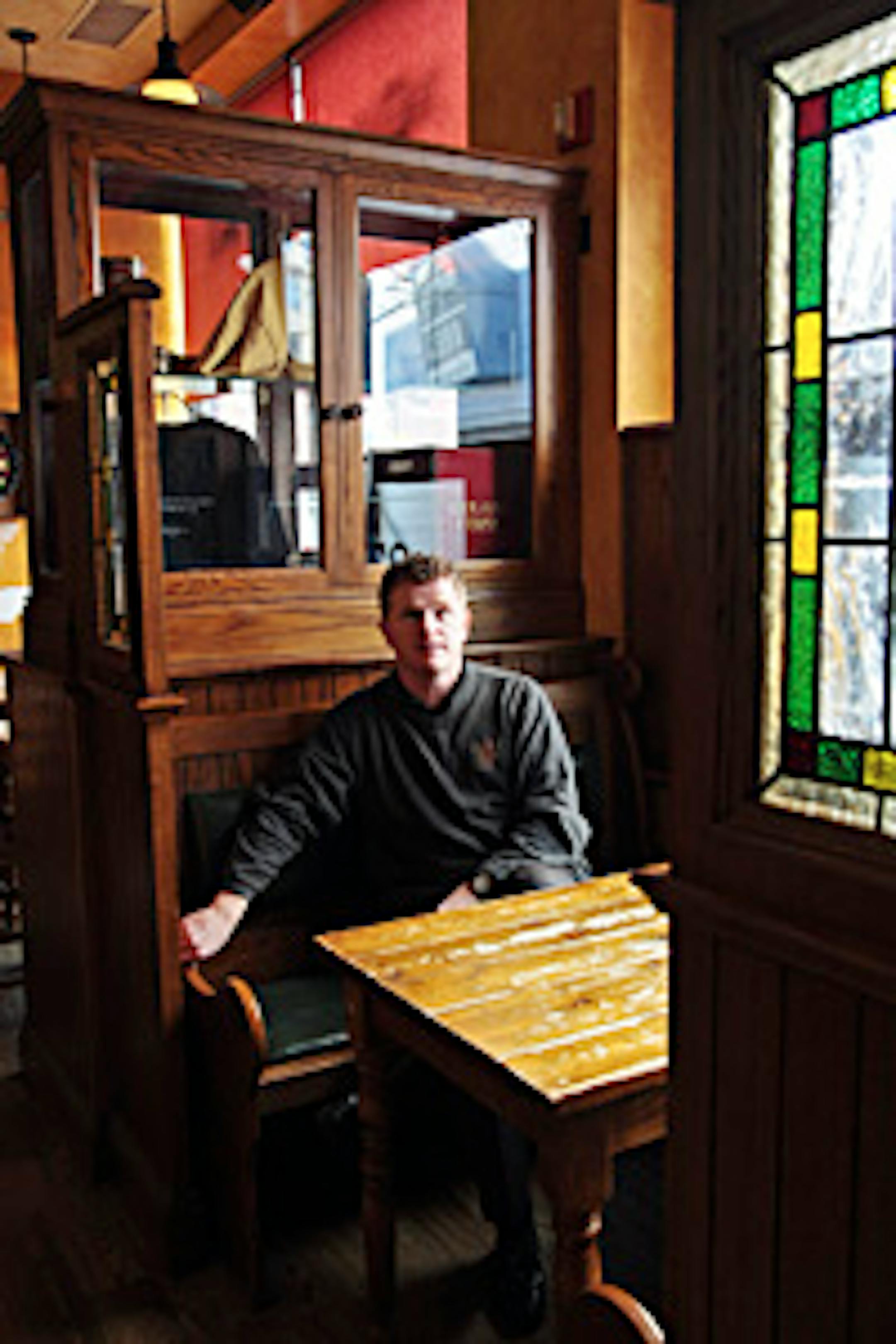
Eventually, these stores gave way to full-fledged public houses. The pubs were primarily male-oriented, but women could go as well; they just had to be segregated from the guys in enclosed booth areas called "snugs." Cowley says the snugs in modern-day Irish pubs now function as places where guests can be secluded and have intimate conversations while still being part of the larger bar area.
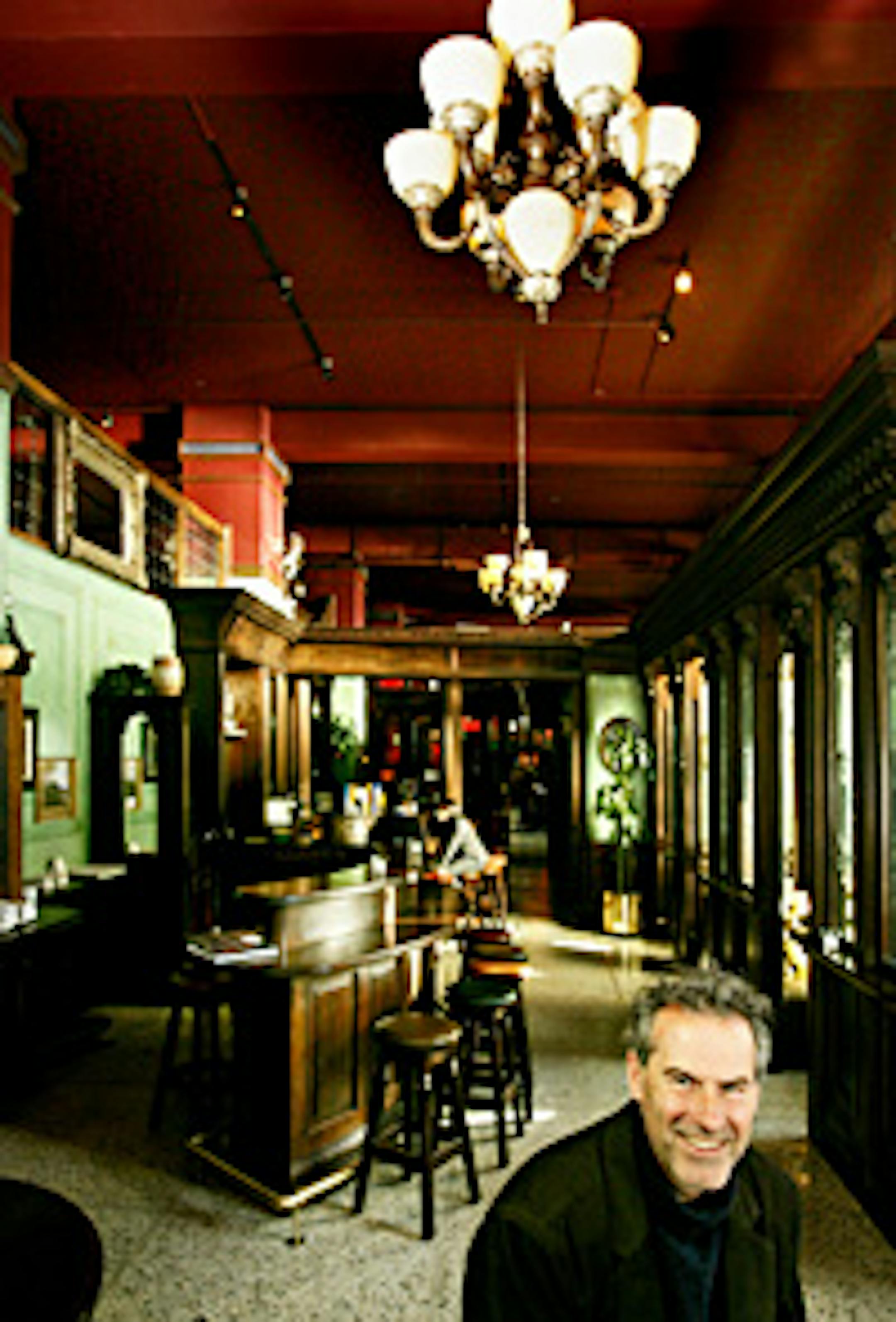
Cowley and Folliard created their pubs with specific goals in mind. Each of Folliard's pubs was designed with special attention to the surroundings and history of its location. The building that the Local resides in was built in 1912, and Folliard wanted the pub to feel like it had been there that long. The Local's large, wooden bar is handmade, as is the etched glass. Both are a nod to turn-of-the-century craftsmanship and design. With the Liffey, Folliard's team wanted a neighborhood bar where everyone who attended an event at the nearby Xcel Energy Center would feel welcome. Folliard says that his pubs are egalitarian: "I want to see a diverse crowd. If I walk around on a Friday or Saturday night and it looks homogenous, I get worried."
Many features at the Local and the Liffey were imported from Ireland, and what wasn't imported was handmade in Minnesota. Folliard wryly notes that a distributor called the Irish Pub Co. sells prefabricated pub designs and exports them around the world, but he's not a fan.
Cowley said O'Donovan's was designed to appeal to people of all ages. He was inspired by smaller rural Irish pubs, where you'd see three generations in the same establishment: grandparents having dinner and a pint, parents relaxing after work and grandchildren hanging out with friends and listening to music. O'Donovan's front room is separated from the live-music room, so that people can sit down and converse with the band as background music.