

For years, beat cops had been frustrated with the constant level of drug-dealing in the Phillips neighborhood in south Minneapolis. They would snatch up the bad guys, but within days they were often back on the streets.
Enter Operation Payback: a meticulously planned investigation started in early 2007 by a unique Minneapolis Police Department crime-fighting unit to take down a notorious gang that brought drugs and violence to the neighborhood on a daily basis.
Last month, the man who was an initial focus of the effort was convicted in federal court on nearly a dozen counts of drug trafficking and gun possession. He was the last of 23 members of the gang, the Rolling 60s Crips, who pleaded guilty or were convicted of similar crimes.
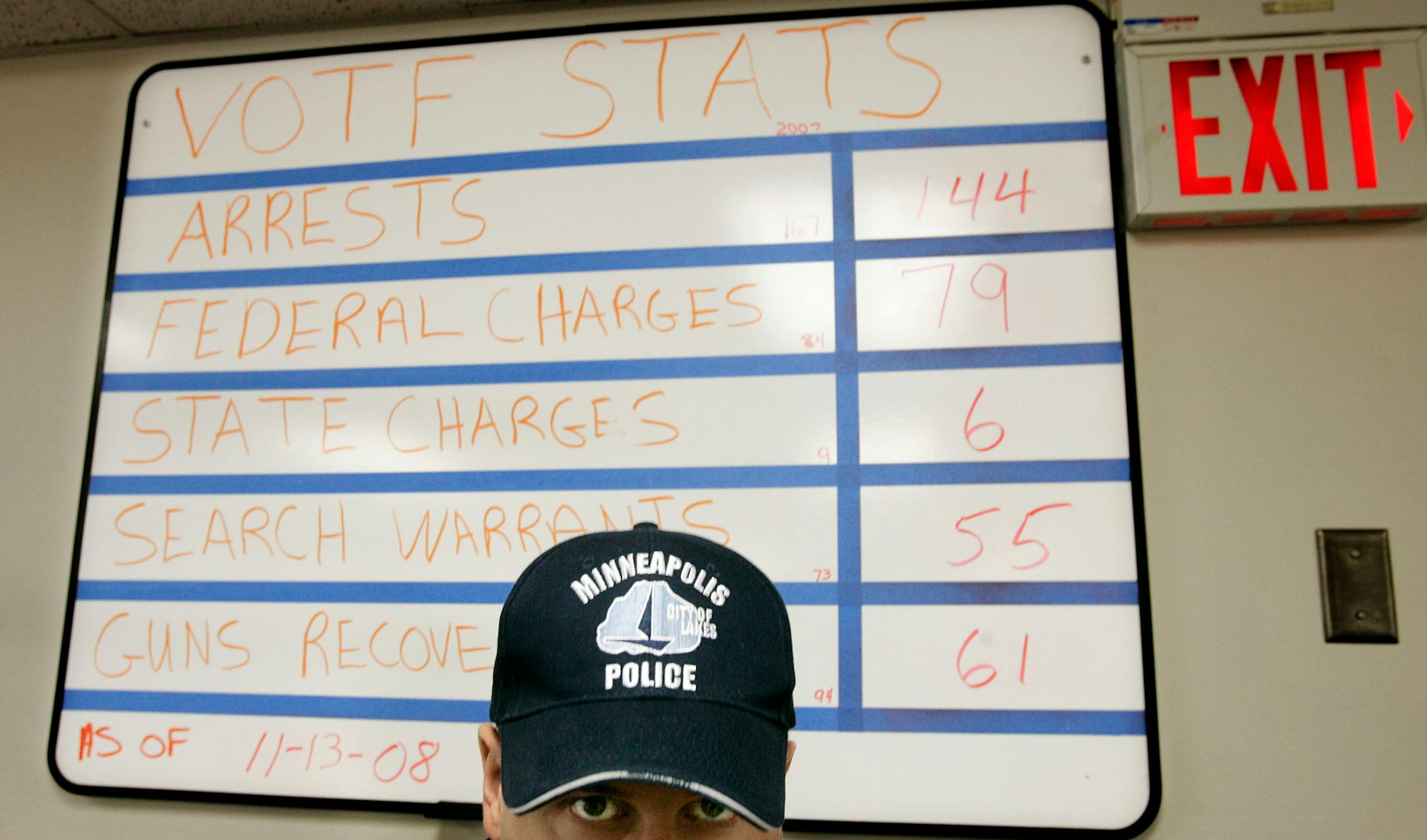
The effect of this combined local and federal law enforcement group -- called the Violent Offender Task Force--is unmatched in the Midwest, officials say. Last year, it was responsible for 13 percent of the federal indictments from the U.S. attorney's office in Minnesota.
"This task force is our gang unit with a big Superman "S" on their shirts," said Police Chief Tim Dolan. "We would have a much larger gang problem without them."
What is the secret of the task force's success? It can focus on specific known targets without responding to daily case loads and is bolstered by extra staffing, financial resources and technical capabilities from the FBI, Bureau of Alcohol, Tobacco, Firearms and Explosives (ATF), Immigration and Customs Enforcement (ICE) and Drug Enforcement Administration (DEA). There is less reliance on informants to testify and victims who are often afraid to cooperate. The task force targets criminal organizations and not individuals, which can result in stiffer federal plea agreements and sentences.
"What's happening with the Violent Offender Task Force is a model of ATF's priorities nationally," said Bernard Zapor, special agent in charge of the ATF's St. Paul division. "We are using finite resources. We are mixing in with the cops. We are showing them new techniques. And we are really getting a return on our investment."
The ATF also is able to lend its expertise gathering intelligence on gangs through wiretaps and video surveillance -- helping the task force track gang members statewide. ATF agents help train officers on how to track criminals through the guns they use -- and then use federal firearms laws to put them away for generally longer prison sentences, Zapor said.


