Updated at 2:37 p.m.
Maneuvering around Minneapolis would be quite frustrating without the 100,000 traffic signs that help residents and visitors reach their destinations every day.
But who makes them all?
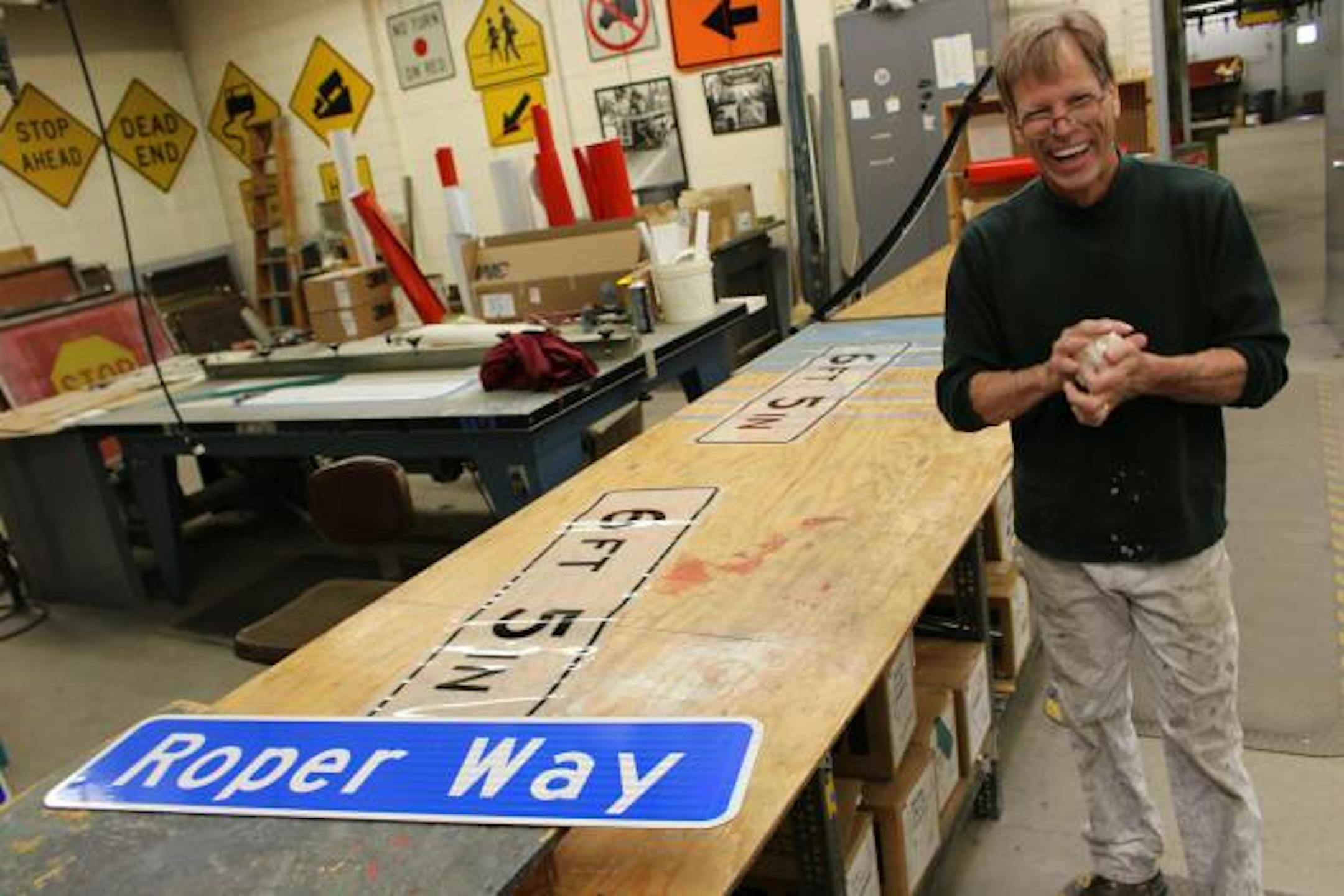
The Star Tribune recently visited the city's traffic operations center, beside the farmers market sheds, to learn more about the process. Here are some fast facts about signs in Minneapolis, derived from a conversation with public works employees Steve Mosing, Doug Maday and Joe Casey:
• The city is in the second year of a 10-year initiative to replace every street sign in Minneapolis over five years old. They are nearing completion in Northeast and will soon move to north Minneapolis. Ten thousand North Side signs have been ordered from an Alabama contractor, which the city will install.
• The Border Avenue facility keeps up with the array of sign changes and replacements throughout the city. Road reconstructions, reconfigured bike lanes and vandalism could all necessitate new signs. The facility can produce more than 100 signs a day, depending on the needs and availability of materials.
• The same crew that makes traffic signs also paints the city's crosswalks at night during the warmer months.
• There are two primary methods of sign-making. One involves using a printer to etch letters into a plastic material, then "weeding" the unneeded parts and applying it to a metal backing. Silk-screening is used for mass production, which is advantageous for duplicative parking signs, for example.