

Opinion editor's note: Star Tribune Opinion publishes a mix of national and local commentaries online and in print each day. To contribute, click here.
•••
Those who want to see the abolition of capital punishment, and more liberal parole guidelines, claim such a change would create a more civilized society. Perhaps, but a more civilized society remembers and respects its murder victims. Moreover, certain crimes are so heinous that the perpetrators should never be released from prison. If they are, it ultimately bespeaks contempt for the law. That's why the case of Leslie Van Houten should resonate.
Denied parole at least 20 times since 1971, Van Houten is now free after spending 53 years in a California prison. Gov. Gavin Newsom did not challenge the parole. For those not yet born or who have forgotten, on Aug. 10, 1969, 19-year-old Van Houten accompanied Charles Manson and four other members of the so-called Manson family on a home invasion of the randomly selected house of supermarket executive Leno LaBianca and his wife, Rosemary, in a tony section of Los Angeles.
Once inside, Manson lieutenant Tex Watson stabbed Leno LaBianca to death and handed the knife to Van Houten. She stabbed Rosemary LaBianca more than a dozen more times. The next morning, Rosemary LaBianca's teenage son discovered her husband's body — knife stuck in his neck, carving fork protruding from his stomach and the word "war" carved into his skin.
Van Houten had been inspired when several of the same Manson family members committed the infamous Sharon Tate murders the previous evening. They savagely killed the actress, who was eight months pregnant, and four houseguests. Van Houten was not present, but when the killers returned home and gleefully described the grisly murders, she felt excluded and wanted in on the next murder spree.
The Tate-LaBianca murders generated a frisson of fear across Southern California, shattering the world's image of California as a land of communal bliss. As Van Houten later said, "My crime affected the nation. It brought an end to a time period in the '60s. It impacted other people in other countries, and it continues to."
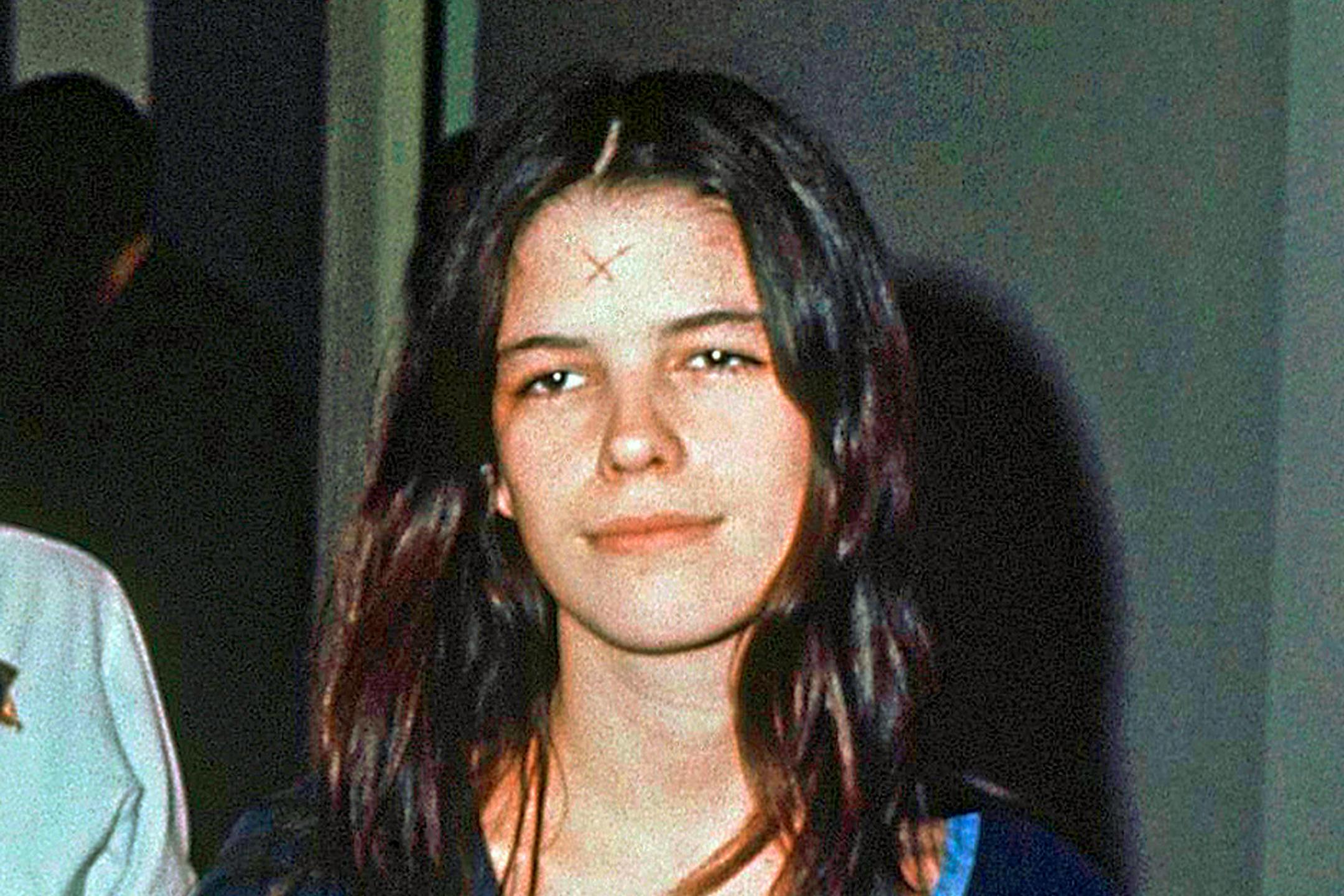
When they were eventually captured, Van Houten and the other girls pointedly showed no remorse. They demonstrated their solidarity with Manson by carving an "X" in their foreheads. Throughout their trials, they laughed and sneered, while Manson family members not on trial created a circuslike atmosphere.


