

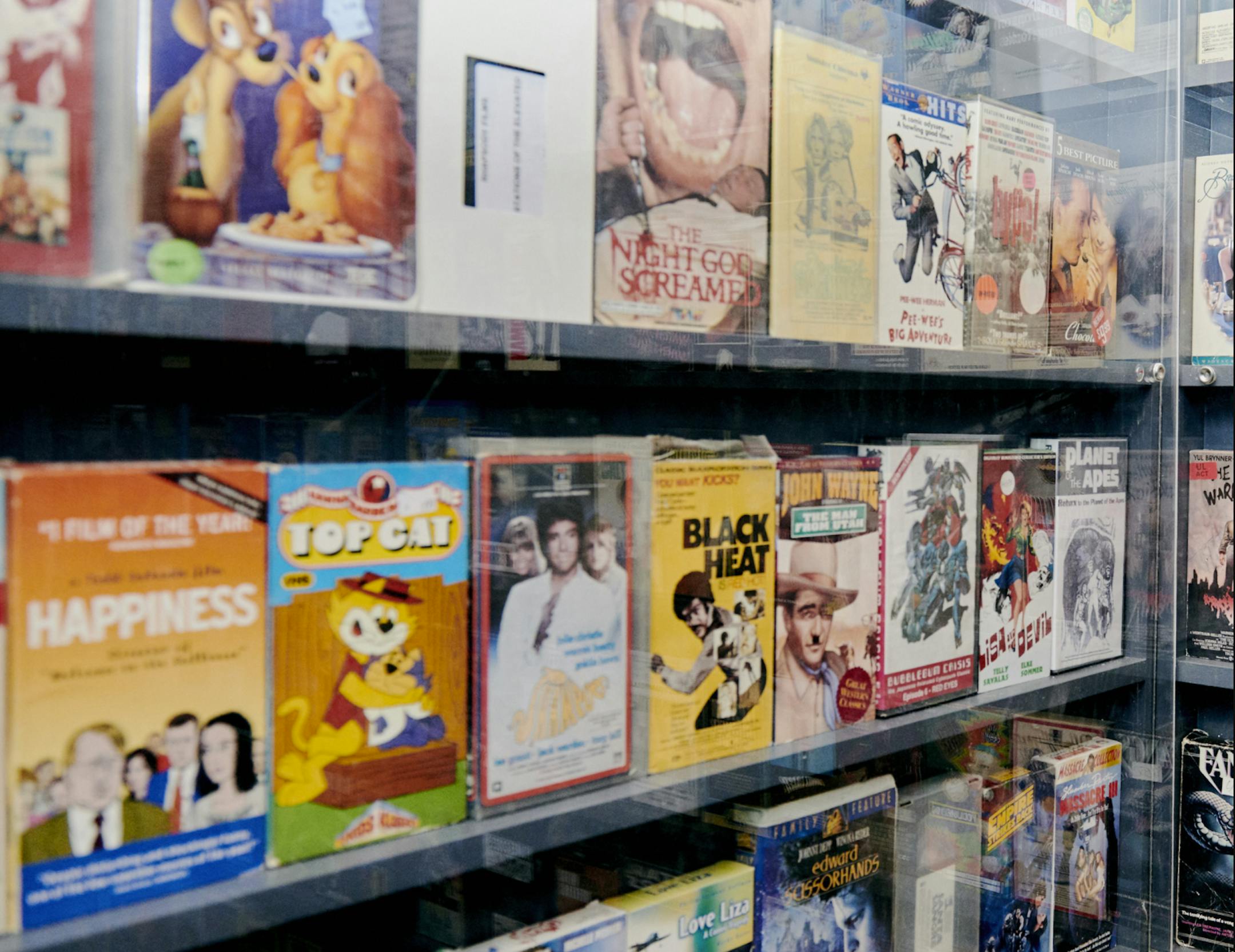
The last VCR was produced in 2016 by Funai Electric in Osaka, Japan. But the VHS tape might be immortal. Today, a robust marketplace exists for it.
On Instagram, sellers tout videos for sale, like the 2003 Jerry Bruckheimer film "Kangaroo Jack," a comedy involving a beauty salon owner — played by Jerry O'Connell — and a kangaroo. Asking price, $190.
If $190 feels outrageous for a film about a kangaroo accidentally coming into money, consider the price of a limited-edition copy of the 1989 Disney film "The Little Mermaid," which is listed on Etsy for $45,000.
There is, it turns out, much demand for these old VHS tapes, price tags notwithstanding and despite post-2006 advancements in technology. Driving the passion is the belief that VHS offers something that other types of media cannot.
"The general perception that people can essentially order whatever movie they want from home is flat-out wrong," said Matthew Booth, the owner of Videodrome in Atlanta, which sells VHS tapes in addition to its Blu-ray and DVD rental business.
Streaming, Booth said, was "promised as a giant video store on the internet, where a customer was only one click away from the exact film they were looking for."
But the reality, he said, is that new releases are expensive, content varies among subscription services and movies operate in cycles, often disappearing before people have the chance to watch them. In that sense, the VHS tape offers something the current market cannot: a vast library of moving images that are unavailable anywhere else.
"Anything that you can think of is on VHS tape," said Josh Schafer, 35, of Raleigh, N.C., a founder and the editor-in-chief of Lunchmeat Magazine and LunchmeatVHS.com, both of which are dedicated to the appreciation and preservation of VHS. "It was a way for everyone to capture something and then put it out there."


