

Apples are everywhere in my kitchen right now: tumbling out of a bowl on the counter, crammed into the refrigerator crisper, stuffed into my pockets as I head out for a walk.
Our farmers markets are a source of wonderful local varieties that are only in season now. A good apple is a balance of complex flavors, the tart and the sweet. As the season progresses, the apple's character is prone to change and the tastes become more distinct. Once picked, as the starch turns to sugar, most apples will sweeten a bit.
Fresh apples also will brighten a range of foods — sharp aged cheeses, cured meats, smoked fish. When choosing an apple for cooking, consider the variety best up to the task. What's most important is whether an apple is the sort that keeps its shape or one that melts into a sweet, fragrant sauce. The drier the apple (such as Keepsake and Regent) the more likely it will be to retain its texture when cooked. The juicier and crisper the apple (think Honeycrisp, SweeTango and Zestar), the more likely it will be to collapse. When I'm making applesauce or baking a pie or a tart, I like to use a mix of each.
Thanks to the University of Minnesota's robust apple program, there are more than 18 local varieties to choose from, each worth a taste. Find the list — along with flavor profiles and cooking properties — at mnhardy.umn.edu.
All apples are best stored in plastic bags in the refrigerator, away from carrots and cut onions, and will keep nicely for several weeks. To avoid loss of flavor, bring apples to room temperature before eating or using fresh in a salad or on an appetizer plate.
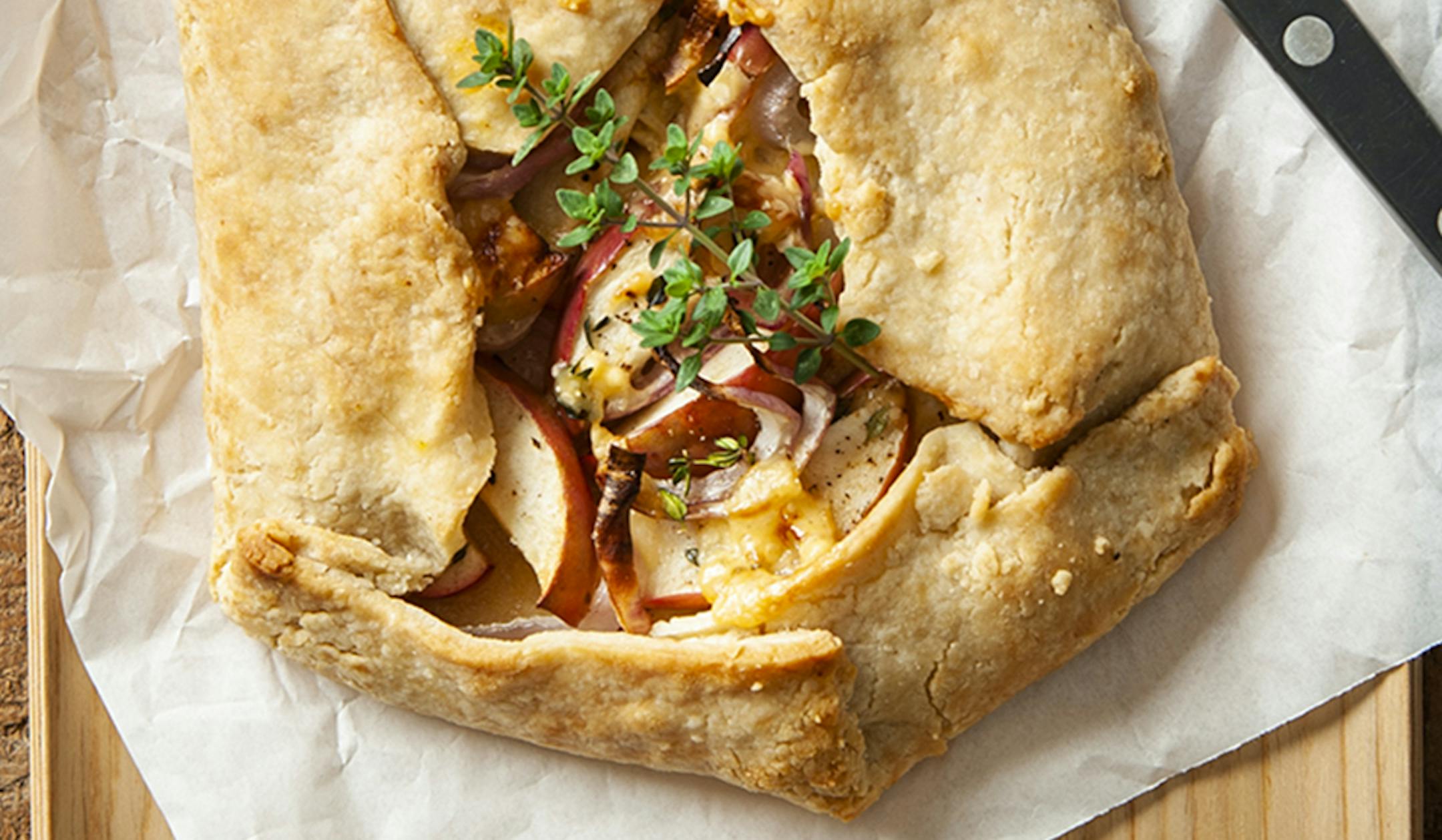
Rustic Apple, Shallot, and Manchego Tart
Serves 8.
This free-form tart gets a savory twist with shallots, cheese and fresh thyme. It's delicious served warm with a simple salad for lunch, or as a side to roast chicken or pork. From Beth Dooley.
Crust


