

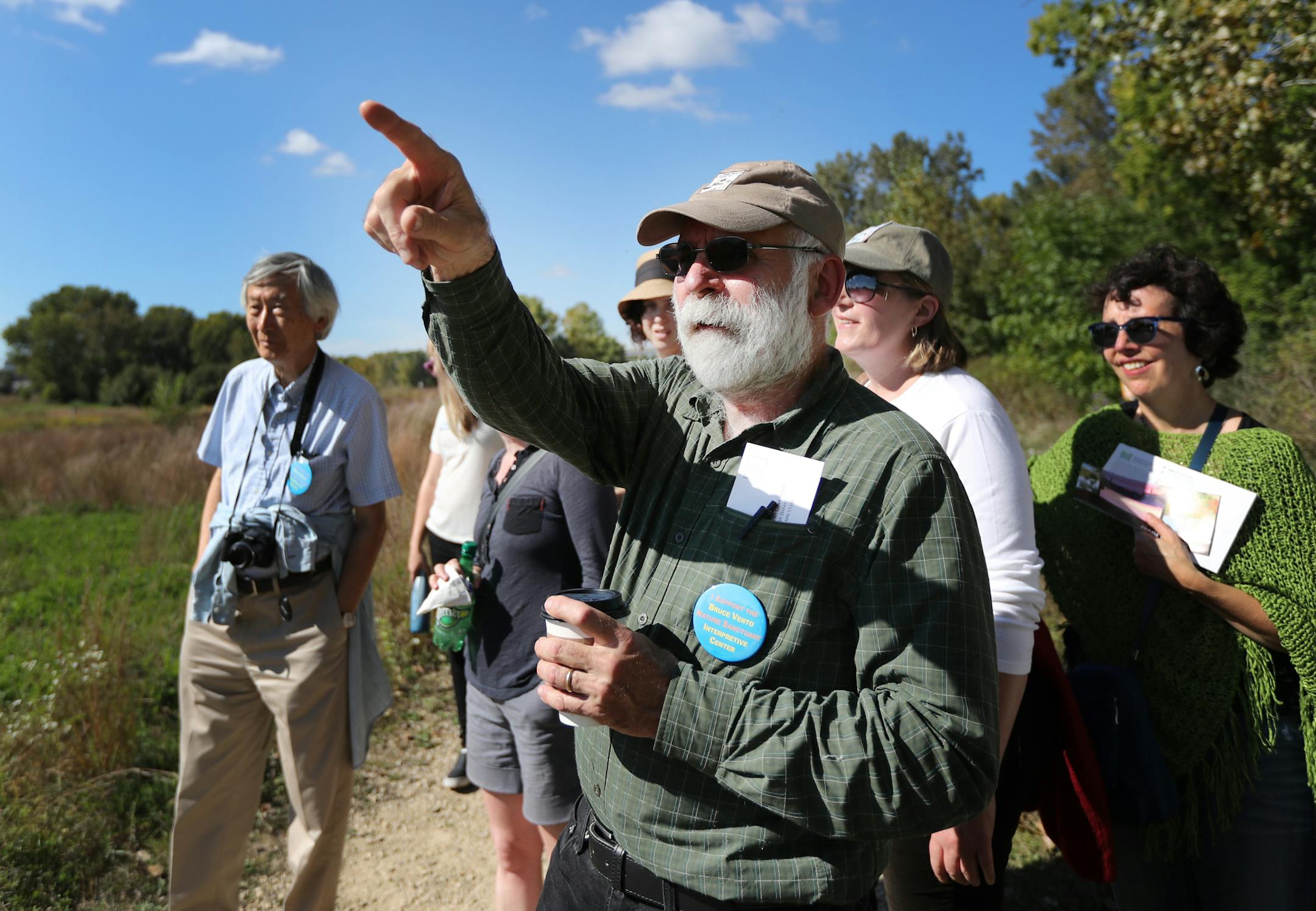
Commuters heading from St. Paul to the eastern suburbs may never notice it, this oasis of quiet.
But beneath the constant hum of Interstate 94 traffic, in the shadow of the Kellogg Boulevard bridge, rests the Bruce Vento Nature Sanctuary, a 27-acre park restored from a once-polluted industrial site between St. Paul's Lowertown and Dayton's Bluff neighborhoods. While this place has been quietly attracting busloads of schoolkids studying science and history, as well as noontime hikers seeking lunchtime serenity, its champions say it can — and should — do more.
Neighborhood and city officials are hoping to build momentum — and attract funding — for a new interpretive center they say will make the sanctuary even more engaging and inspiring. A proposed $6.7 million Wakan Tipi Center would provide classrooms and exhibit space to attract and serve new audiences at the sanctuary, said Melanie Kleiss, who heads the Lower Phalen Creek Project, a neighborhood nonprofit that helped create the sanctuary. But requests for state money have stalled in recent legislative bonding sessions.
"This has been proposed to the Legislature two times before," Kleiss said of the $3 million being sought from the state. "Our board continues to ask if this is still a good idea, does it still make sense? And, yes, it's still a really good idea."
The center would be named for the nearby Wakan Tipi (House of the Spirits), a cave that is a sacred site to the Dakota people. Wall drawings of animals inside the cave were made by indigenous people who lived in the area hundreds of years ago.
"It's a sacred site to Dakota and other American Indian people. It has transcended generations and was, for the most part destroyed when the railroad came through," said Leonard Wabasha, director of cultural resources for the Shakopee Mdewakanton Sioux Community. "They say in the early explorer days that the Dakota children would play there and that because of its landmark status on the Mississippi it was used as a gathering area."
A new gathering place
The cave has been closed to the public for years and Wabasha said it is doubtful it would reopen because of the risk of vandalism. An interpretive center is a way to honor the site's culture and history while making it more usable, Kleiss said.
The new center would be about 10,000 square feet and feature a reception area, classrooms, exhibit space and a small gallery. A cafe would serve food raised by local farmers and offer cooking classes and food workshops, Kleiss said.


