

Fifty years ago this month, the Catholic Church embarked on a period of soul-searching that reverberated far beyond St. Peter's Basilica in Rome. Pope John XXIII called Catholic bishops across the globe to the Second Vatican Council, opening the windows of a monarchical church to the modern world.
The first Catholic president, John F. Kennedy, sat in the White House. Clergy infused the civil rights movement with moral transcendence. These were heady days for religious progressives.
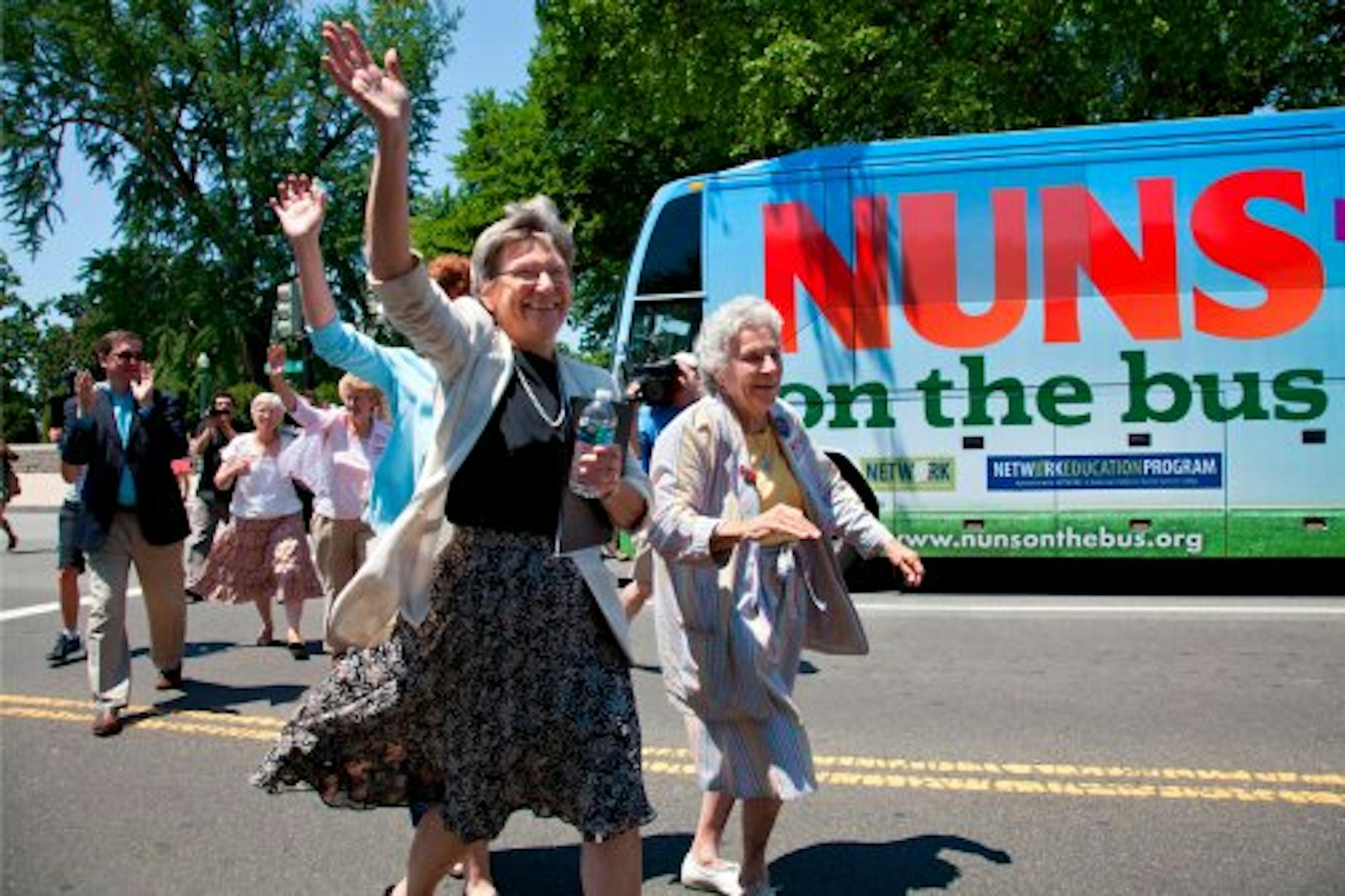
They were also fleeting. Just two decades later, Jerry Falwell made the religious right the public face of Christianity. Today, at a time when debates over the role of faith in politics are as prickly as ever, Catholic nuns in the United States are reawakening the spirit of Vatican II and inspiring a new generation of disillusioned Christians as they face harsh rebuke from an increasingly conservative hierarchy.
Vatican II met for three years beginning in 1962 and stirred groundbreaking changes: building ecumenical bridges, especially in Christian-Jewish relations; permitting Mass to be celebrated in local languages instead of only in Latin; and expansively defining the church as "the people of God." The council was guided by what John XXIII called aggiornamento, or "updating" - a profound change given the church's previous rejection of modernity and liberalism as heresies.
The American Jesuit priest and theologian John Courtney Murray, who a decade earlier had faced Vatican censure for his writings on conscience and religious freedom, became a leading intellectual light of the council. Nuns, encouraged by the council's reformist instincts, emerged from convents to "live the Gospel" in blighted communities. These women continue to serve in prisons, hospitals and war-torn countries. Many took on leadership positions that belie antiquated stereotypes.
In the years after the council, however, the church retrenched.
The next pope, Paul VI, ignored the majority report of his own theological commission when in 1968 he declared birth control to be an "intrinsic evil" even for married couples. The charismatic Pope John Paul II (1978-2005) cracked down on "liberation theology" movements in Latin America led by priests and nuns standing with the poor in the face of oppressive right-wing governments. He also offered stinging critiques of unfettered capitalism and made historic steps to improve Christian-Jewish relations. But his 27-year year papacy was largely defined by a conservative sexual theology, a staunch defense of the all-male priesthood and blindness to the clergy sexual abuse crisis that engulfed the church.
Now Pope Benedict XVI's doctrine office has cracked down on an organization called the Leadership Conference of Women Religious, which represents most U.S nuns. A scathing report from the Vatican in April blasted the group for "promoting radical feminist themes incompatible with the Catholic faith." It chided the nuns for largely focusing on social justice at the expense of speaking out against same-sex marriage and abortion. The Vatican appointed Seattle Archbishop J. Peter Sartain to oversee the conference.


