

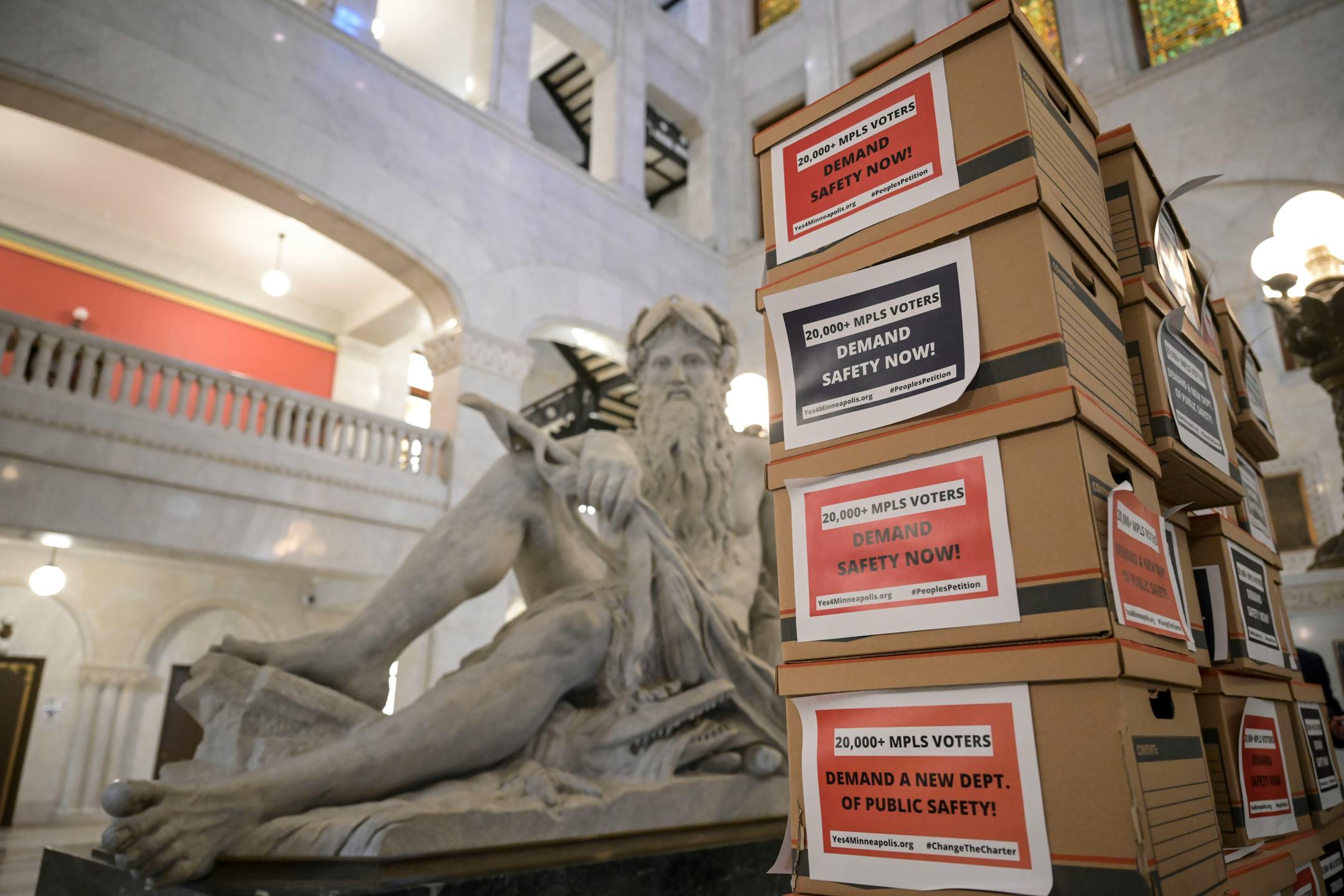
With a momentous decision coming before voters on the Nov. 2 ballot, the Minneapolis City Council has opted to give them less information.
Earlier this month the council voted 12 to 1 for an explanatory note that would have provided critical information about the ballot question that would dismantle and replace the Police Department. But after losing a lawsuit challenging that note, council members reversed themselves, voting 9 to 4 in support of a ballot question without any explanatory note, overriding a mayoral veto to do so.
It's important to keep in mind that it was the specific wording of the original note the court rejected. The court affirmed the city's right to include explanatory notes. Indeed, a proposed rent control ballot measure was approved by the council with an explanatory note.
But the public safety amendment, which would dismantle existing law enforcement structures, gets no explanation. Despite negotiations between Mayor Jacob Frey and the council, no new clarifying language was arrived at.
The question now reads, in its entirety: "Shall the Minneapolis City Charter be amended to strike and replace the Police Department with a Department of Public Safety which could include licensed peace officers (police officers) if necessary, with administrative authority to be consistent with other city departments to fulfill its responsibilities for public safety?"
That's it. On that, voters are expected to decide whether to blow up the existing police department in favor of … what? No one knows exactly. There is no plan for what would come next, what the transition would look like, what the new structure would be, or what would happen to existing operations, even though the amendment would go into effect just 30 days after the vote is in.
What is known is that the Police Department would be replaced by a Public Safety Department of unknown size and structure. It would be headed by a commissioner — no qualifications specified — rather than a police chief. And instead of the mayor having singular authority over police, the commissioner would be appointed by the council and would report to the mayor and 13 council members — in essence, to 14 bosses.
That the council opted for less clarity about all this does not inspire confidence in its ability to provide greater transparency and accountability in managing law enforcement.


