

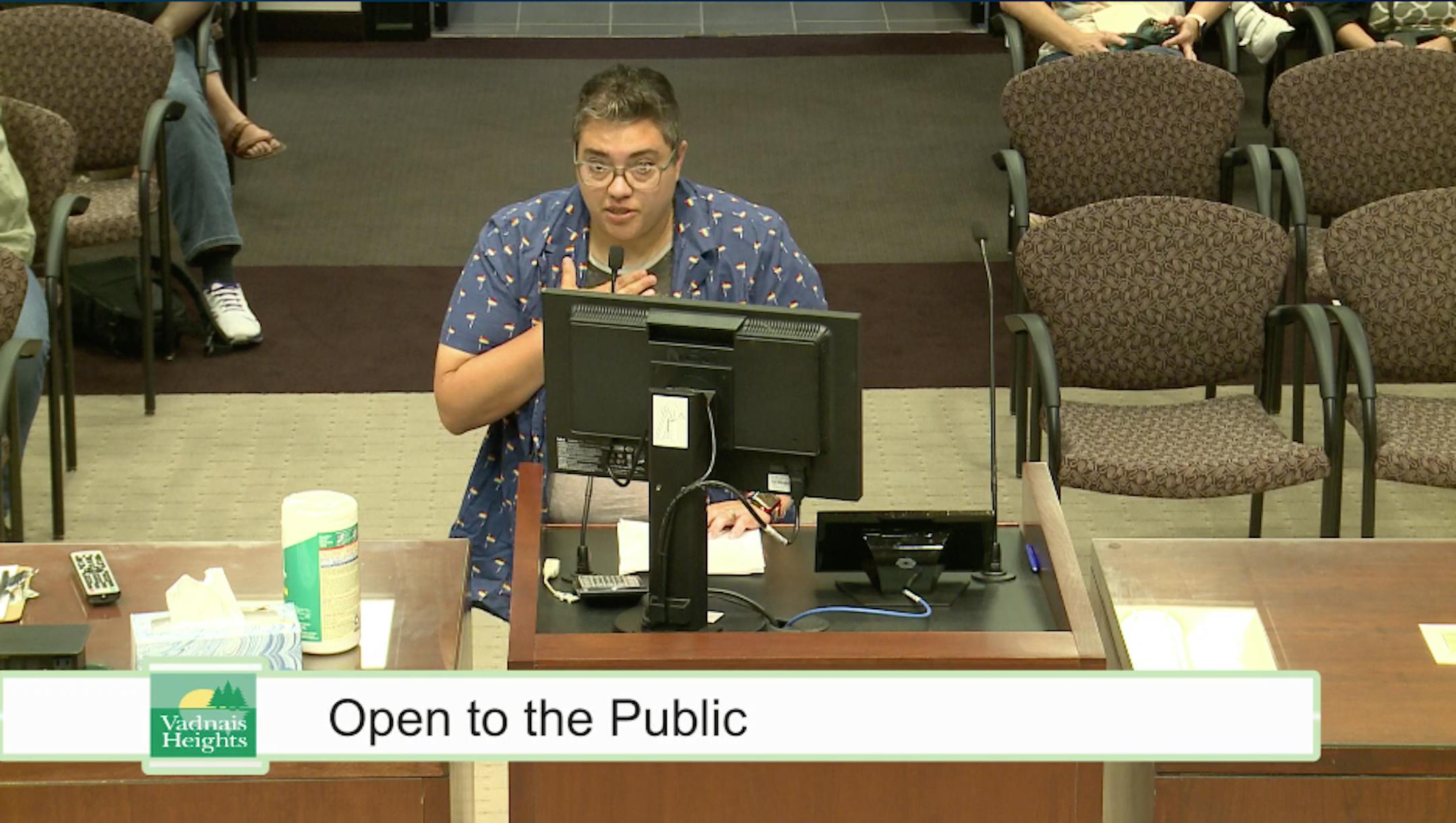
Vadnais Heights teacher Heather Gustafson started calling on her city to create a human rights commission in spring 2020, after a Minneapolis police officer murdered George Floyd and a Vadnais Heights City Council member resigned following a confrontation over social media posts that disparaged Muslims and LGBTQ people.
More than a year later, Gustafson is still at the helm of a grassroots group of neighbors called Vadnais Heights for Change, demanding the Ramsey County suburb of 13,600 form a commission to address these types of issues head-on. While the mayor says city officials want to make sure any new commission has a clear purpose and is wanted by the community, Gustafson accuses local leaders of dragging their feet.
"What is the downside to having a human rights commission?" Gustafson said. "Racial justice isn't just a big city thing. A lot of these problems are in the suburbs where it's under the surface but it can cause just as much damage."
Mayor Heidi Gunderson said the council agreed in July to add the potential creation of a human rights commission to a future council workshop agenda — the first step in the process.
"Vadnais Heights is a small community and we have a lean staff and budget," Gunderson said in a written statement. "It is my hope that we can partner with community members to craft a plan that is well tailored to our demographics and resources to ensure that all people feel welcome and included in our community."
Commissions widespread
About 40 cities in Minnesota have human rights commissions, some of which date back decades, according to the Minnesota Department of Human Rights. While the state human rights department is charged with enforcing the Minnesota Human Rights Act, local commissions established by city charter or ordinance promote equity and inclusion and advise their city councils.
What these community commissions actually do can vary widely and, at times, be a point of debate.
Northfield formed its human rights commission in 1986 and, at one point, the city explored giving it more of an investigative role — something local officials ultimately decided against, given the legal resources it would require.


